


Chemical profiling and pharmacological properties of Arbutus unedo L. collected from Morocco
Article Sidebar
Views | PDF/EPUB Downloads:
340
/ 112
/ 75
Main Article Content
Abstract
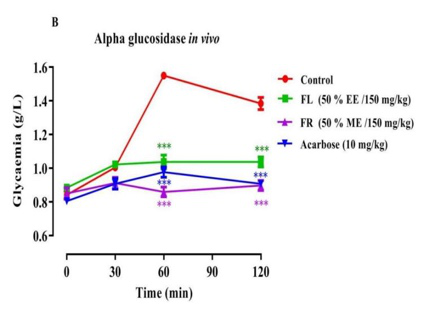
Arbutus unedo L. plant is traditionally used in Morocco to treat various ailments, in particular diabetes. The goal of this study was to evaluate the pharmacological potential of Arbutus unedo fruit and flower extracts in addressing postprandial hyperglycemia and inflammation by inhibiting of digestive enzymes and anti-inflammatory mechanisms. It also aims to identify the bioactive compounds linked to these effects. Therefore, the present study assessed the anti-hyperglycemic potential of Arbutus unedo fruit and flower extracts via inhibitory effects on α-amylase and α-glucosidase both in vitro and in vivo in normoglycemic rats, while anti-inflammatory activity was evaluated via erythrocyte membrane stabilization and protein denaturation inhibition. Bioactive compounds were identified using GC-MS and their molecular interactions were examined through docking studies. The outcomes of this research showed that the fruit extract, containing high levels of quinic acid (33.22%) and azulene (19.01%), displayed stronger anti-inflammatory activity than the flower extract. Notably, the ethanolic fruit extract exhibited potent α-amylase inhibition (p <0.001). The methanolic fruit extract showed high in vivo α-glucosidase inhibition compared to acarbose. Molecular docking revealed that a novel compound isolated from the fruit, (5E)-5-benzylidene-3-[(2-methoxyanilino)methyl]-1,3-thiazolidine-2,4-dione, had high binding affinity for both digestive enzymes.These findings position Arbutus unedo fruit as a promising natural therapeutic candidate for glycemic control and inflammation.
Downloads
Article Details
Section

This work is licensed under a Creative Commons Attribution-NonCommercial-NoDerivatives 4.0 International License.
How to Cite
References
1. Poznyak A, Grechko AV, Poggio P, Myasoedova VA, Alfieri V, Orekhov AN. The diabetes mellitus atherosclerosis connection: The role of lipid and glucose metabolism and chronic inflammation. Int J Mol Sci. 2020; 21(5):1835. DOI: https://doi.org/10.3390/ijms21051835
2. Kashtoh H, Baek KH. New insights into the latest advancement in α-amylase inhibitors of plant origin with anti-diabetic effects. Plants (Basel). 2023;12(16):2944. DOI: https://doi.org/10.3390/plants12162944
3. Abdnim R, Ouassou H, Elrherabi A, Daoudi NE, Berraaouan A, Legssyer A, Ziyyat A, Mekhfi H, Bnouham M. Antioxidant, antiglycation, inhibition of digestive enzymes and enhanced glucose uptake activities of Opuntia ficus indica L, in vitro and in vivo. Trop J Nat Prod Res. 2023; 7(7):3364–3370.
4. WHO. World Health Organization – Diabetes country profiles, 2016. Available from: https://www.who.int/teams/noncommunicable-diseases/surveillance/data/diabetes-profiles.
5. Zhao L, Hu H, Zhang L, Liu Z, Huang Y, Liu Q, Jin L, Zhu M, Zhang L. Inflammation in diabetes complications: Molecular mechanisms and therapeutic interventions. MedComm(2020).2024; 5(4):e516. DOI: https://doi.org/10.1002/mco2.516
6. Hasan MM, Islam ME, Hossain MS, Akter M, Rahman MAA, Kazi M, Khan S, Parvin MS. Unveiling the therapeutic potential:Evaluation of anti-inflammatory and antineoplastic activity of Magnolia champaca Linn's stem bark isolate through molecular docking insights. Heliyon. 2023;10(1):e22972. DOI: https://doi.org/10.1016/j.heliyon.2023.e22972
7. Derbel H, Elleuch J, Mahfoudh W, Michaud P, Fendri I, Abdelkafi S. In Vitro antioxidant and anti-inflammatory activities of bioactive proteins and peptides from Rhodomonas sp. Appl Sci. 2023; 13(5):3202. DOI: https://doi.org/10.3390/app13053202
8. Azeem AK, Dilip C, Prasanth SS, Shahima VJH, Sajeev K, Naseera C. Anti-inflammatory activity of the glandular extracts of Thunnus alalunga. Asian Pac J Trop Med. 2010; 3(10): 794-796. DOI: https://doi.org/10.1016/S1995-7645(10)60190-3
9. Banu N, Alam N, Nazmul Islam M, Islam S, Sakib SA, Hanif NB, Chowdhury MR, Tareq AM, Hasan Chowdhury K, Jahan S, Azad A, Emran TB, Simal-Gandara J. Insightful valorization of the biological activities of pani heloch leaves through experimental and computer-aided mechanisms. Molecules. 2020;25(21):5153. DOI: https://doi.org/10.3390/molecules25215153
10. Aidoo DB, Konja D, Henneh IT, Ekor M. Protective effect of bergapten against human erythrocyte hemolysis and protein denaturation in vitro. Int J Inflam. 2021; 2021:1279359. DOI: https://doi.org/10.1155/2021/1279359
11. Anosike CA, Obidoa O, Ezeanyika LU.Membrane stabilization as a mechanism of the anti-inflammatory activity of methanol extract of garden egg (Solanum aethiopicum). Daru.2012; 20(1):76. DOI: https://doi.org/10.1186/2008-2231-20-76
12. Elrherabi A, Bouhrim M, Abdnim R, Berraaouan A, Ziyyat A, Mekhfi H, Legssyer A, Bnouham M. Antihyperglycemic potential of the Lavandula stoechas aqueous extract via inhibition of digestive enzymes and reduction of intestinal glucose absorption. J Ayurveda Integr Med. 2023; 14(5):100795. DOI: https://doi.org/10.1016/j.jaim.2023.100795
13. Abdnim R, Lafdil FZ, Elrherabi A, El fadili M, Kandsi F, Benayad O, Legssyer A, Ziyyat A, Mekhfi H, Bnouham M. Fatty acids characterisation by GC-MS, antiglycation effect at multiple stages and protection of erythrocytes cells from oxidative damage induced by glycation of albumin of Opuntia ficus-indica (L.) Mill seed oil cultivated in Eastern Morocco: Experimental and computational approaches. J Ethnopharmacol. 2024; 329:118106. DOI: https://doi.org/10.1016/j.jep.2024.118106
14. El Haouari M, Assem N, Changan S, Kumar M, Daştan SD, Rajkovic J, Taheri Y, Sharifi-Rad J. An insight into phytochemical, pharmacological, and nutritional properties of Arbutus unedo L. from Morocco. Evid Based Complement Alternat Med. 2021; 2021: 1794621. DOI: https://doi.org/10.1155/2021/1794621
15. Tenuta MC, Deguin B, Loizzo MR, Dugay A, Acquaviva R, Malfa GA, Bonesi M, Bouzidi C, Tundis R. Contribution of flavonoids and iridoids to the hypoglycaemic, antioxidant, and nitric oxide (NO) inhibitory activities of Arbutus unedo L. Antioxidants (Basel). 2020; 9(2):184. DOI: https://doi.org/10.3390/antiox9020184
16. Isbilir SS,Orak HH,Yagar H, Ekinci N. Determination of antioxidant activities of strawberry tree (Arbutus unedo L.) flowers and fruits at different ripening stages. Acta Sci Pol Hortorum Cultus. 2012; 11(3): 223-237.
17. Mrabti HN, Marmouzi I, Sayah K, Chemlal L, EL Ouadi Y, Elmsellem H, Cherrah Y, Faouzi MA .Arbutus unedo L aqueous extract is associated with in vitro and in vivo antioxidant activity. J Mater Environ Sci. 2017; 8(1): 217-224.
18. Alexandre AMRC, Matias A, Duarte CMM, Bronze MR . High-pressure CO2 assisted extraction as a tool to increase phenolic content of strawberry-tree (Arbutus unedo) extracts. J CO2 Util.2018 ; 27:73–80. DOI: https://doi.org/10.1016/j.jcou.2018.07.002
19. Council NR. Guide for the care and use of laboratory animals. Washington. DC:The National Academies Press; 2011.
20. Hasan, AUH. Evaluation of in vitro and in vivo therapeutic efficacy of Ribes alpestre Decne in rheumatoid arthritis. Braz J Pharm Sci.2019; 55:e17832. DOI: https://doi.org/10.1590/s2175-97902019000217832
21. Kpemissi M,Kantati YT,Veerapur VP, Eklu-Gadegbeku K,Hassan Z.Anti-cholinesterase, anti-inflammatory and antioxidant properties of Combretum micranthum G. Don: Potential implications in neurodegenerative disease. IBRO Neurosci Rep. 2022;14:21-27. DOI: https://doi.org/10.1016/j.ibneur.2022.12.001
22. Trott O, Olson AJ. AutoDock Vina: improving the speed and accuracy of docking with a new scoring function, efficient optimization, and multithreading. J Comput Chem. 2010; 31(2):455-461. DOI: https://doi.org/10.1002/jcc.21334
23. Williams LK, Li C, Withers SG, Brayer GD. Order and disorder: Differential structural impacts of myricetin and ethyl caffeate on human amylase, an antidiabetic target. J Med Chem. 2012; 55(22):10177-10186. DOI: https://doi.org/10.1021/jm301273u
24. Roig-Zamboni V, Cobucci-Ponzano B, Iacono R, Ferrara MC, Germany S, Bourne Y, Parenti G, Moracci M, Sulzenbacher G. Structure of human lysosomal acid α-glucosidase-a guide for the treatment of Pompe disease. Nat Commun. 2017; 8(1):1111. DOI: https://doi.org/10.1038/s41467-017-01263-3
25. Fu L, Shi S, Yi J, Wang N, He Y, Wu Z, Peng J, Deng Y, Wang W, Wu C, Lyu A, Zeng X, Zhao W, Hou T, Cao D. ADMETlab 3.0: An updated comprehensive online ADMET prediction platform enhanced with broader coverage, improved performance, API functionality and decision support. Nucleic Acids Res. 2024; 52(W1):W422-W431. DOI: https://doi.org/10.1093/nar/gkae236
26. Tripathy B, Sahoo N, Sahoo SK.Trends in diabetes care with special emphasis to medicinal plants: Advancement and treatment. Biocatal Agric Biotechnol. 2021;33:102014. DOI: https://doi.org/10.1016/j.bcab.2021.102014
27. Song Y, Li W, Yang H, Peng X, Yang X, Liu X, Sun L. Caffeoyl substitution decreased the binding and inhibitory activity of quinic acid against α-amylase: The reason why chlorogenic acid is a relatively weak enzyme inhibitor. Food Chem. 2022; 371:131278. DOI: https://doi.org/10.1016/j.foodchem.2021.131278
28. Doudach L, Mrabti HN, Al-Mijalli SH, Kachmar MR, Benrahou K, Assaggaf H, Qasem A, Abdallah EM, Rajab BS, Harraqui K, Mekkaoui M, Bouyahya A, Faouzi MEA. Phytochemical, antidiabetic, antioxidant, antibacterial, acute and sub-chronic toxicity of Moroccan Arbutus unedo Leaves. J Pharmacopuncture. 2023; 26(1):27-37. DOI: https://doi.org/10.3831/KPI.2023.26.1.27
29. Nanjan MJ, Mohammed M, Prashantha Kumar BR, Chandrasekar MJN.Thiazolidinediones as antidiabetic agents:A critical review. Bioorg Chem. 2018; 77:548-567. DOI: https://doi.org/10.1016/j.bioorg.2018.02.009
30. Patil VM,Tilekar KN,Upadhyay NM,Ramaa CS.Synthesis, in-vitro evaluation and molecular docking study of N-Substituted thiazolidinediones as α-Glucosidase inhibitors.ChemistrySelect.2022; 7(1):e202103848. DOI: https://doi.org/10.1002/slct.202103848
31. Patil V, Upadhyay N, Tilekar K, Joshi H, Ramaa CS.Hypoglycemic and hypolipidemic swords: synthesis and in-vivo biological assessment of 5-benzylidene-2,4-thiazolidinediones. Iran J Pharm Res. 2021; 20(4):188-201.
32. Moein S, Moein M, Javid H. Inhibition of α-amylase and α-glucosidase of anthocyanin isolated from Berberis integerrima Bunge fruits:A model of antidiabetic compounds. Evid Based Complement Alternat Med. 2022;2022:6529590. DOI: https://doi.org/10.1155/2022/6529590
33. Li X, Chen H, Jia Y, Peng J, Li C. Inhibitory effects against alpha-amylase of an enriched polyphenol extract from pericarp of mangosteen (Garcinia mangostana). Foods. 2022;11(7):1001. DOI: https://doi.org/10.3390/foods11071001
34. Han X, Wang P, Zhang J, Lv Y, Zhao Z, Zhang F, Shang M, Liu G, Wang X, Cai S, Xu F. α-Glucosidase inhibition mechanism and anti-hyperglycemic effects of flavonoids from astragali radix and their mixture effects. Pharmaceuticals (Basel). 2025 ;18(5):744. DOI: https://doi.org/10.3390/ph18050744
35. Lehfa F, Belkhodja H, Sahnouni F. Phytochemical screening, antioxidant and anti-inflammatory activities of polyphenolic extracts of strawberry-tree fruits (Arbutus unedo L). J Appl Biotechnol Rep. 2023;10(2):992-999.
36. Aparna V, Dileep KV, Mandal PK, Karthe P, Sadasivan C, Haridas M. Anti-inflammatory property of n-hexadecanoic acid:Structural evidence and kinetic assessment.Chem Biol Drug Des. 2012; 80(3):434–439. DOI: https://doi.org/10.1111/j.1747-0285.2012.01418.x
37. Zhang H, Jiang Z, Shen C, Zou H, Zhang Z, Wang K, Bai R, Kang Y, Ye XY, Xie T. 5-Hydroxymethylfurfural alleviates inflammatory lung injury by inhibiting endoplasmic reticulum stress and NLRP3 inflammasome activation. Front Cell Dev Biol.2021; 9:782427. DOI: https://doi.org/10.3389/fcell.2021.782427
38. Miklankova D, Markova I, Hüttl M, Stankova B, Malinska H. The different insulin-sensitising and anti-inflammatory effects of palmitoleic acid and oleic acid in a prediabetes model. J Diabetes Res. 2022; 2022: 4587907. DOI: https://doi.org/10.1155/2022/4587907
39. Slon E, Slon B, Kowalczuk D. Azulene and its derivatives as potential compounds in the therapy of dermatological and anticancer diseases: New perspectives against the backdrop of current research. Molecules. 2024; 29(9):2020. DOI: https://doi.org/10.3390/molecules29092020
40. Elrherabi A, Abdnim R, Loukili EH, Laftouhi A, Lafdil FZ, Bouhrim M, Mothana RA, Noman OM, Eto B, Ziyyat A, Mekhfi H, Legssyer A, Bnouham M. Antidiabetic potential of Lavandula stoechas aqueous extract: Insights into pancreatic lipase inhibition, antioxidant activity, antiglycation at multiple stages and anti-inflammatory effects.Front Pharmacol. 2024 ;15:1443311. DOI: https://doi.org/10.3389/fphar.2024.1443311