


In Vivo anti-Plasmodium Potential of Aloe barbadensis Anthraquinones and its Combination with Amodiaquine
Article Sidebar
Main Article Content
Abstract
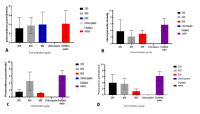
Antimalarial drug resistance is a critical global health challenge. This study investigates the antiplasmodial activities of anthraquinones and their combination with amodiaquine. Twenty-five experimental mice were examined in five groups, each receiving varying concentrations of the compound, either singly or in combination with 40 mg/kg amodiaquine. All the solvent fractions significantly inhibited Plasmodium parasitemia in the order of methanol > ethyl acetate > n-hexane (P < 0.01). The highest reduction in parasitaemia (0.53±0.20 parasites/µL) was recorded with the methanolic fraction at 200μg/kg, while the lowest (3.7±1.2 parasites/µL) was observed with n-hexane at 800 μg/kg. At a dose of 200 μg/kg, the compound exhibited significant prophylactic and suppressive activities (P <0.01). The combination of 200 μg/kg anthraquinones and 40 mg/kg amodiaquine exhibited an optimum suppression rate, while the least (67.4%) was recorded with 800 μg/kg. Curative synergy was significantly observed between the standard drug and anthraquinones at 800 μg/kg (P <0.01). The study advocates further studies on the mechanism behind the antiplasmodium activity of the combination and its safety for human consumption.
Downloads
Article Details
Section

This work is licensed under a Creative Commons Attribution-NonCommercial-NoDerivatives 4.0 International License.
How to Cite
References
1. Alemu BK, Misganaw D. Antimalarial Activity of Fagaropsis angolensis ( Rutaceae ) Crude Extracts and Solvent Fractions of Its Stem Bark Against Plasmodium berghei in Mice. J Exp Pharmacol. 2020;12:683–693.
2. Dagen M. History of malaria and its treatment. Antimalarial Agents: Design and Mechanism of Action. Elsevier Ltd; 2020.1–48p. Available from: http://dx.doi.org/10.1016/B978-0-08-101210-9/00001-9
3. Nanven AF, Nannim N, Monday EA, Mark S, Wilson NBM, Anthony D. Gas Chromatography-Mass Spectrometry Analysis and Antimalarial Activity of Salix ledermannii Ethanol Leaves Extracts. Trop J Nat Prod Res. 2024;8(11):9121–9130.
4. Mardhiyyah K, Johan CK, Ravsanjani EAN. Discovering the Potential Mechanisms of Canna indica Leaves Ethanolic Extract against Plasmodium falciparum Malaria: Network Pharmacology and Molecular Docking Approach. Trop J Nat Prod Res. 2025;9(2):702–710.
5. Misganaw D, Amare GG, Mengistu G. Chemo suppressive and curative potential of Hypoestes forskalei against Plasmodium berghei: Evidence for in vivo antimalarial activity. J Exp Pharmacol. 2020;12:313–323.
6. Yadeta AT. A Review on Antimalarial Activities of Aloe species Extracts. J Commun Dis. 2022;54(3):58–66.
7. Balikagala B, Fukuda N, Ikeda M, Katuro OT, Tachibana SI, Yamauchi M, Opio W, Emoto S, Anywar DA, Kimura E, Palacpac NM. Evidence of artemisinin-resistant malaria in Africa. N Engl J Med. 2021;385(13):1163–1171.
8. Adebayo NS, Motunrayo O. Evaluation of the antiplasmodial potential of Aloe barbadensis and Allium sativum on Plasmodium berghei -infected mice. J Med Plants Res. 2018;12(22):320–324.
9. Ceravolo IP, Aguiar AC, Adebayo JO, Krettli AU. Studies on Activities and Chemical Characterization of Medicinal Plants in Search for New Antimalarials: A Ten Year Review on Ethnopharmacology. Front Pharmacol. 2021;12:1–24.
10. Moronkeji A, Eze IG, Bejide RA, Anwara OA, Igunbor MC. Evaluation of herbal cocktail used in the treatment of malaria on liver tissue of adult Wistar rats. J Med Plants Res. 2018;12(28):508–521.
11. Ishaya LY, Ewaoche AL. An evaluation of Eucalyptus camaldulensis methanolic leaf extract as an alternative therapy for Malaria. Int J Life Sci Res. 2019;7(2):173–178.
12. Hintsa G, Sibhat GG, Karim A. Evaluation of antimalarial activity of the leaf latex and TLC isolates from Aloe megalacantha Baker in Plasmodium berghei infected mice. Evidence-based Complement Altern Med. 2019;2019(1):6459498.
13. Abubakar US, Yusuf KM, Abdullahi MS, Abdu GT, Abdulrazak A, Muhammad S, Binta IK OF and AI, Abstract. Cultivation, phytochemical and in vitro anti-plasmodium activity of Cultivation, phytochemical and in vitro anti-plasmodium activity of Artemisia annua L . ( Asteraceae ). J Med Plants Stud. 2018;6(4):151–155.
14. Sankhuan D, Niramolyanun G, Kangwanrangsan N, Nakano M, Supaibulwatana K. Variation in terpenoids in leaves of Artemisia annua grown under different LED spectra resulting in diverse antimalarial activities against Plasmodium falciparum. BMC Plant Biol 2022;22(1):1–13. Available from: https://doi.org/10.1186/s12870-022-03528-6
15. Zia-Ul-Haq M, AL-Huqail AA, Riaz M, Gohar UF. Essentials of Medicinal and Aromatic Crops. Springer Nature; 2023.
16. Esmail Khosropour, Sahar Ahangari LHA. Antimalarial Response, Traditional and Other Potential Uses of Cinchona Genera. 1st ed. CRC Press; 2024.
17. Al-Harrasi A, Bhatia S, Aldawsari MF, Behl T. Plant Profile, Phytochemistry, and Ethnopharmacological Uses of Terminalia bellirica, Terminalia chebula, and Terminalia arjuna. Recent Adv Nat Prod Sci. 2022;143–172.
18. Chaniad P, Techarang T, Phuwajaroanpong A, Plirat W, Viriyavejakul P, Septama AW, Punsawad C. Antimalarial efficacy and toxicological assessment of medicinal plant ingredients of Prabchompoothaweep remedy as a candidate for antimalarial drug development. BMC Complement Med Ther. 2023;23(1):1–16. Available from: https://doi.org/10.1186/s12906-023-03835-x
19. Asanga EE, Okoroiwu H, Edet UO, Amaechi D, Nelson PE, Uchenwa M, Eseyin OA, Samuel G, Ettah LA, Obongha OA. Antimalarial activity of Mangifera indica aqueous extract in Plasmodium berghei’s apicoplast. Trop J Pharm Res. 2023;22(5):1007–1015.
20. Zuhair Dardona. Literature Review: Punica granatum (pomegranate) with an emphasis on its anti-parasitic activity. GSC Biol Pharm Sci. 2023;23(2):100–114.
21. Zammel N, Saeed M, Bouali N, Elkahoui S, Alam JM, Rebai T, Kausar MA, Adnan M, Siddiqui AJ, Badraoui R. Antioxidant and anti-Inflammatory effects of Zingiber officinale roscoe and Allium subhirsutum: In silico, biochemical and histological Study. Foods. 2021;10(6):1383.
22. Guo X, Mei N. Aloe vera: A review of toxicity and adverse clinical effects. J Environ Sci Heal - Part C Environ Carcinog Ecotoxicol Rev [Internet]. 2016;34(2):77–96. Available from: http://dx.doi.org/10.1080/10590501.2016.1166826
23. Luong TM, Nguyen TP, Nguyen LN, Tran TT, Nguyen NT, Mai CH. Extraction of anthraquinone and salicylic acid from Aloe barbadensis miller. IOP Conf Ser Earth Environ Sci 2023 1155 (1), IOP Publishing. 012015p.
24. Laksemi DA, Sukrama ID, Suwanti LT, Sudarmaja IM, Damayanti PA, Tunas IK, Wiryanthini IA, Linawati NM. A Comprehensive Review on Medicinal Plants Potentially as Antimalarial. Trop J Nat Prod Res. 2022;6(3):287–298.
25. Tan ZJ, Li FF, Xu XL. Extraction and purification of anthraquinones derivatives from Aloe vera L. using alcohol/salt aqueous two-phase system. Bioprocess Biosyst Eng. 2013;36(8):1105–1113.
26. Muluye AB, Desta AG, Abate SK, Dano GT. Anti-malarial activity of the root extract of Euphorbia abyssinica (Euphorbiaceae) against Plasmodium berghei infection in mice. Malar J. 2019;18(1):1–8. Available from: https://doi.org/10.1186/s12936-019-2887-7
27. Gebremariam GK, Desta HK, Teklehaimanot TT, Girmay TG. In vivo Antimalarial Activity of Leaf Latex of Aloe melanacantha against Plasmodium berghei Infected Mice. J Trop Med. 2021;2021(1):6690725
28. Moronkeji A, Temidayo A, Benita A, Latifat O. Methanolic leaf extract of Vernonia amygdalina mitigates cadmium-induced oxidative stress in the liver and kidney of adult male Wistar rats. Egypt J Basic Appl Sci. 2024;11(1):469–78. Available from: https://doi.org/10.1080/2314808X.2024.2360364
29. Olliaro P, Mussano P. Amodiaquine for treating malaria. Cochrane Database Syst Rev. 2009;(4).
30. National Academy Sciences (NAS). Guide for the Care and Use of Laboratory Animals. Institute for Laboratory Animal Research. 8th ed. Washington, DC: National Academies Press. 2011.
31. Balogun ST, Sandabe UK, Waziri IA, Jibrin J, Fehintola FA. In vitro sensitivity of Plasmodium falciparum clinical isolates to 4 - aminoquinolines in Northeast Nigeria. MalariaWorld J. 2016;7(10):1–6.
32. Kumar S, Yadav M, Yadav A, Rohilla P, Yadav JP. Antiplasmodial potential and quantification of aloin and aloe-emodin in Aloe vera collected from different climatic regions of. BMC Complement Altern Med. 2017;17:369.
33. Dennis Shanks G, Edstein MD, Jacobus D. Evolution from double to triple-antimalarial drug combinations. Trans R Soc Trop Med Hyg. 2014;109(3):182–188.
34. Kumar R, Singh AK, Gupta A, Bishayee A, Pandey AK. Therapeutic potential of Aloe vera—A miracle gift of nature. Phytomedicine. 2019;60:152996. Available from: https://doi.org/10.1016/j.phymed.2019.152996
35. Sánchez M, González-Burgos E, Iglesias I, Gómez-Serranillos MP. Pharmacological update properties of aloe vera and its major active constituents. Molecules. 2020;25(6):1–37.
36. Biruk H, Sentayehu B, Alebachew Y, Tamiru W, Ejigu A, Assefa S. In vivo antimalarial activity of 80% methanol and aqueous bark extracts of Terminalia brownii fresen.(Combretaceae) against Plasmodium berghei in mice. Biochem Res Int. 2020(1):9749410.
37. Singh S, Rajendran V, He J, Singh AK, Achieng AO, Vandana, Pant A, Nasamu AS, Pandit M, Singh J, Quadiri A. Fast-acting small molecules targeting malarial aspartyl proteases, plasmepsins, inhibit malaria infection at multiple life stages. ACS Infectious Diseases. 2018;5(2):184-98.
38. Kumar A, Mahajan A, Begum Z. Phytochemical screening and in vitro study of free radical scavenging activity of flavonoids of Aloe vera. Res J Pharm Technol. 2020;13(2):593–598.
39. van Zyl RL, Viljoen AM, Jäger AK. In vitro activity of Aloe extracts against Plasmodium falciparum. South African J Bot. 2002;68(1):106–10.
40. Ounjaijean S, Sukati S, Somsak V, Sarakul O. The potential role of Gymnema inodorum leaf extract treatment in hematological parameters in mice infected with Plasmodium berghei. J Trop Med. 2021(1):9989862.
41. Obidike IC, Amodu B, Emeje MO. Antimalarial properties of SAABMAL®: An ethnomedicinal polyherbal formulation for the treatment of uncomplicated malaria infection in the tropics. Indian J Med Res. 2015;142:221–227.
42. Habte G, Nedi T, Assefa S. Antimalarial Activity of Aqueous and 80% Methanol Crude Seed Extracts and Solvent Fractions of Schinus molle Linnaeus (Anacardiaceae) in Plasmodium berghei‐Infected Mice. J Trop Med. 2020;2020(1):9473250.
43. World Health Organization. World Malaria Report 2023. WHO. 2023
44. Nyandwaro K, Oyweri J, Kimani F, Mbugua A. Evaluating antiplasmodial and antimalarial activities of Soybean (Glycine max) Seed Extracts on P. falciparum Parasite Cultures and P. berghei -Infected Mice . J Pathog. 2020;2020(1):7605730.