


Antibacterial Activity of Melastoma malabathricum L. Leaves and Efficacy in Liquid Spray Formulation against Acne-Causing Bacteria (Staphylococcus epidermidis)
Article Sidebar
Views | PDF/EPUB Downloads:
284
/ 130
/ 69
Main Article Content
Abstract
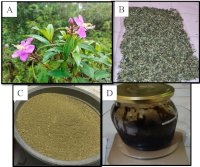
Melastoma malabathricum L. (M. malabathricum L) is traditionally used by the Anak Dalam tribes in Jambi Province to treat diarrhea and is empirically recognized for antibacterial properties, particularly as an anti-acne agent. Therefore, this study aimed to evaluate the antibacterial activity of crude extracts, fractions, and the physical stability of the liquid spray formulation derived from M. malabathricum L. leaves. For the experiment, leaves were extracted using the maceration method, and the crude extract was fractionated with liquid-liquid extraction. Antibacterial activity of crude extracts and fractions of M. malabathricum L. was tested using the disc diffusion method at concentrations of 5%, 10%, and 20% against Staphylococcus epidermidis (S. epidermidis) ATCC 12228. The results showed that all samples had antibacterial activity, namely crude extract (10.4 mm, 16.2 mm, 20.4 mm), n-hexane fraction (10.2 mm, 15 mm, 17.5 mm), ethyl acetate fraction (10.5 mm, 16.4 mm, 18.3 mm), and aqueous residue (10.3 mm, 12 mm, 16.8 mm). Ethyl acetate fraction (10%) showed the highest antibacterial effect (16.4 mm ± 0.20), while liquid spray formulation of the fraction produced a 15.7 mm ± 0.88 inhibition zone. F1 comprising ethyl acetate fraction (10%) was successfully incorporated into liquid spray formulation that showed good stability and was non-irritating. In conclusion, ethyl acetate fraction of M. malabathricum L. leaves showed the most potent antibacterial activity against S. epidermidis and remained effective after being formulated into a stable liquid spray.
Downloads
Article Details
Section

This work is licensed under a Creative Commons Attribution-NonCommercial-NoDerivatives 4.0 International License.
How to Cite
References
1.Bhate K, Williams HC. Epidemiology of acne vulgaris. Br J Dermatol. 2013; 168(3): 474-485. Doi: 10.1111/bjd.12149. DOI: https://doi.org/10.1111/bjd.12149
2.Knutsen-Larson S, Dawson AL, Dunnick CA, Dellavalle RP. Acne vulgaris: pathogenesis, treatment, and needs assessment. Dermatol Clin. 2012; 30(1): 99-106, viii-ix. Doi: 10.1016/j.det.2011.09.001. DOI: https://doi.org/10.1016/j.det.2011.09.001
3.McLaughlin J, Watterson S, Layton AM, Bjourson AJ, Barnard E, McDowell A. Propionibacterium acnes and Acne Vulgaris: New Insights from the Integration of Population Genetic, Multi-Omic, Biochemical and Host-Microbe Studies. Microorganisms. 2019; 7(5):128: 2-29. Doi: 10.3390/microorganisms7050128. DOI: https://doi.org/10.3390/microorganisms7050128
4.Foster TJ, Geoghegan JA, Ganesh VK, Höök M. Adhesion, invasion and evasion: the many functions of the surface proteins of Staphylococcus aureus. Nat Rev Microbiol. 2014; 12(1): 49-62. Doi: 10.1038/nrmicro3161. DOI: https://doi.org/10.1038/nrmicro3161
5.Severn MM, Horswill AR. Staphylococcus epidermidis and its dual lifestyle in skin health and infection. Nat Rev Microbiol. 2023; 21(2): 97-111. Doi: 10.1038/s41579-022-00780-3. DOI: https://doi.org/10.1038/s41579-022-00780-3
6.Jeverica S, El Sayed F, Čamernik P, Kocjančič B, Sluga B, Rottman M, Papst L. Growth detection of Cutibacterium acnes from orthopaedic implant-associated infections in anaerobic bottles from BACTEC and BacT/ALERT blood culture systems and comparison with conventional culture media. Anaerobe. 2020; 61:102133: 1-5. Doi: 10.1016/j.anaerobe.2019.102133. DOI: https://doi.org/10.1016/j.anaerobe.2019.102133
7.Vasam M, Korutla S, Bohara RA. Acne vulgaris: A review of the pathophysiology, treatment, and recent nanotechnology based advances. Biochem Biophys Rep. 2023; 36:101578: 1-8. Doi: 10.1016/j.bbrep.2023.101578. DOI: https://doi.org/10.1016/j.bbrep.2023.101578
8.Joffry SM, Yob NJ, Rofiee MS, Affandi MM, Suhaili Z, Othman F, Akim AM, Desa MN, Zakaria ZA. Melastoma malabathricum (L.) Smith Ethnomedicinal Uses, Chemical Constituents, and Pharmacological Properties: A Review. Evid Based Complement Alternat Med. 2012; 2012:258434: 1-48. Doi: 10.1155/2012/258434. DOI: https://doi.org/10.1155/2012/258434
9.Suleiman D, Idris AM, Ibrahim UI. Review of Pharmacognostic Features, Phytochemical Constituents and Pharmacological Actions of Melastoma malabathricum LINN (Melastomaceae). Niger J Pharm Appl Sci Res. 2018; 7(2): 7-18.
10.Anggraini T, Lewandowsky P. The exotic plants of Indonesia: Mahkota dewa (Phaleria macrocarpa), sikaduduak (Melastoma malabathricum Linn), and mengkudu (Morinda citrifolia) as potent antioxidant sources. Int J Adv Sci Eng Inf Technol. 2015; 5(2): 115-118. Doi: 10.18517/ijaseit.5.2.496. DOI: https://doi.org/10.18517/ijaseit.5.2.496
11.Novasella N, Rahmatullah S, Wirasti W, Pambudi DB. Antibacterial Activity Test of Ointment Formulation of Ethanol Extract of Senggani Leaves (Melastoma malabathricum L.) Against Staphylococcus aureus. J Ilm JOPHUS J Pharm UMUS. 2022; 3(02):104-110. Doi: 10.46772/jophus.v3i02.527. DOI: https://doi.org/10.46772/jophus.v3i02.527
12.Hainil S, Rachdiati H, Prawita D. Phytochemical Screening and Antibacterial Activity of Senduduk Leaves (Melastoma malabathricum L.). In: Proceedings of the 2nd International Conference on Contemporary Science and Clinical Pharmacy 2021 (ICCSCP 2021). 2022: 211-213. Doi: 10.2991/ahsr.k.211105.031. DOI: https://doi.org/10.2991/ahsr.k.211105.031
13.Halimah; Maryani, Y.; Krisyudhanti, E.; Wardoyo, S. Effectiveness of Secang Wood (Caesalpinia Sappan l.) in Inhibiting the Growth of Streptococcus Mutans. Trop J Nat Prod Res. 2024; 8 (6): 7504-7508. Doi: 10.26538/tjnpr/v8i6.26. DOI: https://doi.org/10.26538/tjnpr/v8i6.26
14.Sanam MUE, Detha AIR, Rohi NK. Detection of antibacterial activity of lactic acid bacteria, isolated from Sumba mare's milk, against Bacillus cereus, Staphylococcus aureus, and Escherichia coli. J Adv Vet Anim Res. 2022; 9(1): 53-58. Doi: 10.5455/javar.2022.i568. DOI: https://doi.org/10.5455/javar.2022.i568
15.Fiume MM, Bergfeld WF, Belsito DV, Hill RA, Klaassen CD, Liebler D, Marks JG Jr, Shank RC, Slaga TJ, Snyder PW, Andersen FA. Safety assessment of propylene glycol, tripropylene glycol, and PPGs as used in cosmetics. Int J Toxicol. 2012; 31(5 Suppl): 245-260. Doi: 10.1177/1091581812461381. DOI: https://doi.org/10.1177/1091581812461381
16.Martihandini N, Denada D., & Sutiswa, S. I. Formulation of Spray Gel Hand Sanitizer from Citronella Oil Using Gelling Agent Carbopol 940 and Humectant Propylene Glycol. Indones. J. Pharm. Educ. 2023: 447–455. Doi: 10.37311/ijpe.v3i3.22166. DOI: https://doi.org/10.37311/ijpe.v3i3.22166
17.Leelapornpisid P., Mungmai L., Sirithunyalug B., Jiranusornkul S., and Peerapornpisal Y. A novel moisturizer extracted from freshwater macroalga [Rhizoclonium hieroglyphicum (C.agardh) K. Tzing] for skin care cosmetic. Chiang Mai J. Sci. 2014; 41(5.2): 1195-1207.
18.Chaiwaree S, Khoothiam K, Thepmalee C, Thephinlap C, Suwannasom N. Antibacterial Activity of Acorus calamus Linn. and Litsea cubeba (Lour.) Pers. and Their Efficacy in Shower Gel Formulation. Trop. J. Nat. Prod. Res. 2021; 5(12): 2085-2091. Doi: 10.26538/tjnpr/v5i12.7.
19.Suena NM, Rahayu LR, Wijaya SC, Antari NP, Adrianta KA. Formulation and Antioxidant Activity Test of Centella asiatica Herba Extract and Moringa oleifera Leaves Extract as an Anti-Aging Emulgel. Trop. J. Nat. Prod. Res. 2024; 8(3): 6525-6536. Doi:10.26538/tjnpr/v8i3.9. DOI: https://doi.org/10.26538/tjnpr/v8i3.9
20.Apridamayanti P, Sari R, Rachmaningtyas A, Aranthi V. Antioxidant, antibacterial activity and FICI (Fractional Inhibitory Concentration Index) of ethanolic extract of Melastoma malabathricum leaves with amoxicillin against pathogenic bacteria. Nusant Biosci. 2021; 13(2): 140-147. Doi: 10.13057/nusbiosci/n130202. DOI: https://doi.org/10.13057/nusbiosci/n130202
21.Apridamayanti P, Pratiwi L, Sari R. Gas chromatography study of n-hexane and chloroform fractions of ethanol extract of Melastoma malabathricum L. Leaves: an in vitro study of antioxidant and SPF values. Int J Appl Pharm. 2022; 14(3): 40-46. Doi: 10.22159/ijpps.2022v14i3.43801. DOI: https://doi.org/10.22159/ijpps.2022v14i3.43801
22.Mayasari D, Murti YB, Sudarsono S, Pratiwi SUT. Phytochemical, antioxidant, and antibacterial evaluation of Melastoma malabathricum L.: An Indonesian traditional medicinal plant. Trop J Nat Prod Res. 2021; 5(5): 819–24. Doi: 10.26538/tjnpr/v5i5.5. DOI: https://doi.org/10.26538/tjnpr/v5i5.5
23.Zhang QW, Lin LG, Ye WC. Techniques for extraction and isolation of natural products: a comprehensive review. Chin Med. 2018; 13:20: 2-26. doi: 10.1186/s13020-018-0177-x. DOI: https://doi.org/10.1186/s13020-018-0177-x
24.Ministry of Health of the Republic of Indonesia. Indonesia Herbal Pharmacopedia. Edisi II, 2017: 4-8.
25.Lee J-E, Jayakody JTM, Kim J-I, Jeong J-W, Choi K-M, Kim T-S, Seo C, Azimi I, Hyun J, Ryu B. The Influence of Solvent Choice on the Extraction of Bioactive Compounds from Asteraceae: A Comparative Review. Foods. 2024; 13(19): 3151: 2-21. Doi: 10.3390/foods13193151. DOI: https://doi.org/10.3390/foods13193151
26.Haslina H, Eva M. Extract Corn Silk with Variation of Solvents on Yield, Total Phenolics, Total Flavonoids and Antioxidant Activity. Indones Food Nutr Prog. 2017; 14(1): 21-28. Doi: 10.22146/ifnp.24280. DOI: https://doi.org/10.22146/ifnp.24280
27.Jenkins SG, Schuetz AN. Current concepts in laboratory testing to guide antimicrobial therapy. Mayo Clin Proc. 2012; 87(3): 290-308. Doi: 10.1016/j.mayocp.2012.01.007. DOI: https://doi.org/10.1016/j.mayocp.2012.01.007
28.Periferakis A, Periferakis K, Badarau IA, Petran EM, Popa DC, Caruntu A, Costache RS, Scheau C, Caruntu C, Costache DO. Kaempferol: Antimicrobial Properties, Sources, Clinical, and Traditional Applications. International Journal of Molecular Sciences. 2022; 23(23):15054: 2-39. Doi: 10.3390/ijms232315054. DOI: https://doi.org/10.3390/ijms232315054
29.Iranshahi M, Rezaee R, Parhiz H, Roohbakhsh A, Soltani F. Protective effects of flavonoids against microbes and toxins: The cases of hesperidin and hesperetin. Life Sci. 2015; 137: 125-32. Doi: 10.1016/j.lfs.2015.07.014. DOI: https://doi.org/10.1016/j.lfs.2015.07.014
30.Shamsudin NF, Ahmed QU, Mahmood S, Ali Shah SA, Khatib A, Mukhtar S, Alsharif MA, Parveen H, Zakaria ZA. Antibacterial Effects of Flavonoids and Their Structure-Activity Relationship Study: A Comparative Interpretation. Molecules. 2022; 9;27(4):1149: 2-43. Doi: 10.3390/molecules27041149. DOI: https://doi.org/10.3390/molecules27041149
31.Ardhany SD, Putra CD, Novaryatiin S. Modification of Anti-acne Bawang Dayak (Eleutherine bulbosa (Mill.)Urb.) Cream to Propionibacterium acnes. J Adv Pharm Technol Res. 2021; 12(1): 94-98. Doi: 10.4103/japtr.JAPTR_107_20 DOI: https://doi.org/10.4103/japtr.JAPTR_107_20
32.Preedalikit W, Chittasupho C, Leelapornpisid P, Qi S, Kiattisin K. Development and Evaluation of Anti-Pollution Film-Forming Facial Spray Containing Coffee Cherry Pulp Extract. Pharmaceutics. 2025; 17(3):360: 2-25. Doi: 10.3390/pharmaceutics17030360. DOI: https://doi.org/10.3390/pharmaceutics17030360
33.Van Dam A, Van Dam AJ. DMDM-Hydantoin: The Promising Result of a Search for an Alternative in Fluid Preservation of Biological Specimens. Collect Forum. 2023; 18(2):104–15.
34.Mosiichuk N, Enggren G, Da Silva ZL, Morén AK, Hansson H, Engblom J, Ruzgas T. Antibacterial activity of propylene glycol against Staphylococcus aureus and Staphylococcus epidermidis in neutral and mild acidic conditions. J Antimicrob Chemother. 2025; 80(7):1947-1950. Doi: 10.1093/jac/dkaf153. DOI: https://doi.org/10.1093/jac/dkaf153