


In Silico Study of Green Tea and Green Coffee Compounds Inhibiting Cardiac Fibrosis in Metabolic Syndrome Via Dual Inhibition FGF23/FGFR4
Article Sidebar
Views | PDF/EPUB Downloads:
211
/ 91
/ 59
Main Article Content
Abstract
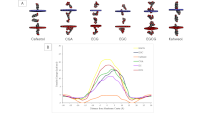
Cardiac fibrosis can occur due to various causes, including metabolic syndrome. Increased expression of FGF23, which can activate the cardiac fibrosis pathway via FGFR4, is often observed in metabolic syndrome. Meanwhile, inhibitor therapies targeting FGF23 and FGFR4 for cardiac fibrosis are minimal. Therefore, this study used green tea and coffee compounds to determine their potential as specific inhibitors of FGF23 and FGFR4 to inhibit cardiac fibrosis signaling using bioinformatics methods. Six compounds derived from green tea and coffee—cafestol, CGA, ECG, EGC, EGCG, and Kahweol—were evaluated through ADMET screening, membrane permeability prediction, toxicity prediction, molecular docking, and molecular dynamics simulations. The analysis revealed that all six compounds could pass through the phospholipid membrane, with cafestol having the lowest energy transfer value. Molecular docking and molecular dynamics analyses of FGF23 showed that cafestol and kahweol compounds had better binding affinity values (-6.2 and -5.9 kcal/mol) than the control and showed stable ligand stability and movement (~3 Å). Meanwhile, all compounds had good binding affinity and succeeded in occupying more active sites on FGFR4, with EGC, EGCG, and kahweol compounds showing the most stable stability and movement compared to other compounds against the native ligand (~3 Å). This study demonstrates that the six compounds derived from green tea and coffee have strong potential as specific inhibitors of FGF23 and FGFR4 to inhibit cardiac fibrosis signaling in metabolic syndrome conditions.
Downloads
Article Details
Section

This work is licensed under a Creative Commons Attribution-NonCommercial-NoDerivatives 4.0 International License.
How to Cite
References
1.Frangogiannis NG. Cardiac fibrosis. Cardiovasc Res. 2021 May 25;117(6):1450–88.
2.Herningtyas EH, Ng TS. Prevalence and distribution of metabolic syndrome and its components among provinces and ethnic groups in Indonesia. BMC Public Health. 2019; 19(1):1-12. doi: 10.1186/s12889-019-6711-7
3.Chen W, Chen Y. Cardiometabolic Syndrome and Vascular Calcification. Cardiometab Syndr J. 2022; 2(1):1-21. doi: 10.51789/cmsj.2022.2.e2.
4.Nakano T, Kishimoto H, Tokumoto M. Direct and indirect effects of fibroblast growth factor 23 on the heart. Front Endocrinol (Lausanne). 2023; 14: 1-8. doi: 10.3389/fendo.2023.1059179.
5.Böckmann I, Lischka J, Richter B, Deppe J, Rahn A, Fischer DC, Haineke J, Haffner D, Leifhet-Nestler, M. FGF23-Mediated Activation of Local RAAS Promotes Cardiac Hypertrophy and Fibrosis. Int J Mol Sci. 2019; 20(18): 4634: 1-16. doi: 10.3390/ijms20184634
6.Grabner A, Amaral AP, Schramm K, Singh S, Sloan A, Yanucil C, Li J, Shehadeh LA, Hare JM, David V, Martin A, Fornoni A, Di Marco GS, Kentrup D, Reuter S, Mayer AB, Pavenstädt H, Stypmann J, Kuhn C, Hille S, Frey N, Leifhet-Nestler M, Richter B, Haffner D, Abraham R, Bange J, Sperl B, Ullrich A, Brand M, Wolf M, Faul C. Activation of Cardiac Fibroblast Growth Factor Receptor 4 Causes Left Ventricular Hypertrophy. Cell Metab. 2015; 22(6): 1020–1032. doi: 10.1016/j.cmet.2015.09.002.
7.Herbert C, Schieborr U, Saxena K, Juraszek J, De Smet F, Alcouffe C, Bianciotto M, Saladino G, Sibrac D, Kudlinzki D, Sreeramulu S, Brown A, Rigon P, Herault JP, Lassalle G, Blundell TL, Rousseau F, Gils A, Schymkowitz J, Tompa P, Herbert JM, Carmeliet P, Gervasio FL, Schwalbe H, Bono F. Molecular mechanism of SSR128129E, an extracellularly acting, small-molecule, allosteric inhibitor of FGF receptor signaling. Cancer Cell. 2013; 23(4): 489–501. doi: 10.1016/j.ccr.2013.02.018.
8.Rojas-González A, Figueroa-Hernández CY, González-Rios O, Suárez-Quiroz ML, González-Amaro RM, Hernández-Estrada ZJ, Rayas-Duarte P. Coffee Chlorogenic Acids Incorporation for Bioactivity Enhancement of Foods: A Review. Molecules. 2022; 27(11): 3400: 1-23. doi: 10.3390/molecules27113400.
9.Rachmawati E, Rohman S, Sishartami LW, Sargowo D, Kalsum U. In Silico Modelling, Regulation of Cell Viability and Anti Atherosclerotic Effect in Macrophage by Decaffeinated Coffee and Green Tea Extract. PJ. 2022; 14(1):46–55. doi: 10.5530/pj.2022.14.7.
10.Lukitasari M, Rohman MS, Nugroho DA, Wahyuni NA, Nur Kholis M, Widodo N. Improvement of Cardiac Fibrosis Biomarkers through Inflammation Inhibition by Green Tea and Decaffeinated Light Roasted Green Coffee Extract Combination Administration in Metabolic Syndrome Rat Model. F1000Res. 2021; 10: 1013: 1-12. doi: 10.12688/f1000research.55468.1.
11.Daina A, Michielin O, Zoete V. SwissADME: a free web tool to evaluate pharmacokinetics, drug-likeness and medicinal chemistry friendliness of small molecules. Sci Rep. 2017; 7(1): 42717: 1-13. doi: 10.1038/srep42717.
12.Lipinski CA, Lombardo F, Dominy BW, Feeney PJ. Experimental and computational approaches to estimate solubility and permeability in drug discovery and development settings 1PII of original article: S0169-409X(96)00423-1. The article was originally published in Advanced Drug Delivery Reviews 23 (1997) 3–25. 1. Advanced Drug Delivery Reviews. 2001; 46(1–3): 3–26. doi: 10.1016/S0169-409X(00)00129-0.
13.Banerjee P, Eckert AO, Schrey AK, Preissner R. ProTox-II: a webserver for the prediction of toxicity of chemicals. Nucleic Acids Res. 2018; 46(W1):W257–263. doi:
10.1093/nar/gky318.
14.Lomize AL, Hage JM, Schnitzer K, Golobokov K, LaFaive MB, Forsyth AC, Pogozheva ID. PerMM: A Web Tool and Database for Analysis of Passive Membrane Permeability and Translocation Pathways of Bioactive Molecules. J Chem Inf Model. 2019; 22;59(7): 3094–3099. doi: 10.1021/acs.jcim.9b00225.
15.Fakhar M, Rashid S. Targeted inhibition of Klotho binding to fibroblast growth factor 23 prevents hypophosphetemia. J Mol Graph Model. 2017; 75: 9–19. doi: 10.1016/j.jmgm.2017.04.024.
16.Wu D, Guo M, Philips MA, Qu L, Jiang L, Li J, Chen X, Chen Z, Chen L, Chen Y. Crystal Structure of the FGFR4/LY2874455 Complex Reveals Insights into the Pan-FGFR Selectivity of LY2874455. Wlodawer A, editor. PLoS ONE. 2016;11(9):e0162491: 1-11. doi: 10.1371/journal.pone.0162491.
17.Krieger E, Vriend G. YASARA View - molecular graphics for all devices - from smartphones to workstations. Bioinformatics. 2014; 30(20): 2981–2982. doi: 10.1093/bioinformatics/btu426.
18.Sahu VK, Singh RK, Singh PP. Extended Rule of Five and Prediction of Biological Activity of peptidic HIV-1-PR Inhibitors. UJPP. 2022; 1(1): 20–42. doi: 10.31586/ujpp.2022.403
19.Al-Kuraishy HM, Al-Gareeb AI, Saad HM, Batiha GES. The potential effect of metformin on fibroblast growth factor 21 in type 2 diabetes mellitus (T2DM). Inflammopharmacology. 2023; 31(4):1751–1760. doi: 10.1007/s10787-023-01255-4.
20.Hollingsworth SA, Dror RO. Molecular Dynamics Simulation for All. Neuron. 2018; 99(6): 1129–1143. doi: 10.1016/j.neuron.2018.08.011.
21.Martínez L. Automatic Identification of Mobile and Rigid Substructures in Molecular Dynamics Simulations and Fractional Structural Fluctuation Analysis. Kleinjung J, editor. PLoS ONE. 2015; 10(3): e0119264: 1-10. doi: 10.1371/journal.pone.0119264.
22.Wargasetia TL, Ratnawati H, Widodo N, Widyananda MH. Bioinformatics Study of Sea Cucumber Peptides as Antibreast Cancer Through Inhibiting the Activity of Overexpressed Protein (EGFR, PI3K, AKT1, and CDK4). Cancer Inform. 2021; 20: 1-11. doi: 10.1177/11769351211031864
23.Fatriansyah JF, Boanerges AG, Kurnianto SR, Pradana AF, Fadilah null, Surip SN. Molecular Dynamics Simulation of Ligands from Anredera cordifolia (Binahong) to the Main Protease (M pro) of SARS-CoV-2. J Trop Med. 2022; 2022: 1178228: 1-13. doi: 10.1155/2022/1178228.
24.Suryono S, Amien MI, Tohari AI, Saputra AD, Hidayat MRF, Ramadhan HF. Effect of Moringa oleifera Leaf Extract on TGF-β1 and Galectin-3 Levels and Cardiac Fibrosis in Diabetic Rat. Trop J Nat Prod Res. 2024; 8(11): 8998 - 8992. doi: 10.26538/tjnpr/v8i11.4.
25.Firdausi SR, Nur'aini RAR, Izzah FN, Nabilah SN, Christina YI, Dwijayanti DR, Rahayu S, Rifa'i M, Djati MS. Elephantopus scaber Ethanol Extract Suppresses Inflammation via Regulation of the NF-κB Pathway Expression in Pulmonary Fibrosis. Trop J Nat Prod Res. 2024; 8(9): 8554-8560. doi: https://doi.org/10.26538/tjnpr/v8i9.44%20.