


Synergistic Effects of the Combination of Active Fractions of Red Ginger Rhizome (Zingiber officinale var. rubrum) with Doxorubicin on 4T1 Cells
Article Sidebar
Views | PDF/EPUB Downloads:
223
/ 116
/ 59
Main Article Content
Abstract
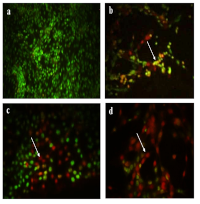
The use of chemopreventive agents in combination with chemotherapy increases the sensitivity of cancer cells, enhances the efficacy of chemotherapy, and reduces damage to healthy tissues. Red ginger rhizomes are among the natural materials that could be created as co-chemotherapy agents. The research aims to evaluate the effect of combining active fractions from red ginger rhizome with doxorubicin on the inhibition of 4T1 breast cancer cell proliferation in vitro. The extract of red ginger rhizome was obtained by maceration in 96% ethanol and fractionated using n-hexane, ethyl acetate, and a water-methanol mixture. The cytotoxicity effect was assessed using the MTT test, while proliferation inhibition and apoptosis were evaluated using the doubling time and AO/PI staining methods. The results showed that n-hexane fraction exhibited a more effective cytotoxic effect, with an IC₅₀ value of 26 µg/mL, in contrast to the ethyl acetate and water-methanol fractions, which had IC₅₀ values of 72 µg/mL and 89 µg/mL, respectively. The n-hexane fraction has a very strong synergistic effect when combined with doxorubicin, with a Combination Index (CI) value of < 0.1. Combination (n-hexane fraction 1/8 IC₅₀ with doxorubicin 1/4 IC₅₀) can extend the doubling time, and the combination (n-hexane fraction ½ IC₅₀; doxorubicin ½ IC₅₀) can induce apoptosis. The findings of this study suggest that the n-hexane fraction of red ginger rhizome has potential as a co-chemotherapy agent in combination with doxorubicin against 4T1 breast cancer cells.
Downloads
Article Details
Section

This work is licensed under a Creative Commons Attribution-NonCommercial-NoDerivatives 4.0 International License.
How to Cite
References
1. Yin L, Duan JJ, Bian XW, Yu SC. Triple-negative breast cancer molecular subtyping and treatment progress. Breast Cancer Res. 2020; 22(1): 1–13.
2. Dewi MP, Indrayudha P, Maryati, Saifudin A, Muflihah CH. Cytotoxic Activity and Antiproliferation of Soursop Seed Protein (Annona muricata) Against 4T1 Cells. Vol. 3, Proceedings of the 4th International Conference Current Breakthrough in Pharmacy (ICB-Pharma 2022). Atlantis Press International BV; 2023. 361–369 p. Available from: http://dx.doi.org/10.2991/978-94-6463-050-3_31
3. Arnold M, Morgan E, Rumgay H, Mafra A, Singh D, Laversanne M. Current and future burden of breast cancer: Global statistics for 2020 and 2040. Breast. 2022; 66:15–23. Available from: https://doi.org/10.1016/j.breast.2022.08.010
4. Sung H, Ferlay J, Siegel RL, Laversanne M, Soerjomataram I, Jemal A, Bray, F. Global Cancer Statistics 2020: Global Cancer Observatory Estimates of Incidence and Mortality Worldwide for 36 Cancers in 185 Countries. CA Cancer J Clin. 2021; 71(3): 209–249.
5. Fatmawati KI, Indrayudha P, Maryati, Saifudin A, Muflihah CH. Cytotoxic Activity of Melinjo Seed Protein (Gnetum Gnemon L.) Against 4T1 Cells and Hela Cells, and Antiproliferation Test on 4T1 Cells. Vol. 3, Proceedings of the 4th International Conference Current Breakthrough in Pharmacy (ICB-Pharma 2022). Atlantis Press International BV; 2023. 370–378 p. Available from: http://dx.doi.org/10.2991/978-94-6463-050-3_32
6. Gu H, Zhu T, Ding JL, Yang Z, Lu Y, Guo G. The association between sarcopenia and clinical outcomes among Chinese patients with triple-negative breast cancer: a retrospective study. Front Oncol. 2025; 15: 1–8.
7. Utami YP, Yulianty R, Djabir YY, Alam G. Tropical Journal of Natural Product Research from North Luwu, Indonesia, using the MTT Assay Protocol. 2025; 9(February): 756–764.
8. Adedoyin D, Ojokuku AS, Bamidele FA. The Effect of Aqueous Extract of Ocimum gratissimum On Monosodium Glutamate Induced Biochemical Changes in Albino Rats: Trop. J. Nat. Prod. Res. 2020;4(2):27-30.
9. Laksmiani NPL, Susidarti RA, Meiyanto E. Brazilein Increased Cytotoxic Activity of Doxorubicin on MCF-7/DOX Cells. Indones J Cancer Chemoprevention. 2017; 6(2): 58.
10. Musyayyadah H, Wulandari F, Nangimi AF, Anggraeni AD, Ikawati M, Meiyanto E. The Growth Suppression Activity of Diosmin and PGV-1 Co-Treatment on 4T1 Breast Cancer Targets Mitotic Regulatory Proteins. Asian Pac. J Can. Prev. 2021; 22(9): 2929–2938.
11. Haryanti S, Zulfin UM, Salsabila IA, Wulandari F, Meiyanto E. The Cytotoxic and Anti-Migratory Properties of Caesalpinia sappan and Ficus septica, in Combination with Doxorubicin on 4T1 TNBC Cells with Nephroprotective Potential. Asian Pac. J Can. Prev. 2022; 23(2): 743–753.
12. Procumbens G, Merr L. Aplikasi Ko-Kemoterapi Fraksi Etil Asetat Ekstrak Etanolik Daun Sambung Nyawa (Gynura Procumbens (Lour.) Merr.) Pada Sel Kanker Payudara Mcf-7. Pharm. Sci. Res. 2009; 6(3): 132–141.
13. Cragg GM, Pezzuto JM. Natural Products as a Vital Source for the Discovery of Cancer Chemotherapeutic and Chemopreventive Agents. Med Princ Pract. 2016; 25(2): 41–59.
14. Atanasov AG, Zotchev SB, Dirsch VM, Supuran, Claudiu T. Natural products in drug discovery: advances and opportunities. Nat Rev Drug Discov. 2021; 20(3): 200–216.
15. Ahlina FN, Nugraheni N, Salsabila IA, Haryanti S, Da’i M, Meiyanto E. Revealing the reversal effect of galangal (Alpinia galanga L.) extract against oxidative stress in metastatic breast cancer cells and normal fibroblast cells intended as a Co- chemotherapeutic and anti-ageing agent. Asian Pac J Can Prev. 2020; 21(1): 107–117.
16. Zulfin UM, Rahman A, Hanifa M, Utomo RY, Haryanti S, Meiyanto E. Reactive oxygen species and senescence modulatory effects of rice bran extract on 4T1 and NIH-3T3 cells co-treatment with doxorubicin. Asian Pac J Trop Biomed. 2021; 11(4): 174–182.
17. Rofida S, Nurani LH, Utami D, Edityaningrum CA. Cytotoxicity of Zingiber officinale var. rubrum on HeLa cells and prediction of anti-proliferative activity via the JAK2 / STAT3 and hedgehog pathways using a molecular docking approach. 2023; 13(3): 291–305.
18. Fuzer AM, Lee SY, Mott JD, Cominetti MR. [10]-Gingerol Reverts Malignant Phenotype of Breast Cancer Cells in 3D Culture. J Cell Biochem. 2017; 118(9): 2693–2699.
19. Martin ACBM, Fuzer AM, Becceneri AB, Silva JA, Tomasin R, Denoyer D, Kim SH, Mcintyre KA, Person HB, Yeo B, Nagpal A, Ling X, Araujo HSS, Viera PC, Cominetti MR, Pouliot N. 10]-Gingerol Induces Apoptosis and Inhibits
Metastatic Dissemination of Triple Negative Breast Cancer in vivo. Oncotarget. 2017; 8(42): 72260–72271.
20. Qonitah F, Ariastuti R, Pratiwi M, Wuri NA. Phytochemical Screening of Ethanol Extract of Kaffir Lime Leaves (Citrus hystrix) from Klaten Regency. Gema. 2022; 34(01): 47–51.
21. Sulistyowati CB. Cytotoxic Activity of Ethanol Extract of Ginger Rhizome (Zingiber officinale Roscoe) and Red Ginger (Zingiber officinale Roscoe var. Rubrum) against T47d Breast Cancer Cells. 2011; (Faculty of pharmacy Universitas Muhammadiyah Surakarta, Surakarta).
22. Zulfin, Maryam U, Rahman, Hanifa, Mila, Utomo, Haryanti S, Meiyanto E. Reactive oxygen species and senescence modulatory effects of rice bran extract on 4T1 and NIH-3T3 cells co-treatment with doxorubicin. Asian Pac J Trop Biomed. 2021; 11(4): 174–182.
23. Countinuing Care Retirement Community (CCRC). Prosedur Tetap Uji Pengamatan Proliferasi Sel (Doubling Time). 2009; 1–5.
24. Khazaei S, Esa NM, Ramachandran V, Hamid RA, Pandurangan AK, Etemad A, Ismail P. In vitro antiproliferative and apoptosis-inducing effect of Allium atroviolaceum bulb extract on breast, cervical, and liver cancer cells. Front Pharmacol. 2017; 8(JAN): 1–16.
25. Edityaningrum CA, Khairurrizki A, Nurani LH, Bachri MS, Yuliani S, Utami D, Kintoko, Nurkhasanah, Irham LM, Zakaria ZA. Co-Chemotherapy Effect of The Extract of Hibiscus Sabdariffa and Cisplatin Against Apoptosis and Anti-Proliferation on T47d and Vero Cells. Trop J Nat Prod Res. 2024; 8(6): 7509–7513.
26. Maryati M, Sutrisna E. Fraksi Petroleum Eter Tanaman Ceplukan (Physalis angulata L.) Menghambat Proliferasi dan Memacu Apoptosis pada Sel HeLa. Biota J Ilm Ilmu-Ilmu Hayati. 2011; 16(1): 80–87.
27. Agustina P, Haryoto, Indrayudha P. Apoptosis and Antiproliferation of Tespong Herbs (Oenanthe javanica (Blume) DC) Fraction Against MCF 7 Breast Cancer Cell. BIO Web Conf. 2024; 135: 10–14.
28. Fadlilah M. Cytotoxic Activity Test of Red Ginger Extract and Fraction (Zingiber officinale Roscoe var. rubrum) Against HeLa Cells in vitro. Masker Med. 2013; 1(September): 62–73.
29. Fitrianingsih, Maharini I, Utami DT. Development of Ethanolic Extract of Pinang Masak Jambi (Areca Catechu L.) as A Modulator of Doxorubicin Cytotoxic Effect in Breast Cancer Therapy. Pharm Sci Res. 2020; 7(1): 45–50.
30. Ifora I, Hamidi D, Susanti M, Hefni D, Wahyuni FS. Enhancing Chemotherapeutic Efficacy: Synergistic Cytotoxic Effect of Garcinia cowa Bark Extract and Doxorubicin in T47D Breast Cancer Cells. Trop J Nat Prod Res. 2025; 9(1): 67–72.
31. Maryati, Sutrisna E, Saifudin A, Kusumaningrum ID, Abu Bakar MF. Extract of ceplukan (Physalis angulata L.) inhibited proliferation and induced apoptosis in myeloma cell line. Food Res. 2019; 3(6): 755–760.
32. Niu J, Li M, Wang Y. Cell Proliferation and Cytotoxicity Assays, The Fundamentals for Drug Discovery. Int J Drug Discov Pharmacol. 2024; 100013.
33. Anggraini K, Setyaningrum DAW, Wulansari L, Andayani HT, Shihran LP, Fauziyyah I. Effect of Extraction Solvent on Extraction Yield, Cytotoxic Activity and Bioactive Compound in Zingiber officinale Roscoe var rubrum. Vol. 1. Atlantis Press International BV; 2023. 815–825 p. Available from: http://dx.doi.org/10.2991/978-94-6463-284-2_86
34. Bawadood AS, Al-Abbasi FA, Anwar F, El-Halawany AM, Al-Abd AM. 6-Shogaol suppresses the growth of breast cancer cells by inducing apoptosis and suppressing autophagy via targeting notch signaling pathway. Biomed Pharmacother. 2020; 128: 110302. DOI:10.1016/j.biopha.2020.110302
35. Lee SH, Cekanova M, Seung JB. Multiple mechanisms are involved in 6-gingerol-induced cell growth arrest and apoptosis in human colorectal cancer cells. Mol Carcinog. 2008; 47(3): 197–208.
36. Joo JH, Hong SS, Cho YR, Seo DW. 10-Gingerol inhibits proliferation and invasion of MDA-MB-231 breast cancer cells through suppression of Akt and p38MAPK activity. Oncol Rep. 2016;35(2):779–784.
37. Yang S, Zhao Q, Xiang H, Liu M, Zhang Q, Xue W, Song B, Yang S. Antiproliferative activity and apoptosis-inducing mechanism of constituents from Toona sinensis on human cancer cells. Cancer Cell Int. 2013; 13(1): 1–8.
38. Rahwawati J, Maryati M, Yuliani R. Cytotoxic and Antiproliferation Activity of n-Hexane Fraction of Avocado seed (Persea americana Mill.) on MCF7 cell. Pharmacon J Farm Indones. 2022; 19(1): 35–44.
39. Sarmoko, Solihati I, Setyono J, Ekowati H, Fadlan A. Zingiber officinale Var. rubrum extract increases the cytotoxic activity of 5-fluorouracil in colon adenocarcinoma Widr cells. Indones J Pharm. 2020; 31(4): 266–272.
40. Zhang S, Kou X, Zhao H, Mak KK, Balijepalli MK, Pichika MR. Zingiber officinale var. rubrum: Red Ginger's Medicinal Uses. Molecules. 2022; 27(3).
41. Zhang M, Zhao R, Wang D, Wang L, Zhang Q, Wei S, Wei S, Lu F, Peng W, Wu C. Ginger (Zingiber officinale Rosc.) and its bioactive components are potential resources for health beneficial agents. Phyther Res. 2021; 35(2): 711–742.