


Qualitative and Quantitative Estimation of Glycosides in Stevia rebaudiana Bertoni Callus Cultures under the Influence of Various Growth Regulators
Article Sidebar
Views | PDF/EPUB Downloads:
0
/ 0
/ 0
Main Article Content
Abstract
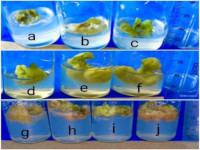
Stevia rebaudiana Bertoni is a novel natural sweetener and hypoglycemic plant. It has many diterpenoid glycosides with no negative effect on the sugar levels of the blood and no calories, although its sweetness is 300 times more than sugar. Traditional propagation methods for S. rebaudiana include seed planting and stem cutting but are limited by small seed size, poor seed viability, and limited availability of stem cuttings. The current research assessed the impact of plant growth regulators (PGRs) on the formation and proliferation of callus and quantified glycosides produced in callus tissues, aiming to maximize yields for medicinal, industrial, and commercial applications. Different combinations and concentrations of PGRs: 2,4-dichlorophenoxyacetic acid (2,4-D) with kinetin (Kin), naphthalene acetic acid (NAA) with 6-benzyl adenine (BA), and 0.1, 0.5, and 1.0 mg/L of thidiazuron (TDZ) in combination with 4.0 mg/L NAA and 1.0 mg/L BA, were evaluated to determine the most effective treatment for inducing callus formation from leaf explants. High-performance liquid chromatography was used to analyze the glycosides that were extracted from the tissues of the leaves and calli. The interaction of 2, 4-D and Kin exhibited a weak response in inducing callus formation. In contrast, the combination of 4.0 mg/L NAA and 1.0 mg/L BA was the most effective for callus development and rebaudiosides accumulation. Moreover, supplementation with 1.0 mg/L TDZ alongside 4.0 mg/L NAA and 1.0 mg/L BA resulted in the highest accumulation of stevioside. The study’s findings revealed that effective PGR combinations enhanced callus formation and glycoside accumulation in Stevia.
Downloads
Article Details
Section

This work is licensed under a Creative Commons Attribution-NonCommercial-NoDerivatives 4.0 International License.
How to Cite
References
1.Hossain MF, Islam MT, Islam MA, Akhtar S. Cultivation and uses of Stevia (Stevia rebaudiana Bertoni): A review. Afr J Food Agric Nutr Dev. 2017;17(4):12745–12757.
2.Momtazi-Borojeni AA, Esmaeili SA, Abdollahi E, Sahebkar A. A review on the pharmacology and toxicology of steviol glycosides extracted from Stevia rebaudiana. Curr Pharm Des. 2016;23(11):1616–1622.
3.Sattarovich SA, Mamatkulovich BA. Bioecology of Melissa officinalis plant in introduction conditions. Am J Agric Biomed Eng. 2020;2(10):69–73.
4.Suresh V, Preethi Fetricia J, Saranya V, Sarithra S, Tamilselvan K. Uses of stevia (Stevia rebaudiana). J Med Plants Stud. 2018;6(2):247–248.
5.Youssef MA, Yousef AF, Ali MM, Ahmed AI, Lamlom SF, Strobel WR, Kalaji HM. Exogenously applied nitrogenous fertilizers and effective microorganisms improve plant growth of Stevia (Stevia rebaudiana Bertoni) and soil fertility. AMB Express. 2021;11:133–143.
6.Gunasena MDKM, Senarath WTPSK. In vitro plant regeneration of Stevia rebaudiana through indirect organogenesis. Int J Bot Stud. 2019;4(4):199–203.
7.Yadav AK, Singh S, Dhyani D, Ahuja PS. A review on the improvement of stevia [Stevia rebaudiana (Bertoni)]. Can J Plant Sci. 2011; 91(1):1–27.
8.Kumar S, Pandey AK. Chemistry and biological activities of flavonoids: An overview. Sci World J. 2013; 2013:162750.
9.Abdullateef RA, Osman MB, Zainuddin ZB. Acclimatized apparatus enhanced seed germination in Stevia rebaudiana Bertoni. Int J Biol. 2015; 7(2):28–34.
10.Lone SM, Hussain K, Malik A, Magray M, Hussain SM, Rashid M. Plant propagation through tissue culture – a biotechnological intervention. Int J Curr Microbiol Appl Sci. 2020;9(7):2176–2190.
11.Angelini LG, Martini A, Passera B, Tavarini S. Cultivation of Stevia rebaudiana Bertoni and associated challenges. In: Sweeteners. 2018. p. 35–85.
12.Chandran H, Meena M, Barupal T, Sharma K. Plant tissue culture as a perpetual source for production of industrially important bioactive compounds. Biotechnol Rep. 2020; 26:e00450.
13.Ochoa-Villarreal M, Howat S, Hong S, Jang MO, Jin YW, Lee EK. Plant cell culture strategies for the production of natural products. BMB Rep. 2016; 49(3):149–158.
14.Nurfarahin AH, Mohamed MS, Phang LY. Culture medium development for microbial-derived surfactants production—an overview. Molecules. 2018; 23(5):1049-1054.
15.Hesami M, Naderi R, Tohidfar M, Yoosefzadeh-Najafabadi M. Development of support vector machine-based model and comparative analysis with artificial neural network for modeling plant tissue culture procedures: effect of plant growth regulators on somatic embryogenesis of chrysanthemum, as a case study. Plant Methods. 2020; 16(1):1–15.
16.Rashid MA, Ding P, Hassan SA. Effects of light sources and drying methods on plant growth and steviol glycoside content of Stevia rebaudiana Bertoni. J Trop Plant Physiol. 2021; 13(1):1–14.
17.Mahmud S, Akter S, Jahan IA, Khan S, Khaleque A, Islam S. Comparative analyses of stevioside between fresh leaves and in vitro derived callus tissue from Stevia rebaudiana Bert. Using HPLC. Bangladesh J Sci Ind Res. 2014; 49(4):199–204.
18.Alwash BM, Hamad SF. The effect of biotic and abiotic elicitors on dianthalexin production from the callus of Dianthus caryophyllus. Int J ChemTech Res. 2017; 10(6):25–30.
19.Cary N. Statistical analysis system: User’s guide. Version 9. Cary (NC): SAS Institute Inc; 2012.
20.Zahri F, Abedini M, Razavi SM. Tissue culture and production of volatile secondary metabolites from callus of Stevia rebaudiana at different combinations of plant growth regulators. J Plant Process Funct. 2019; 7(28):51–60.
21.Gupta P, Sharma S, Saxena S. Callusing in Stevia rebaudiana (natural sweetener) for steviol glycoside production. Int J Agric Biol Sci. 2010; 1(1):30–34.
22.Ferdous J. Callus induction and plant regeneration of Stevia rebaudiana (Bertoni). [Doctoral dissertation, Department of Biotechnology]. Dhaka: Sher-e-Bangla Agricultural University; 2015.
23.Mohammed SU, Mohammad SHC, Mohammad BU, Romel A, Bateb MA. In vitro propagation of Stevia rebaudiana Bertoni in Bangladesh. Afr J Biotechnol. 2006; 5(13):1238–1240.
24.Malik SI, Rashid H, Yasmin T, Minhas NM. Effect of 2, 4-dichlorophenoxyacetic acid on callus induction from mature wheat (Triticum aestivum L.) seeds. Int J Agric Biol. 2003; 6:156–159.
25.Blinstrubienė A, Burbulis N, Juškevičiūtė N, Vaitkevičienė N, Žūkienė R. Effect of growth regulators on Stevia rebaudiana Bertoni callus genesis and influence of auxin and proline on steviol glycosides, phenols, flavonoids accumulation, and antioxidant activity in vitro. Molecules. 2020; 25(12):2759-2775.
26.Razavi SM, Zahri F, Abedini M. Tissue culture and production of volatile secondary metabolites from callus of Stevia rebaudiana at different combinations of plant growth regulators. J Plant Process Funct. 2019; 7(28):51–60.
27.Karim Z, Uesugi D, Nakayama N, Hossain MM, Ishihara K, Hamada H. Identification of stevioside using tissue culture-derived Stevia rebaudiana leaves. Biochem Insights. 2015; 8(2):33–37.
28.Rahim ZHA, Jawad LK. The role of growth regulators in the multiplication of Stevia rebaudiana Bertoni shoot and callus induction in vitro. Diyala Agric Sci J. 2021; 13(2):24–31.
29.Mohammed IS, Al-Bayati A, Hashim ST, Saleh TH, Laftaah BA, Hasoon BA. The effect of zinc oxide on inhibition of Candida albicans isolated from leukemia patients. Microbial Biosystems. 2025 Jun 1;10(2):202-212.
30.Jassim TS, Al-Fendi AM, Hashim ST, Saleh TH, Al-Rubaii BA. Molecular detection of Rubella virus (1E genotype) in clinical sample of pregnant women, and it’s related to abortion. Репродуктивне здоров'я жінки. 2025 May 23(3):113-8.
31.Abdullah MM, AL-Rubaii BA. Effect of Lactobacillus supernatant on swarming-related gene expression in Proteus mirabilis isolated from urinary tract infections. Ukrainian Journal of Nephrology and Dialysis. 2024; 4(84):39-48.
32.Husain AG, Alrubaii BA. Molecular detection and expression of virulence factor encoding genes of Pseudomonas aeruginosa isolated from clinical samples. Biomedicine. 2023 Nov 9; 43(5):1514-9.
33.Ramawat KG, Mérillon JM. Bioactive molecules and medicinal plants. Berlin: Springer; 2008 Oct 16.
34.Al-Zubaidy NA, Ibrahim MM, Musstta MA. The effect of growth regulators and different concentrations of sucrose in callus induction of sugar leaf plant Stevia rebaudiana and its content of stevoiside. Plant Arch. 2020; 20:4492-6.