


Cytotoxic Activity Against Breast Cancer of Ethyl Acetate Fraction of the Fruiting Bodies Ganoderma multiplicatum through Inducing Apoptosis
Article Sidebar
Views | PDF/EPUB Downloads:
0
/ 0
/ 0
Main Article Content
Abstract
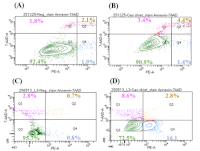
Breast cancer remains the most frequently diagnosed malignancy among women worldwide, underscoring the need for safer and more effective therapeutic agents, particularly those derived from natural medicinal resources. This study evaluated the cytotoxic and apoptosis-inducing activities of the ethyl acetate fraction (GMEA) obtained from the 96% ethanol extract of Ganoderma multiplicatum (GME) against human breast cancer MCF-7 cells. Triterpenoid quantification using the vanillin assay revealed enrichment of these compounds in GMEA (5.84 ± 1.41 mg/g) compared with GME (4.83 ± 0.40 mg/g). GMEA significantly reduced MCF-7 cell viability in a dose-dependent manner, with an IC50 value of 147.69 µg/mL after 48 h. Flow cytometry demonstrated marked increases in both early (0.8% -16.1%) and late apoptosis (0.7% - 2.8%). Importantly, GMEA exhibited minimal cytotoxicity toward human fibroblasts at concentrations ≤ 400 µg/mL, suggesting selective activity against cancer cells. Collectively, these findings indicate that triterpenoid enriched fraction from Ganoderma multiplicatum exert cytotoxic effects through apoptosis induction and highlight this species as a promising and underexplored source of natural anticancer agents.
Downloads
Article Details
Section

This work is licensed under a Creative Commons Attribution-NonCommercial-NoDerivatives 4.0 International License.
How to Cite
References
1.Bray F, Laversanne M, Sung H, Ferlay J, Siegel RL, Soerjomataram I, Jemal A. Global cancer statistics 2022: GLOBOCAN estimates of incidence and mortality worldwide for 36 cancers in 185 countries. CA Cancer J Clin. 2024;74(3):229–263.
2.Devereux S, Hatton MQ, Macbeth FR. Immediate side effects of large fraction radiotherapy. Clin Oncol. 1997;9(2):96–99.
3.Ehrke MJ. Immunomodulation in cancer therapeutics. Int Immunopharmacol. 2003;3(8):1105–1119.
4.Maduro JH, Pras E, Willemse PHB, de Vries EGE. Acute and long-term toxicity following radiotherapy alone or in combination with chemotherapy for locally advanced cervical cancer. Cancer Treat Rev. 2003;29(6):471–488.
5.Melfi F, Carradori S, Mencarelli N, Campestre C, Gallorini M, Di Giacomo S, Di Sotto A. Natural products as a source of new anticancer chemotypes. Expert Opin Ther Pat. 2023;33(11):721–744.
6.Chunarkar-Patil P, Kaleem M, Mishra R, Ray S, Ahmad A, Verma D, Bhayye S, Dubey R, Singh HN, Kumar S. Anticancer Drug Discovery Based on Natural Products: From Computational Approaches to Clinical Studies. Biomedicines. 2024;12(1):201.
7.Venturella G, Ferraro V, Cirlincione F, Gargano ML. Medicinal Mushrooms: Bioactive Compounds, Use, and Clinical Trials. Int J Mol Sci. 2021;22(2):634.
8.De Silva DD, Rapior S, Fons F, Bahkali AH, Hyde KD. Medicinal mushrooms in supportive cancer therapies: an approach to anti-cancer effects and putative mechanisms of action. Fungal Divers. 2012;55(1):1–35.
9.Seethapathy P, Subramani T, Ayrilmis N, Patil H. Therapeutic and environmental potential of mushrooms in ancient and modern contexts: A Review. IJM. 2025;27(4).
10.Rahayu S, Rohmatika A, Islamatasya U, Herdiansyah M, Susilo R, Hayaza S, Santoso D, Anggarda OY, Wahyuningsih SPA, Darmanto W. Potential of Ganoderma applanatum extract as anticancer and immunomodulator in diethylnitrosamine-induced colon cancer. Trop. J Nat Prod Res. 2025;9(9):4310–20.
11.Li P, Deng YP, Wei XX, Xu JH. Triterpenoids from Ganoderma lucidum and their cytotoxic activities. Nat Prod Res. 2013;27(1):17–22.
12.Galappaththi MCA, Patabendige NM, Premarathne BM, Hapuarachchi KK, Tibpromma S, Dai DQ, Suwannarach N, Rapior S, Karunarathna SC. A review of Ganoderma triterpenoids and their bioactivities. Biomolecules. 2023;13(1):24.
13.Li X, Xie Y, Yang BB. Characterizing novel anti-oncogenic triterpenoids from Ganoderma. Cell Cycle. 2017;17(5):527–528.
14.Hu H, Ahn NS, Yang X, Lee YS, Kang KS. Ganoderma lucidum extract induces cell cycle arrest and apoptosis in MCF-7 human breast cancer cell. Int J Cancer. 2002 Nov 20;102(3):250–253.
15.Liu YW, Gao JL, Guan J, Qian ZM, Feng K, Li SP. Evaluation of antiproliferative activities and action mechanisms of extracts from two species of Ganoderma on tumor cell lines. J Agric Food Chem. 2009;57(8):3087–3093.
16.Azahar NI, Swan SY, Mohd Mokhtar N, Abd Aziz MA, Arifin MA. Evaluation of antioxidant, antibacterial and anticancer activities of Ganoderma lucidum extracts. Mater Today Proc. 2024;107:82–91.
17.Smina TP, Nitha B, Devasagayam TPA, Janardhanan KK. Ganoderma lucidum total triterpenes induce apoptosis in MCF-7 cells and attenuate DMBA induced mammary and skin carcinomas in experimental animals. Mutat Res Genet Toxicol Environ Mutagen. 2017;813:45–51.
18.Rašeta M, Kebert M, Mišković J, Kostić S, Kaišarević S, Stilinović N, Vukmirović S, Karaman M. Ganoderma pfeifferi Bres. and Ganoderma resinaceum Boud. as potential therapeutic agents: A comparative study on antiproliferative and lipid-lowering properties. J Fungi. 2024;10(7):501.
19.Steyaert RL. Study of Some Ganoderma Species. Bull Jard Bot Natl Belg. 1980;50(1/2):135–186.
20.Luangharn T, Karunarathna SC, Dutta AK, Paloi S, Promputtha I, Hyde KD, Xu J, Mortimer PE. Ganoderma (Ganodermataceae, Basidiomycota) species from the Greater Mekong subregion. J Fungi. 2021;7(10):819.
21.Hapuarachchi KK, Karunarathna SC, Raspé O, De Silva KHWL, Thawthong A, Wu XL, Kakumyan P, Hyde KD, Wen TC. High diversity of Ganoderma and Amauroderma (Ganodermataceae, Polyporales) in Hainan Island, China. Mycosphere. 2018;9(5):931–982.
22.Bolaños A, Bononi V, Gugliotta A. New records of Ganoderma multiplicatum (Mont.) Pat. (Polyporales, Basidiomycota) from Colombia and its geographic distribution in South America. Check List. 2016;12(4):1–7.
23.Silva L, Silva L, Sá A, Naves L, Cunha E, Santos S. Additions to the knowledge of Ganodermataceae in brazilian Cerrado. Hoehnea. 2019;47:e852019.
24.Fiske MS, Hande D. Nutraceutical Value of Ganoderma species from Melghat Forest of Maharashtra. J Emerg Technol Innov Res. 2019;6(11):982–995.
25.Khan F, Mukhtar T. Morphological characterization of Ganoderma species from Murree hills of Pakistan. Plant Protect. 2019;3:73–84.
26.Nguyen TTT, Le NTT, Nguyen TK, Nguyen HVT, Nguyen HD, Tran, LT, Van KTP, Tran MH. (2022). Morphology and phylogeny of five new Ganodermataceae (Polyporales) Species for Vietnam. Research Aspects in Biological Science, 2022;4:17–47.
27.Arroyo-Cruz LV, Sagardía-González S, Miller K, Ling T, Rivas F, Martínez-Montemayor MM. Selective antineoplastic potential of fractionated caribbean native Ganoderma species extracts on triple-negative breast cancer cells. Pharmaceuticals. 2024;17(7):864.
28.Nguyen TTT, Nguyen TTT, Nguyen HD, Nguyen TK, Pham PTV, Tran LT, Tran LTT, Tran MH. Integrating in silico and in vitro studies to screen anti-Staphylococcus aureus activity from Vietnamese Ganoderma multiplicatum and Ganoderma sinense. Nat Prod Commun. 2023;18(4):1934578X231167289.
29.Lu J, Qin JZ, Chen P, Zhao SJ. Quality difference study of six varieties of Ganoderma lucidum with different origins. Front Pharmacol. 2012;3.
30.Hiai S, Oura H, Nakajima T. Color reaction of some sapogenins and saponins with vanillin and sulfuric acid. Planta Med. 2009;29:116–122.
31.Meerloo J van, Kaspers GJL, Cloos J. Cell Sensitivity Assays: The MTT assay. In: Cree IA, editor. Cancer Cell Culture: Methods and Protocols. Totowa, NJ: Humana Press; 2011; 237–245.
32.Abbasi BA, Iqbal J, Mahmood T, Khalil AT, Ali B, Kanwal S, et al. Role of dietary phytochemicals in modulation of miRNA expression: Natural swords combating breast cancer. Asian Pac J Trop Med. 2018;11(9):501.
33.Mau JL, Lin HC, Chen CC. Antioxidant properties of several medicinal mushrooms. J Agric Food Chem. 2002;50(21):6072–6077.
34.Shamaki B, Geidam Y, Abdulrahma F, Ogbe A, Sandabe U. Evaluation of phytochemical constituents and in vitro antibacterial activity of organic solvent fractions of Ganoderma lucidum methanolic extract. J Med Plant Res. 2012;1(3):026–031.
35.Jargalmaa S, Eimes JA, Park MS, Park JY, Oh SY, Lim YW. Taxonomic evaluation of selected Ganoderma species and database sequence validation. PeerJ. 2017;5:e3596.
36.Hu H, Ahn NS, Yang X, Lee YS, Kang KS. Ganoderma lucidum extract induces cell cycle arrest and apoptosis in MCF-7 human breast cancer cell. Int J Cancer. 2002;102(3):250–253.
37.Sen-In O, Mee-Sook L. Effects of antioxidative stress, antimutagenicity and cytotoxicity of cancer cells in fractional extracts from Ganoderma lucidum Karst. Korean J Food Cook Sci. 2005;21(6):759–768.
38.E R, Naik P, N KM, Laha S. Apoptosis-mediated anticancer activity of Ganoderma colossus (Agaricomycetes) extracts in breast cancer cells. Int J Med Mushrooms. 2023;25(10):23–37.
39.Nguyen TTT, Pham PTV, Nguyen VAT, Nguyen TTT, Tran LT, Truong PCH, Tran MH. Taxonomic characterization and cytotoxic potential of Vietnamese Ganoderma ellipsoideum against human breast cancer MCF-7 cells. PLOS One. 2025;20(11): e0336024.
40.International Organization for Standardization. ISO 10993-5:2009 – Biological evaluation of medical devices – Part 5: Tests for in vitro cytotoxicity.
41.Kladar NV, Gavarić NS, Božin BN. Ganoderma: Insights into anticancer effects. Eu J Cancer Prev. 2016;25:5
42.Suárez-Arroyo IJ, Loperena-Alvarez Y, Rosario-Acevedo R, Martínez-Montemayor MM. Ganoderma spp.: A promising adjuvant treatment for breast cancer. Medicines. 2017; 4(1):15.
43.Wu G, Qian Z, Guo J, Hu D, Bao J, Xie J, Xu W, Lu J, Chen X, Wang Y. Ganoderma lucidum extract induces G1 cell cycle arrest, and apoptosis in human breast cancer cells. Am J Chin Med. 2012;40(3):631-42.
Ramírez-Gutiérrez JC, Ayala-Zavala JF, Torres-Moreno H, Vidal-Gutiérrez M, Esqueda M. Can Ganoderma triterpenoids exert immunogenic cell death in human cancer cells? A systematic review and protein network analysis. Pharmaceuticals (Basel). 2025;18(11):1641.