Rapid Spectroscopy-based Fingerprinting Combined with Data Fusion Chemometrics of Amaranthus tricolor L. for Growing Environment Discrimination
DOI:
https://doi.org/10.26538/tjnpr/v9i10.33Keywords:
Amaranthus tricolor L., Ultraviolet-Visible, Fourier Transform Infrared, Data Fusion, Chemometrics, Hydroponics, Soil-GrownAbstract
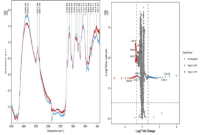
Amaranthus tricolor L. is a nutrient-rich plant with significant health-promoting properties, making it a valuable candidate for functional foods and therapeutic applications. This study investigated the effect of the cultivation environment on the metabolite composition of A. tricolor L. by comparing soil- and hydroponically grown samples. Spectral analysis using ultraviolet-visible (UV-Vis) and Fourier transform infrared (FTIR) spectroscopy, combined with chemometric data fusion, was conducted to assess the metabolic profiles. Principal component analysis (PCA) and orthogonal partial least squares discriminant analysis (OPLS-DA) were performed to evaluate the data, facilitating robust classification and accurate identification of the key metabolites. Volcano plot analysis indicated that the soil-grown plants accumulated higher levels of phenolics and flavonoids, whereas hydroponic cultivation favored the synthesis of photosynthetic pigments and membrane lipids. The PCA revealed distinct separation between the groups, with PC1 explaining 84.8% and 69.2% of the FTIR and UV-Vis variance, respectively. OPLS-DA models exhibited the highest classification accuracy (100%) with R²Y > 0.99 and Q² > 0.98. Notably, low-level data fusion further enhanced discrimination, increasing predictive variance to 76.0% and capturing subtle metabolic differences that single techniques cannot detect. These results suggested that soil cultivation promotes a defensive metabolic strategy that enhances the antioxidant capacity, whereas hydroponic systems support growth-oriented metabolism. The integrative chemometric and data fusion approach provided a comprehensive metabolomic fingerprint, offering valuable insights into the optimization of cultivation practices to enhance the nutritional and functional values of A. tricolor L.
References
1 Sarker U, Oba S, Ullah R, Bari A, Ercisli S, Skrovankova S, Adamkova A, Zvonkova M, Mlcek J. Nutritional and bioactive properties and antioxidant potential of Amaranthus tricolor, A. lividus, A viridis, and A. spinosus leafy vegetables. Heliyon. 2024; 10(9): e30453. Doi: 10.1016/j.heliyon.2024.e30453.
2 Shukla S, Bhargava A, Chatterjee A, Srivastava J, Singh N, Singh SP. Mineral profile and variability in vegetable amaranth (Amaranthus tricolor). Plant Foods Hum Nutr. 2006; 61(1): 23-28. Doi: 10.1007/3-7643-7438-1_3.
3 Sarker U, Islam MdT, Oba S. Salinity stress accelerates nutrients, dietary fiber, minerals, phytochemicals and antioxidant activity in Amaranthus tricolor leaves. PLoS One. 2018; 13(11): e0206388. Doi: 10.1371/journal.pone.0206388.
4 Sumarmi S, Arlinda M, Sukirno S. The Effectiveness of Red Spinach (Amaranthus tricolor L.) and Green Spinach (Amaranthus hybridus L.) Extracts for Bacillus thuringiensis var. kurstaki Protectant against UVB Radiation for the Control of Armyworm (Spodoptera litura Fab.). J Trop Biodivers Biotechnol. 2020; 5(2): 143-148. Doi: 10.22146/jtbb.53004.
5 Jang S, Shim J, Choe Y, Kim SJ, Kim TW. Biochemical analysis of Betalain Biosynthesis and Photosynthesis of Amaranth (Amaranthus tricolor L.) by Dessication under high-temperature. In: The 8th World Congress on New Technologies. Prague, 2022 doi:10.11159/icepr22.139.
6 Jeong WT, Bang J-H, Han S, Hyun TK, Cho H, Lim H Bin, Chung J-W. Establishment of a UPLC-PDA/ESI-Q-TOF/MS-Based Approach for the Simultaneous Analysis of Multiple Phenolic Compounds in Amaranth (A. cruentus and A. tricolor). Molecules. 2020; 25(23): 5674. Doi: 10.3390/molecules25235674.
7 Fei P, Feng H, Wang Y, Kang H, Xing M, Chang Y, Guo L, Chen J. Amaranthus tricolor crude extract inhibits Cronobacter sakazakii isolated from powdered infant formula. J Dairy Sci. 2020; 103(11): 9969-9979. Doi: 10.3168/jds.2020-18480.
8 House NC, Puthenparampil D, Malayil D, Narayanankutty A. Variation in the polyphenol composition, antioxidant, and anticancer activity among different Amaranthus species. S Afr J Bot. 2020; 135: 408-412. Doi: 10.1016/j.sajb.2020.09.026.
9 Gins MS, Gins VK, Motyleva SM, Kulikov IM, Medvedev SM, Pivovarov VF, Mertvishcheva ME. Metabolites with Antioxidant and Protective Functions from Leaves of Vegetable Amaranth (Amaranthus tricolor L.). Agric Biol. 2017; 52(5): 1030-1040. Doi: 10.15389/agrobiology.2017.5.1030eng.
10 Spórna-Kucab A, Tekieli A, Kisiel A, Grzegorczyk A, Skalicka-Woźniak K, Starzak K, Wybraniec S. Antioxidant and Antimicrobial Effects of Baby Leaves of Amaranthus tricolor L. Harvested as Vegetable in Correlation with Their Phytochemical Composition. Molecules. 2023; 28(3): 1463. Doi: 10.3390/molecules28031463.
11 Li-wei G, Wang Y, Bi X, Duo K, Sun Q, Yun X, Zhang H, Peng F, Han J. Antimicrobial Activity and Mechanism of Action of the Amaranthus Tricolor Crude Extract Against Staphylococcus Aureus and Potential Application in Cooked Meat. Foods. 2020; 9(3): 359. Doi: 10.3390/foods9030359.
12 Bala VC, Abid M. Neuroprotective Effect of Hydroalcoholic Extract of Amaranthus tricolor Leaves On Experimental. Asian J Pharm Clin Res. 2020; 13: 181-186. Doi: 10.22159/ajpcr.2020.v13i6.37181.
13 Ehi-Omosun MB, Omoko OG. Effects of Aqueous Leaf Extract of Amaranthus tricolor On the Liver of the Adult Wistar Rat. Journal of Applied Sciences and Environmental Management. 2023; 27(4): 879-882. Doi: 10.4314/jasem.v27i4.33.
14 Bihani GV, Bodhankar SL, Kadam PP, Zambare GN. Anti-nociceptive and anti-inflammatory activity of hydroalcoholic extract of leaves of Amaranthus tricolor L. Pharm Lett. 2013; 5(3): 48-55.
15 Hameed MK, Umar W, Razzaq A, Aziz T, Maqsood MA, Wei S, Niu Q, Huang D, Chang L. Differential Metabolic Responses of Lettuce Grown in Soil, Substrate and Hydroponic Cultivation Systems under NH4+/NO3− Application. Metabolites. 2022; 12(5): 444. Doi: 10.3390/metabo12050444/S1.
16 Lin Z, Li G, Zhang H, Ji R, Xu Y, Xu G, Li H, Liu Z, Luo W, Qiu Y, Qiu S, Tang H. Metabolic characteristics of taste differences under the soil and hydroponic cultures of sweet potato leaves by using non-targeted metabolomics. bioRxiv. 2021; 93(12). Doi: 10.1101/2021.02.24.432602.
17 Giri L, Angmo JC, Hussain M, Singh B, Bhatt ID, Nautiyal S. Hydroponic culture improves growth and secondary metabolite production in Rheum tibeticum, a near threatened species from the Ladakh Trans-Himalayan region of India. Plant Biosystems. 2025; 159(2): 356-368. Doi: 10.1080/11263504.2025.2468727.
18 Zantanta N, Kambizi L, Etsassala NGER, Nchu F. Comparing Crop Yield, Secondary Metabolite Contents, and Antifungal Activity of Extracts of Helichrysum odoratissimum Cultivated in Aquaponic, Hydroponic, and Field Systems. Plants. 2022; 11(20): 2696. Doi: 10.3390/plants11202696.
19 Buitrago-Villanueva I, Barbosa-Cornelio R, Coy-Barrera E. Specialized Metabolite Profiling-Based Variations of Watercress Leaves (Nasturtium officinale R.Br.) from Hydroponic and Aquaponic Systems. Molecules. 2025; 30(2): 406. Doi: 10.3390/molecules30020406.
20 Hu L, Wu Z, Robert CAM, Ouyang X, Züst T, Mestrot A, Xu J, Erb M. Soil chemistry determines whether defensive plant secondary metabolites promote or suppress herbivore growth. In: Proceeding of the National Academy of Sciences of the United States of America. 2021, p e2109602118.
21 Arifah MF, Hastuti AA, Rohman A. Utilization of UV-visible and FTIR spectroscopy coupled with chemometrics for differentiation of Indonesian tea: an exploratory study. Indones J Pharm. 2022; 33: 200-207. Doi: 10.22146/ijp.3795.
22 Sharma A, Mazumdar B, Keshav A. Extraction and Phytochemical Analysis of Coccinia indica Fruit Using UV-VIS and FTIR Spectroscopy. In: International Conference on Biomedical Engineering Science and Technology: Roadway from Laboratory to Market. Springer Nature: Chhattisgarh, India, 2021, pp 1-7.
23 Rafi M, Rismayani W, Sugiarti RM, Syafitri UD, Wahyuni WT, Rohaeti E. FTIR-based fingerprinting combined with chemometrics for discrimination of Sonchus arvensis leaves extracts of various extracting solvents and the correlation with its antioxidant activity. Indones J Pharm. 2021; 32: 132-140. Doi: 10.22146/ijp.755.
24 Cavdaroglu C, Ozen B. Applications of UV–Visible, Fluorescence and Mid-Infrared Spectroscopic Methods Combined with Chemometrics for the Authentication of Apple Vinegar. Foods. 2023; 12(6): 1139. Doi: 10.3390/foods12061139.
25 Azcarate SM, Ríos-Reina R, Amigo JM, Goicoechea HC. Data handling in data fusion: Methodologies and applications. TrAC. 2021; 143: 116355. Doi: 10.1016/j.trac.2021.116355.
26 Sarker U, Oba S. Polyphenol and flavonoid profiles and radical scavenging activity in leafy vegetable Amaranthus gangeticus. BMC Plant Biol. 2020; 20(1): 499. Doi: 10.1186/s12870-020-02700-0.
27 Mabasa XE, Mathomu LM, Madala NE, Musie EM, Sigidi MT. Molecular Spectroscopic (FTIR and UV-Vis) and Hyphenated Chromatographic (UHPLC-qTOF-MS) Analysis and In Vitro Bioactivities of the Momordica balsamina Leaf Extract. Biochem Res Int. 2021; 2021(1): 1-12. Doi: 10.1155/2021/2854217.
28 Nyonje WA, Schafleitner R, Abukutsa-Onyango M, Yang RY, Makokha A, Owino W. Precision phenotyping and association between morphological traits and nutritional content in Vegetable Amaranth (Amaranthus spp.). J Agric Food Res. 2021; 5: 100165. Doi: 10.1016/J.JAFR.2021.100165.
29 Verdoliva SG, Gwyn-Jones D, Detheridge A, Robson P. Controlled comparisons between soil and hydroponic systems
reveal increased water use efficiency and higher lycopene and β-carotene contents in hydroponically grown tomatoes. Sci Hortic. 2021; 279: 109896. Doi: 10.1016/j.scienta.2021.109896.
30 He Z, Liu Y, Kim HJ, Tewolde H, Zhang H. Fourier transform infrared spectral features of plant biomass components during cotton organ development and their biological implications. J. Cotton Sci. 2022; 5(1): 11. Doi: 10.1186/s42397-022-00117-8.
31 Chaturvedi S, Gupta P. Evaluation of Bioactive Metabolites and Antioxidant-Rich Extracts of Amaranths with Possible Role in Pancreatic Lipase Interaction: In Silico and In Vitro Studies. Metabolites. 2021; 11(10): 676. Doi: 10.3390/metabo11100676.
32 Schröter D, Baldermann S, Schreiner M, Witzel K, Maul R, Rohn S, Neugart S. Natural diversity of hydroxycinnamic acid derivatives, flavonoid glycosides, carotenoids and chlorophylls in leaves of six different amaranth species. Food Chem. 2018; 267: 376-386. Doi: 10.1016/j.foodchem.2017.11.043.
33 Al-Tamimi A, Alfarhan A, Al-Ansari A, Rajagopal R. Antioxidant, enzyme inhibitory and apoptotic activities of alkaloid and flavonoid fractions of Amaranthus spinosus. Physiol Mol Plant Pathol. 2021; 116: 101728. Doi: 10.1016/j.pmpp.2021.101728.
34 Lei C, Engeseth NJ. Comparison of growth characteristics, functional qualities, and texture of hydroponically grown and soil-grown lettuce. LWT. 2021; 150: 111931. Doi: 10.1016/j.lwt.2021.111931.
35 Lin Z, Li G, Zhang H, Ji R, Xu Y, Xu G, Li H, Liu Z, Luo W, Qiu Y, Tang H, Qiu S. Metabolic Characteristics of Taste Differences of Sweet Potato Leaves Grown in Soil and Hydroponic Cultures by Using Non-Targeted Metabolomics. Phyton (B Aires). 2024; 93(12): 3401-3410. Doi: 10.32604/phyton.2024.058692.
36 Gfeller V, Waelchli J, Pfister S, Deslandes-Hérold G, Mascher F, Glauser G, Aeby Y, Mestrot A, Robert CAM, Schlaeppi K, Erb M. Plant secondary metabolite-dependent plant-soil feedbacks can improve crop yield in the field. Elife. 2023; 12: e84988. Doi: 10.7554/eLife.84988.
37 Leng H, Chen C, Chen C, Chen F, Du Z, Chen J, Yang B, Zuo E, Xiao M, Lv X, Liu P. Raman spectroscopy and FTIR spectroscopy fusion technology combined with deep learning: A novel cancer prediction method. Spectrochim Acta A Mol Biomol Spectrosc. 2023; 285: 121839. Doi: 10.1016/j.saa.2022.121839.
38 Ren X, Li S, Zhang M, Guan L, Han W. Geographical discrimination of fresh instant rice according to non‐destructive analysis of flavor profiles. Cereal Chem. 2023; 100(2): 414-423. Doi: 10.1002/cche.10621.
39 Ikram MMM, Ridwani S, Putri SP, Fukusaki E. GC-MS Based Metabolite Profiling to Monitor Ripening-Specific Metabolites in Pineapple (Ananas comosus). Metabolites. 2020; 10(4): 134. Doi: 10.3390/metabo10040134.
40 Schröter D, Baldermann S, Schreiner M, Witzel K, Maul R, Rohn S, Neugart S. Natural diversity of hydroxycinnamic acid derivatives, flavonoid glycosides, carotenoids and chlorophylls in leaves of six different amaranth species. Food Chem. 2018; 267: 376-386. Doi: 10.1016/j.foodchem.2017.11.043.
41 Nekesa R, Njue LG, Abong GO. A Comparative Analysis on the Variation of β‐Carotene, Vitamin C and E Levels in Hydroponic and Soil‐Based Fruits and Vegetables in Kiambu County, Kenya. Food Sci Nutr. 2025; 13(6). Doi: 10.1002/fsn3.70403. doi:10.1002/fsn3.70403.
42 Cunha-Chiamolera TPL da, Chileh-Chelh T, Urrestarazu M, Ezzaitouni M, López-Ruiz R, Gallón-Bedoya M, Rincón-Cervera MÁ, Guil-Guerrero JL. Crop Productivity, Phytochemicals, and Bioactivities of Wild and Grown in Controlled Environment Slender Amaranth (Amaranthus viridis L.). Agronomy. 2024; 14(9): 2038. Doi: 10.3390/agronomy14092038.
43 Mampholo BM, Truter M, Maboko MM. Yield, Phytonutritional and Essential Mineral Element Profiles of Selected Aromatic Herbs: A Comparative Study of Hydroponics, Soilless and In-Soil Production Systems. Plants. 2025; 14(14): 2179. Doi: 10.3390/plants14142179.
44 Yao S, Li T, Liu H, Li J, Wang Y. Traceability of Boletaceae mushrooms using data fusion of UV–visible and FTIR combined with chemometrics methods. J Sci Food Agric. 2018; 98(6): 2215-2222. Doi: 10.1002/jsfa.8707.
45 Yao S, Li T, Li J, Liu H, Wang Y. Geographic identification of Boletus mushrooms by data fusion of FT-IR and UV spectroscopies combined with multivariate statistical analysis. Spectrochim Acta A Mol Biomol Spectrosc. 2018; 198: 257-263. Doi: 10.1016/j.saa.2018.03.018.
46 Zhi W-X, Wang B-R, Zhou J, Qiu Y-C, Lu S-Y, Yu J-Z, Zhang Y-H, Mu Z-S. Rapid and accurate quantification of trypsin activity using integrated infrared and ultraviolet spectroscopy with data fusion techniques. Int J Biol Macromol. 2024; 278: 135017. Doi: 10.1016/j.ijbiomac.2024.135017.
47 Wang Y, Zuo Z-T, Shen T, Huang H-Y, Wang Y-Z. Authentication of Dendrobium Species Using Near-Infrared and Ultraviolet–Visible Spectroscopy with Chemometrics and Data Fusion. Anal Lett. 2018; 51(17): 2792-2821. Doi: 10.1080/00032719.2018.1451874.
48 Kucharska-Ambrożej K, Martyna A, Karpińska J, Kiełtyka-Dadasiewicz A, Kubat-Sikorska A. Quality control of mint species based on UV-VIS and FTIR spectral data supported by chemometric tools. Food Control. 2021; 129: 108228. Doi: 10.1016/j.foodcont.2021.108228.
Published
Issue
Section
License
Copyright (c) 2025 Tropical Journal of Natural Product Research

This work is licensed under a Creative Commons Attribution-NonCommercial-NoDerivatives 4.0 International License.