Ethnobotanical Study of Medicinal Plants used for Therapeutic Purposes by the Population of the Sidi Kacem region in Northeastern Morocco
DOI:
https://doi.org/10.26538/tjnpr/v9i10.22Keywords:
Sidi Kacem, Ethnobotanical study, Therapeutic uses, Medicinal plantsAbstract
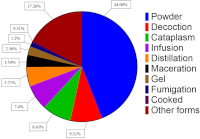
In the Sidi Kacem region of Morocco, an ethnobotanical study was carried out with the goal of conserving traditional oral knowledge on the use of therapeutic plants. This study is a continuation of our earlier work and is a component of larger ethnobotanical research, with the goal of enhancing and expanding upon the ethnobotanical data in the study area. The study involved 530 local inhabitants in all. Open-ended, semi-structured interview questions served as the foundation for the methodology. Basic statistical tools and quantitative indices like plant part value, fidelity level, informant agreement rate, botanical family use value, and species use value were used to examine the data. 75 plant species, spread throughout 41 botanical families, were identified during the study. With 12 species, the Lamiaceae family had the highest representation (0.21). The one with the highest usage value (0.69) was Dittrichia viscosa (L) Greuter. 34 plant species were identified with a maximum Fidelity Level of 100%. The highest level of informant consensus was found for uses pertaining to viral infections, digestive, metabolic, and nervous system illnesses (0.97). The fidelity level reached 100%, indicating strong consistency in plant use. Leaves were the most frequently employed plant part (0.489), whereas powders represented the most common form of preparation. These findings highlight both the floristic richness of the region and the robustness of traditional knowledge associated with medicinal plants. They further underscore the need for comprehensive phytochemical and pharmacological investigations of local species.
References
Baars EW, Kienle GS, Heusser P, Pedersen PA, van Wietmarschen HA, Kiene H. Anthroposophic medicinal products: a literature review of features, similarities and differences to conventional medicinal products, scientific and regulatory assessment. Glob Adv Health Med. 2022;11:1-17. Doi: 10.1177/21649561211073079.
2. Hamdane S, Marcelino S, Gaspar PD, Paço A. Sustainable agricultural practices for the production of aromatic and medicinal plants: evidences and recommendations. 2023; 28(11):1-27.
3. Khomsi ME, Hmamou A, Oubbadi RE, El Houda Tahiri N, Kara M, Amar A, Mesfioui A, Hmouni D. HPLC analysis and anti-inflammatory, antinociceptive, healing and antidepressant properties of Anchusa italica Retz extracts. Phytomedicine Plus. 2024; 4(1):1-11. Doi: 10.1016/j.phyplu.2023.100518.
4. Yissibi EP, Tajeukem VC, Kpoumie HM, Mfifen AM, Maffo NM, Mkounga P, Bayaga HN, Essomba CN, Zapfack L. Knowledge, identification and phytochemical study of two medicinal plants called “ginseng” in Yaoundé (Cameroon). Int J Biol Chem Sci. 2023;17(3):1147–1162.
5. Orch H, Chaachouay N, Douiri EM, Faiz N, Zidane L, Douira A. Use of medicinal plants in dermato-cosmetology: An ethnobotanical study among the population of Izarène. Jordan J Pharm Sci. 2021; 14(3): 323-340.
6. Jamila F, Mostafa E. Ethnobotanical survey of medicinal plants used by people in Oriental Morocco to manage various ailments. J Ethnopharmacol. 2014; 154(1):76–87. Doi: 10.1016/j.jep.2014.03.016.
7. Vitalini S, Iriti M, Puricelli C, Ciuchi D, Segale A, Fico G. Traditional knowledge on medicinal and food plants used in Val San Giacomo (Sondrio, Italy)—An alpine ethnobotanical study. J Ethnopharmacol. 2013;145(2):517–29. Doi: 10.1016/j.jep.2012.11.024.
8. Salhi N, Bouyahya A, Fettach S, Zellou A, Cherrah Y. Ethnopharmacological study of medicinal plants used in the treatment of skin burns in occidental Morocco (area of Rabat). South Afr J Bot. 2019; 121:128–142. Doi: 10.1016/j.sajb.2018.10.038.
9. Chaachouay N, Benkhnigue O, Fadli M, Ibaoui HE, Zidane L. Ethnobotanical and ethnopharmacological studies of medicinal and aromatic plants used in the treatment of metabolic diseases in the Moroccan Rif. Heliyon. 2019; 5(10):1-9. Doi: 10.1016/j.heliyon.2019.e02191.
10. El Khomsi M, Hmamou A, Tahiri NE Houda, Soulo N, Doubi M, Hmouni D. Ethnobotanical study of plants used in treating skin ailments and dermato-cosmetics among population of Sidi Kacem, Northeast of Morocco. J Herb Med. 2025; 53:1-13. Doi: 10.1016/j.hermed.2025.101045.
11. El Miri H, Faraj C, Himmi O, Hmamouch A, Maniar S, Laaroussi T, Rhajaoui M, Sebti F, Benhoussa A. Cutaneous leishmaniasis in Ouazzane and Sidi Kacem provinces, Morocco (1997–2012). Bull Société Pathol Exot. 2016; 109(5):376–380.
12. Miri HE, Rhajaoui M, Himmi O, Ouahabi S, Benhoussa A, Faraj C. Entomological study of five foci of cutaneous leishmaniasis in the province of Sidi Kacem in northern Morocco. Ann Société Entomol Fr (N.S.). 2013; 49(2): 154–159. Doi: 10.1080/00379271.2013.808504.
13. Rhazi Filali F, Ennacirie F, Rahou A. Ethnobotanical study of medicinal plants used in traditional medicine in the province of Sidi Kacem, Morocco. Asian J Pharm Clin Res. 2017; 10(1): 121-130. Doi: 10.22159/ajpcr.2017.v10i1.14326
14. Martin GJ. Ethnobotany: a methods manual. Dordrecht: Springer; 2014. 296 p.
15. Gupta SC, Patchva S, Aggarwal BB. Therapeutic roles of curcumin: lessons learned from clinical trials. AAPS J. 2013; 15:195–218.
16. Fennane M, Tattou MI, Mathez J, Ouyahya A, El Oualidi J. Practical flora of Morocco: manual for the identification of vascular plants. Angiospermae (Leguminosae–Lentibulariaceae). Rabat: Scientific Institute, Mohammed V University-Agdal; 2007. p. 579–582.
17. Benkhnigue O, Zidane L, Fadli M, Elyacoubi H, Rochdi A, Douira A. Ethnobotanical study of medicinal plants in the region of Mechraâ Bel Ksiri (Gharb region, Morocco). Acta Bot Barc. 2010;53:191–216.
18. Sreekeesoon DP, Mahomoodally MF. Ethnopharmacological analysis of medicinal plants and animals used in the treatment and management of pain in Mauritius. J Ethnopharmacol. 2014; 157:181–200. Doi: 10.1016/j.jep.2014.09.030.
19. El Khomsi M, Dandani Y, Chaachouay N, Hmouni D. Ethnobotanical study of plants used for medicinal, cosmetic, and food purposes in the region of Moulay Yacoub, Northeast of Morocco. J Pharm Pharmacogn Res. 2022; 10(1):13–29.
20. Habchaou J, Saad I, El Khomsi M, Fadli M, Bourkhiss B. Ethnobotanical study of medicinal herbs in the Saïss Urban Commune (Region of Fez/Morocco). Trop J Nat Prod Res. 2023; 7(11):5034–5039. Doi: 10.26538/tjnpr/v7i11.3
21. Ghabbour I, Ghabbour N, Khabbach A, Louahlia S, Hammani K. Checklist of the medicinal flora used by the local population in the province of Taza (north-eastern Morocco) through an ethnobotanical study. Bot Sci. 2024; 102(3):854–877. Doi: 10.17129/botsci. 3420.
22. El Brahimi R, El Barnossi A, Amrani M, Bari A. Ethnobotanical Study and Biodiversity of Medicinal Plants Used in the Province of Taza North-Eastern Morocco. Trop J. Nat Prod Res. 2022; 6(11):1814–1831. Doi: 10.26538/tjnpr/v6i11.12.
23. Hilah FE, Akka FB, Bengueddour R, Rochdi A, Zidane L. Ethnobotanical study of medicinal plants used in the treatment of dermatological disorders in the central Moroccan plateau. J Appl Biosci. 2016; 98:9252–9260. Doi: 10.4314/jab.v98i1.2.
24. Mesfin F, Seta T, Assefa A. An ethnobotanical study of medicinal plants in Amaro Woreda, Ethiopia. Ethnobot Res Appl. 2014; 12:341–354.
25. Cerqueira TMG, de Carvalho Correia AC, dos Santos RV, Lemos RPL, da Silva SAS, Barreto E. The Use of Medicinal Plants in Maceió, Northeastern Brazil: An Ethnobotanical Survey. Medicines. 2020; 7(2):1-12. Doi: 10.3390/medicines7020007
26. Kala CP, Farooquee NA, Dhar U. Traditional uses and conservation of timur (Zanthoxylum armatum DC.) through social institutions in Uttaranchal Himalaya, India. Conserv Soc. 2005; 3(1):224–230.
27. Srithi K, Balslev H, Wangpakapattanawong P, Srisanga P, Trisonthi C. Medicinal plant knowledge and its erosion among the Mien (Yao) in northern Thailand. J Ethnopharmacol. 2009; 123(2):335–342. Doi: 10.1016/j.jep.2009.02.035.
28. Anyinam C. Ecology and ethnomedicine: exploring links between current environmental crisis and indigenous medical practices. Health Psychol. 2016; 35:260–270.
29. Merrouni IA, Kharchoufa L, Bencheikh N, Elachouri M. Ethnobotanical profile of medicinal plants used by people of North-Eastern Morocco: cross-cultural and historical approach (part I). Ethnobot Res Appl. 2021; 21:1–45. Doi: 10.32859/era.21.34.1-45.
30. Hayat J, Mustapha A, Abdelmajid M, Mourad B, Ali S, Said E, Saadia B. Ethnobotanical survey of medicinal plants growing in the region of “Oulad Daoud Zkhanine” (Nador Province), in Northeastern Morocco. Ethnobot Res Appl. 2020; 19:1–12. Doi: 10.32859/era.19.39.1-12.
31. Idrissi AM, Mahraz MA, Hmamou A, El Assri Y, El Fettouhi A, Bourachdi S, Allali A, El Ouatassi N, Lahkimi A. Ethnobotanical Heritage of Skoura M’Daz: A Study on the Traditional Uses, Knowledge, and Conservation of Medicinal and Wild Plants. Trop J Nat Prod Res. 2025; 9(6):2653–2663. Doi : 10.26538/tjnpr/v9i6.41.
32. Chaachouay N, Douiri EM, Faiz N, Zidane L, Douira A. Use of medicinal plants in dermato-cosmetology: An ethnobotanical study among the population of Izarène. Jordan J Pharm Sci. 2021; 14(3):323–340.
33. Tlemcani S, Lahkimi A, Eloutassi N, Bendaoud A, Hmamou A, Bekkari H. Ethnobotanical study of medicinal plants in the Fez-Meknes region of Morocco. J Pharm Pharmacogn Res. 2023; 11(1):137–159. Doi: 10.56499/jppres22.1459_11.1.137.
34. Mssillou I, Agour A, Slighoua M, Tourabi M, Nouioura G, Lyoussi B, Derwich E. Phytochemical characterization, antioxidant activity, and in vitro investigation of antimicrobial potential of Dittrichia viscosa L. leaf extracts against nosocomial infections. Acta Ecol Sin. 2022; 42(6):661–669. Doi: 10.1016/j.chnaes.2021.09.021.
35. Mrid RB, Bouchmaa N, Kabach I, Zouaoui Z, Chtibi H, Maadoudi M, Kounnoun A, Cacciola F, Majdoub YO, Mondello L, Zyad A, Nhiri M. Dittrichia viscosa L. Leaves: A Valuable Source of Bioactive Compounds with Multiple Pharmacological Effects. Molecules. 2022; 27(7):1-16. Doi: 10.3390/molecules27072108.
36. Ozkan E, Karakas FP, Yildirim AB, Tas I, Eker I, Yavuz MZ, Turker AU. Promising medicinal plant Inula viscosa L.: Antiproliferative, antioxidant, antibacterial and phenolic profiles. Prog Nutr. 2019; 21(3):652–661. DOI: 10.23751/pn.v21i3.7186.
37. Rhimi W, Hlel R, Ben Salem I, Boulila A, Rejeb A, Saidi M. Dittrichia viscosa L. Ethanolic Extract Based Ointment with Antiradical, Antioxidant, and Healing Wound Activities. BioMed Res Int. 2019; 2019:1–10. Doi: 10.1155/2019/4081253.
38. Kachmar MR, Naceiri Mrabti H, Bellahmar M, Ouahbi A, Haloui Z, El Badaoui K, Bouyahya A, Chakir S. Traditional Knowledge of Medicinal Plants Used in the Northeastern Part of Morocco. Evid Based Complement Alternat Med. 2021; 1-20. Doi: 10.1155/2021/6002949.
39. Bouyahya A, Zengin G, Belmehdi O, Bourais I, Chamkhi I, Taha D, Benali T, Dakka N, Bakri Y. Origanum compactum Benth., from traditional use to biotechnological applications. J Food Biochem. 2020; 44(8):1-24. Doi: 10.1111/jfbc.13251.
40. Bouyahya A, Guaouguaou F‑E, Dakka N, Bakri Y. Pharmacological activities and medicinal properties of endemic Moroccan medicinal plant Origanum compactum (Benth) and their main compounds. Asian Pac J Trop Dis. 2017; 7(10):628–640. Doi: 10.12980/apjtd.7.2017D7-31.
41. Loukili EH, Ouahabi S, Elbouzidi A, Taibi M, Yahyaoui MI, Asehraou A, Azougay A, Saleh A, Al Kamaly O, Parvez MK, El Guerrouj B, Touzani R, Ramdani M. Phytochemical Composition and Pharmacological Activities of Three Essential Oils Collected from Eastern Morocco (Origanum compactum, Salvia officinalis, and Syzygium aromaticum): A Comparative Study. Plants. 2023; 12(19):1-20. Doi: 10.3390/plants12193376.
42. Andrade JM, Faustino C, Garcia C, Ladeiras D, Reis CP, Rijo P. Rosmarinus officinalis L.: an update review of its phytochemistry and biological activity. Future Sci OA. 2018; 4(4):1-19. Doi: 10.4155/fsoa-2017-0124.
43. Miara MD, Bendif H, Ait Hammou M, Teixidor-Toneu I. Ethnobotanical survey of medicinal plants used by nomadic peoples in the Algerian steppe. J Ethnopharmacol. 2018; 219:248–256. Doi: 10.1016/j.jep.2018.03.011.
44. Merrouni IA, Kharchoufa L, Bencheikh N, Elachouri M. Ethnobotanical profile of medicinal plants used by people of North-eastern Morocco: Cross-cultural and Historical approach (Part I). Ethnobot Res Appl. 2021; 21:1–45. Doi: 10.32859/era.21.34.
45. Aitbaba A, Kabdy H, Baslam A, Azraida H, Laadraoui J, Raoui K, Aboufatima R, El Yazouli L, Sokar Z, Garzoli S, Chait A. Therapeutic effect of Marrubium vulgare L. aqueous extract on chronic constriction injury of sciatic nerve-induced neuropathic pain in mice. Nat Prod Res. 2024; 1–9. Doi: 10.1080/14786419.2024.2424403.
46. Al-Snafi AE, Al-Saedy HA, Talab TA, Majid WJ, Batiha GE‑S, Abofazi JS. The bioactive ingredients and therapeutic effects of Marrubium vulgare—A review. Int J Biol Pharm Sci Arch. 2021; 1(2): 009–021. Doi: 10.30574/ijbpsa.2021.1.2.0301
47. Bucciantini M, Leri M, Nardiello P, Casamenti F, Stefani M. Olive Polyphenols: Antioxidant and Anti-Inflammatory Properties. Antioxidants. 2021; 10(7):1-23. Doi: 10.3390/antiox10071044.
48. de Oliveira NM, Machado J, Chéu MH, Lopes L, Criado MB. Therapeutic Potential of Olive Leaf Extracts: A Comprehensive Review. Appl Biosci. 2024; 3(3):392–425. Doi: 10.3390/applbiosci3030026.
49. Mir-Cerdà A, Granados M, Saurina J, Sentellas S. Olive tree leaves as a great source of phenolic compounds: Comprehensive profiling of NaDES extracts. Food Chem. 2024; 456:1-12. Doi: 10.1016/j.foodchem.2024.140042
50. Dauber C, Carreras T, González L, Gámbaro A, Valdés A, Ibañez E, Vieitez I. Characterization and incorporation of extracts from olive leaves obtained through maceration and supercritical extraction in Canola oil: Oxidative stability evaluation. LWT. 2022; 160:1-10. Doi: 10.1016/j.lwt.2022.113274.
51. Mansour HMM, Zeitoun AA, Abd-Rabou HS, El Enshasy HA, Dailin DJ, Zeitoun MAA, El-Sohaimy SAA. Antioxidant and Anti-Diabetic Properties of Olive (Olea europaea) Leaf Extracts: In Vitro and In Vivo Evaluation. Antioxidants. 2023; 12(6):1-21. Doi: 10.3390/antiox12061275.
52. Joyroy N, Ngiwsara L, Wannachat S, Mingma R, Svasti J, Wongchawalit J. Unveiling the potentials of Lawsonia inermis L.: its antioxidant, antimicrobial, and anticancer potentials. PeerJ. 2025; 13:1-25. Doi: 10.7717/peerj.19170.
53. El Massoudi S, Zinedine A, Rocha JM, Benidir M, Najjari I, El Ghadraoui L, Benjelloun M, Errachidi F. Phenolic Composition and Wound Healing Potential Assessment of Moroccan Henna (Lawsonia inermis) Aqueous Extracts. Cosmetics. 2023; 10(3):1-13. Doi: 10.3390/cosmetics10030092.
54. Salma R, Vijay V, Sivakumar M, Vijayakumar AR, Deepa N. A Review on Phytochemical, Pharmacological, and Toxicological Properties of Lawsonia inermis L.: Review article. J Pharma Insights Res. 2024; 2(3):155–166. DOI: 10.5281/zenodo.11653152.
55. Bhandari PR. Garlic (Allium sativum L.): A review of potential therapeutic applications. Int J Green Pharm. 2012; 6(2):118-129. Doi: 10.22377/ijgp.v6i2.247.
56. Jikah AN, Edo GI, Makia RS, Yousif E, Gaaz TS, Isoje EF, Opiti RA, Akpoghelie PO, Igbuku UA, Owheruo JO, Ugbune U, Essaghah AE, Umar HA. A review of the therapeutic potential of sulfur compounds in Allium sativum. Meas Food. 2024; 15:1-14. Doi: 10.1016/j.meafoo.2024.100195.
57. Salhi N, El Guourrami O, Rouas L, Moussaid S, Moutawalli A, Benkhouili FZ, Ameggouz M, Alshahrani MM, Al Awadh AA, Bouyahya A, Faouzi MEA, Cherrah Y. Evaluation of the Wound Healing Potential of Cynara humilis Extracts in the Treatment of Skin Burns. Evid Based Complement Alternat Med. 2023; 1-12. Doi: 10.1155/2023/5855948.
58. El Khomsi M, Kara M, Hmamou A, Assouguem A, Al Kamaly O, Saleh A, Ercisli S, Fidan H, Hmouni D. In Vitro Studies on the Antimicrobial and Antioxidant Activities of Total Polyphenol Content of Cynara humilis from Moulay Yacoub Area (Morocco). Plants. 2022; 11(9):1-12. Doi: 10.3390/plants11091200.
59. Salhi N, Bouyahya A, Bounihi A, Masrar A, Bouabdellah M, Chabraoui L, Zengin G, Taghzouti K, Rouas L, Cherrah Y. Investigation of wound healing activity of Cynara humilis root extracts. J Cosmet Dermatol. 2022; 21(4):1596–1609. Doi: 10.1111/jocd.14237.
60. Khomsi ME, Imtara H, Kara M, Hmamou A, Assouguem A, Bourkhiss B, Tarayrah M, AlZain MN, Alzamel NM, Noman O, Hmouni D. Antimicrobial and Antioxidant Properties of Total Polyphenols of Anchusa italica Retz. Molecules. 2022; 27(2):1-10. Doi: 10.3390/molecules27020416.
61. Khomsi ME, Hmamou A, Oubbadi RE, El houda Tahiri N, Kara M, Amar A, Mesfioui A, Hmouni D. HPLC analysis and anti-inflammatory, antinociceptive, healing and antidepressant properties of Anchusa italica Retz extracts. Phytomedicine Plus. 2024; 4(1):1-11. Doi: 10.1016/j.phyplu.2023.100518.
62. Hmamou A, Eloutassi N, Alshawwa SZ, Al Kamaly O, Kara M, Bendaoud A, El-Assri E-M, Tlemcani S, El Khomsi M, Lahkimi A. Total Phenolic Content and Antioxidant and Antimicrobial Activities of Papaver rhoeas L. Organ Extracts Growing in Taounate Region, Morocco. Molecules. 2022; 27(3):1-12. Doi: 10.3390/molecules27030854
63. Hmamou A, El Khomsi M, El-Assri E-M, Kara M, El Oumari F, El Ouadrhiri F, Bendaoud A, Elmansouri I, Eloutassi N, Lahkimi A. Chemical characterization, anti-struvite crystal, anti-inflammatory, analgesic, and antidepressant activities of Papaver rhoeas L. root and leaf extracts. J Ethnopharmacol. 2024; 319(2):1-9. Doi: 10.1016/j.jep.2023.117208.
64. Hmamou A, Bendaoud A, Laftouhi A, El Khomsi M, Merzouki M, Mounadi Idrissi A, Kara M, Lahkimi A. Optimization of the hydroethanolic extraction of Papaver rhoeas L. aerial parts: Maximizing antioxidant and antimicrobial bioactivities. South Afr J Bot. 2025; 185:702–711. Doi: 10.1016/j.sajb.2025.08.038.
65. Khouchlaa A. Ethnomedicinal use, phytochemistry, pharmacology, and toxicology of Chamaerops humilis: A review. Not Sci Biol. 2023; 15(3):1-18. Doi: 10.55779/nsb15311630.
66. Nekhla H, Atmani M, El Hanafi L, Rhioui W, Goubi A, Squalli W, Zahri A, Harrach A, El Ghadraoui L. Biological Properties of Chamaerops humilis L. – Antioxidant and Antibacterial Activities of Leaf, Fruit and Pulp Extracts. Ecol Eng Environ Technol. 2023; 24(8):346–356. Doi: 10.12912/27197050/171868
67. Lewu FB, Afolayan AJ. Ethnomedicine in South Africa: The role of weedy species. Afr J Biotechnol. 2009; 8(6):929-934.
68. Chaachouay N, Douira A, Zidane L. Herbal Medicine Used in the Treatment of Human Diseases in the Rif, Northern Morocco. Arab J Sci Eng. 2022; 47(1):131–153.
69. Daoudi A, Bammou M, Zarkani S, Slimani I, Ibijbijen J, Nassiri L. Ethnobotanical study of medicinal flora in the rural commune of Aguelmouss, province of Khénifra (Morocco). Phytotherapie. 2016; 14(4):220–228. Doi: 10.1007/s10298-015-0953-z.
70. El Alami A, Loubna F, Chait A. Ethnobotanical study on spontaneous medicinal plants growing on the northern slope of the Atlas of Azilal (Morocco). Algerian J Nat Prod. 2016; 4(2):271–282.
71. Khan I, AbdElsalam NM, Fouad H, Tariq A, Ullah R, Adnan M. Application of Ethnobotanical Indices on the Use of Traditional Medicines against Common Diseases. Evid Based Complement Alternat Med. 2014; 1-21. Doi: 10.1155/2014/635371.
72. Mesfin F, Seta T, Assefa A. An Ethnobotanical Study of Medicinal Plants in Amaro Woreda, Ethiopia. Ethnobot Res Appl. 2014; 12:341–354.
73. Salhi N, Bouyahya A, Fettach S, Zellou A, Cherrah Y. Ethnopharmacological study of medicinal plants used in the treatment of skin burns in occidental Morocco (area of Rabat). South Afr J Bot. 2019; 121:128–142. Doi: 10.1016/j.sajb.2018.10.038.
74. Lin J, Puckree T, Mvelase TP. Anti-diarrhoeal evaluation of some medicinal plants used by Zulu traditional healers. J Ethnopharmacol. 2002; 79(1):53–56. Doi: 10.1016/S0378-8741(01)00353-1.
75. Uniyal SK, Sharma V, Jamwal P. Folk Medicinal Practices in Kangra District of Himachal Pradesh, Western Himalaya. Hum Ecol. 2011; 39(4):479–488.
76. Case RJ, Pauli GF, Soejarto DD. Factors in Maintaining Indigenous Knowledge Among Ethnic Communities of Manus Island. Econ Bot. 2005; 59(4):356–365.
Reyes-García V, Guèze M, Luz AC, Paneque-Gálvez J, Macía MJ, Orta-Martínez M, Pino J, Rubio-Campillo X. Evidence of traditional knowledge loss among a contemporary indigenous society. Evol Hum Behav. 2013; 34(4):249–257. Doi: 10.1016/j.evolhumbehav.2013.03.002.
Published
Issue
Section
License
Copyright (c) 2025 Tropical Journal of Natural Product Research

This work is licensed under a Creative Commons Attribution-NonCommercial-NoDerivatives 4.0 International License.