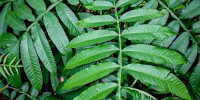
The Effect of Ethyl Acetate Extract of Sungkai Leaves (Peronema canescens Jack.) On Uric Acid Levels in Hyperuricemia Male Albino Mice (Mus musculus L.)
DOI:
https://doi.org/10.26538/tjnpr/v9i10.21Keywords:
Peronema canescens Jack, Sungkai leaf, extract, ethyl acetate, gout, hyperuricemiaAbstract
Hyperuricemia is a condition in which the level of uric acid in the blood increases. Uric acid is the end product of purine metabolism. Flavonoid compounds in Peronema canescens (Sungkai) leaves are considered to reduce uric acid levels. This study aims to determine the effect of varying the duration of administration and dose of the ethyl acetate extract of Sungkai leaves on the reduction of uric acid levels in hyperuricemic male albino mice induced by chicken liver juice (0.5 mL/20 g BW per oral) and potassium oxonate. The test animals, comprising as many as 54 mice, were divided into six groups: a negative control group that received only standard feed, a positive control induced with hyperuricemia and a standard control, allopurinol 13 mg/kg BW p.o once daily, and treatment groups I, II, and III were given Peronema canescens (Sungkai) leaf extract at doses of 125 mg/kg BW, 250 mg/kg BW, and 500 mg/kg BW with a duration of administration of 5, 10, and 15 days, respectively, following induction of hyperuricemia. Uric acid levels were measured post-administration of the extracts using an enzymatic method with a photometer at a wavelength of 546 nm from blood serum samples taken via the neck veins of mice. Data were analyzed using Analysis of Variance (ANOVA) and followed up with Duncan's test at a 95% confidence interval. The results showed a dose-dependent reduction in uric acid levels (p<0.05) compared to the negative control, with the optimal decrease among the three doses occurring at 500 mg/kg BW. The reduction in uric acid levels was concentration-dependent. This study showed that ethyl acetate extract from Sungkai leaves reduced uric acid levels in hyperuricemic male albino mice.
References
1. Pribadi T, Rahma A, Yulendasari R. Giving Acupressure to Reduce Pain And Uric Acid Levels In Gout Clients In Poncowarno, Kalirejo District, Central Lampung. J. Creat Comm Serv. 2021;4(3):515–519.
2. Kussoy VFM, Kundre R, Wowiling F. Eating Habits of High Purine Foods with Uric Acid Levels in Public Health Centers. J. Nurs. 2019;7(2):1–7.
3. Fitriani U, Ardiyanto D, Mana TA. Evaluation of the Safety and Benefits of Herbal Herbs for Hyperuricemia. Health Research Bull. 2017;45(4):227–232.
4. Dillasamola D, Aldi Y, Wahyuni FS, Rauza SR, Dachriyanus SU, Harrizul R. Study of Sungkai (Peronema canescens, Jack) Leaf Extract Activity as an Immunostimulator With In vivo and In vitro Methods. Pharmacog. J. 2021;13(6):1397-1407.
5. Permatasari DAI, Kurniasri N, Mahardika MP. Qualitative and Quantitative Analysis of Dexamethasone in Rheumatic Pain Herbal Medicine Using Thin-Layer Chromatography (TLC)—Densitometry. J. Fundam. Appl. Pharm. Sci. 2021; 2, 10–22.
6. Sinata N, Utami R, Aisyah S. Activity of the Ethyl Acetate Fraction Artocarpus altilis (Parkinson Ex FA Zorn) Fosberg on Blood Uric Acid Levels in Hyperuricemic Male White Mice. Putih. 2019;2(2):122-6.
7. Dillasamola D, Wahyuni FS, Rita RS, Dachriyanus, Alen Y, Umar S, Aldi Y. Immunostimulating Study of Active Agent Fraction from Sungkai (Peronema canescens Jack.) Leaf from SARS-COV-2 Virus Antigen Exposure to NK and CD8+T Cells. Pharmacogn J. Phcogj.com 2022;14(4): 344-351
8. Ahkam AH, Susilawati Y, Sumiwi SA. Peronema canescens as a source of immunomodulatory agents: A new opportunity and perspective. Biology. 2024;13(9):744-752.
9. Iliopoulos G. Understanding and treating gout: A narrative review. Achaiki Iatriki. 2020;87.
10. Fadhila R, Nainggolan H. Antihyperuricemia of Lemongrass Extract (Cymbopogon citratus) on Male Mice with Potassium Oxonate and Chicken Liver Juice Induced. Appl. Res. Sci. Tech. 2024;4(2):90-101.
11. Rizki KP, Muslichah S, Ningsih IY. Effect of Combination of Ethanol Extract of Sidaguri Leaf (Sida rhombifolia L.) and Red Ginger Rhizome (Zingiber officinale Rosc.) on Hyperuricemic Male Mice. Health Lib e-J. 2018;6(2):205.
12. Cendrianti F, Muslichah S, Ulfa EU. Antihyperuricemic Activity Test of Extracts of n-Hexane, Ethyl Acetate, and Ethanol 70% of Tempuyung Leaves (Sonchus arvensis L.) in Hyperuricemic Male Mice. Health Lib e-J. 2013;2(2):3–7.
13. Dong L, Zhang S, Chen L, Lu J, Zhao F, Long T, Wen J, Huang J, Mao Y, Qi Z, Zhang J. In vivo anti-hyperuricemia and anti-gouty arthritis effects of the ethanol extract from Amomum villosum Lour. Biomed. Pharmacother. 2023;161:114532.
14. Sutyarso S, Kanedi M, Rokiban A, Wahyuni A. Anti-hyperuricemic effects of water-soluble fraction of leaf extract of sukun (Artocarpus altilis) on mice fed purine-rich foods. Biomed. Pharmacol. J. 2020;13(2):915-919.
15. Mao Y, Xu H, Xia P. Ilex cornuta leaves extracts ameliorate hyperuricemia by modulating uric acid transporters. J. Ethnopharmacol. 2025;336:118618.
16. Aldi Y, Amdani A, Bakhtiar A. Activity of Scopoletin Compounds from Noni Fruit (Morinda citrifolia Linn.) Against Macrophage Response of Male White Mice. J. Pharm. Health. 2016;6(1):25–35.
17. Wahyuni AS, Ariyanti R, Wahyuningtyas N, Wahyuni AS. Effect of Infusion of Salam Leaves (Eugenia polyantha Wight) on Reduction of Blood Uric Acid Levels in Male White Mice Induced with Potassium Oxonate Salam. Pharmacog. J. 2007;8(2):56–63.
18. Nasrul E, Sofitri. Hyperuricemia in Pre-Diabetes. And Heal. J. 2012;1(2):86–91.
19. Latief M, Tarigan IL, Sari PM, Aurora FE. Antihyperuricemic Activity of Sungkai Leaf (Peronema canescens Jack) Ethanol Extract in Male White Mice. Pharmacon: J Farm Ind. 2021;18(1):23–37.
20. Amir M, Irem Adriana Purukan J. Effectiveness Test of Ethanol Extract of White Dragon Fruit (Hylocereus undatus) on Reducing Blood Uric Acid Levels in Mice (Mus musculus). Ind J. Pharm. Sci. 2018;16(2):166–171.
Published
Issue
Section
License
Copyright (c) 2025 Tropical Journal of Natural Product Research

This work is licensed under a Creative Commons Attribution-NonCommercial-NoDerivatives 4.0 International License.