Volatile Composition and Bioactivity Assessment of Wurfbainia schmidtii Essential Oils from Thailand
DOI:
https://doi.org/10.26538/tjnpr/v9i10.7Keywords:
Antibacterial activities, Antioxidant potential, Essential oil, Tyrosinase inhibition, Volatile composition, Wurfbainia schmidtiiAbstract
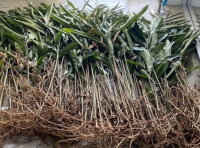
This research examined the volatile composition and biological activities of essential oils obtained from Wurfbainia schmidtii, collected from Western Thailand. Essential oils were extracted from the aerial parts (leaves and stems) and rhizomes, and analyzed using headspace solid-phase microextraction (HS-SPME) and gas chromatography-mass spectrometry (GC/MS). The analysis revealed 25 volatile compounds in the aerial oil and 33 in the rhizome oil. Both oils demonstrated potent bioactivity in inhibiting tyrosinase, with IC50 values of 0.55 µg/mL and 1.24 µg/mL for aerial and rhizome oils, and significant antioxidant potential (IC50 = 12.94 mg/mL and 27.07 mg/mL, respectively). The oils also exhibited moderate to low antibacterial activity against Staphylococcus aureus, Staphylococcus epidermidis, and methicillin-resistant Staphylococcus aureus (MRSA), with MIC and MBC values between 50 and 100 mg/mL. These findings highlighted the potential of W. schmidtii essential oils in pharmaceutical and cosmetic applications, particularly for their antioxidative and skin-enhancing properties.
References
1. Saensouk P, Saensouk S, Tanomtong A, Sungkaew S. Cytogenetic study of five rare species in the genus Amomum, Meistera, and Wurfbainia (Zingiberaceae) from Thailand. Cytologia. 2022; 87(4):345-352.
2. Raut JS, Karuppayil SM. A status review on the medicinal properties of essential oils. Ind Crops Prod. 2014; 62:250-264.
3. Tongnuanchan S, Benjakul S. Essential oils: extraction, bioactivities, and their uses for food preservation. J Food Sci. 2014; 79:1231-1249.
4. Bakkali F, Averbeck S, Averbeck D, Idaomar M. Biological effects of essential oils - a review. Food Chem Toxicol. 2008; 46(2):446-475.
5. de Matos, SP, Teixeira HF, de Lima ÁAN, Veiga-Junior VF, Koester LS. Essential oils and isolated terpenes in nanosystems designed for topical administration: A review. Biomolecules. 2019; 9(4):138.
6. Natta L, Orapin K, Krittika N, Pantip B. Essential oil from five Zingiberaceae for anti food-borne bacteria. Int Food Res J. 2008; 15(3):337-346.
7. Theanphong O, Mingvanish W, Jenjittikul T. Antimicrobial and radical scavenging activities of essential oils from Kaempferia larsenii Sirirugsa. Trends Sci. 2023; 20(6):5212-5221.
8. Panyajai P, Chueahongthong F, Viriyaadhammaa N, Nirachonkul W, Tima S, Chiampanichayakul S, Anuchapreeda S, Okonogi S. Anticancer activity of Zingiber ottensii essential oil and its nanoformulations. PLoS One. 2022; 17(1):e0262335.
9. Tammasorn P, Kanjanakawinkul W, Chaiyana W. Cosmeceutical activities of essential oils from the rhizomes of plants in the Zingiberaceae family. Nat Life Sci Commun. 2024; 23(2):e2024021.
10. Lancioni C, Castells C, Candal R, Tascon M. Headspace solid-phase microextracion: fundamentals and recent advances. Adv Sample Prep. 2022; 3:100035.
11. Aati HY, Perveen S., Aati S, Orfali R, Alqahtani JH., Al-Taweel AM, Wanner J, Aati AY. Headspace solid-phase microextraction method for extracting volatile constituents from the different parts of Saudi Anethum graveolens L. and their antimicrobial activity. Heliyon. 2022; 8:e09051.
12. Vitalini S, Iriti M, Garzoli S. GC-MS and SPME-GC/MS analysis and bioactive potential evaluation of essential oils from two Viola Species belonging to the V. calcarata complex. Separations. 2022; 9(2):39-51.
13. Antih J, Houdkova M, Urbanova K, Kokoska L. Antibacterial activity of Thymus vulgaris L. essential oil vapours and their GC/MS analysis using solid-phase microextraction and syringe headspace sampling techniques. Molecules. 2021; 26(21):6553.
14. Kose YB, Saltan N, Kurkcuoglu M. SPME/GC-MS analysis of volatile organic compounds from Origanum acutidens (Hand.-Mazz.) Ietsw. - An endemic species in Turkey. Nat Volatiles & Essent Oils. 2021; 8(2):18-26.
15. Spadaccino G, Frabboni L, Petruzzi F, Disciglio G, Mentana A, Nardiello D, Quinto M. Essential oil characterization of Prunus spinosa L., Salvia officinalis L., Eucalyptus globulus L., Melissa officinalis L. and Mentha x piperita L. by a volatolomic approach. J Pharm Biomed Anal. 2021; 202:114167.
16. Chen LX, Lai YF, Zhang WX, Cai J, Hu H, Wang Y, Zhao J, Li SP. Comparison of volatile compounds in different parts of fresh Amomum villosum Lour. from different geographical areas using cryogenic grinding combined HS-SPME-GC-MS. Chin Med. 2020; 15:97.
17. Abbasi N, Khalighi Z, Eftekhari Z, Bahmani M. Extraction and phytoanalysis of chemical compounds of Eucalyptus globulus leaf native to Dehloran, Ilam province, Iran by HS-SPME and GC-MS. Adv Anim Vet Sci. 2020; 8(6):647-652.
18. Li C, Wan H, Wu X, Yin J, Zhu L, Chen H, Song X, Han L, Yang W, Yu H, Li Z. Discrimination and characterization of the volatile organic compounds in Schizonepetae Spica from six regions of China using HS-GC-IMS and HS-SPME-GC-MS. Molecules. 2022; 27(14):4393.
19. Bartnik M. GC-MS analysis of essential oil and volatiles from aerial parts of Peucedanum tauricum M.B. during the phenological period. Separations. 2023; 10(9):484.
20. Aati HY, Attia HA, Alanazi AS, Al Tamran LK, Wanner JK. Phytochemical characterization utilizing HS-SPME/GC-MS: exploration of the antioxidant and enzyme inhibition properties of essential oil from Saudi Artemisia absinthium L. Pharmaceuticals. 2024; 17(11):1460.
21. Abouelela MB, Shawky EM, Elgendy O, Farag MA, Baky MH. Comparative volatiles profiling of two marjoram products via GC-MS analysis in relation to the antioxidant and antibacterial effects. Sci Rep. 2024; 14:27804.
22. Jiang R, Liu J, Liu Q, Jin Z, Zhu H, Han H, Ma X. Comparative analysis of volatile components and sensory profiles of four Basil varieties based on HS-SPME and SD coupled with GC-MS. Processes. 2024; 12(12):2789.
23. Ameur S, Toumi M, Bendif H, Derbak, L, Yildiz I, Rebbas K, Demirtas I, Flamini G, Bruno M, Garzoli, S. Cistus libanotis from Algeria: Phytochemical analysis by GC/MS, HS-SPME-GC/MS, LC-MS/MS and its anticancer activity. J Food Compos Anal. 2024; 136:106747.
24. Paniandy JC, Chane-Ming J, Pieribattesti JC. Chemical composition of the essential oil and headspace solid-phase microextraction of the guava fruit (Psidium guajava L.). J Essent Oil Res. 2000; 12(2):153-158.
25. Vandendool H, Kratz PD. A generalization of the retention index system including linear temperature programmed gas-liquid partition chromatography. J Chromatogr. 1963; 11: 463-471.
26. Brand-Williams W, Cuvelier ME, Berset C. Use of a free radical method to evaluate antioxidant activity, LWT - Food Sci Technol. 1995; 28(1):25-30.
27. Cai Y, Luo Q, Sun M, Corke H. Antioxidant activity and phenolic compounds of 112 traditional Chinese medicinal plants associated with anticancer. Life Sci. 2004; 74(17):2157-2184.
28. Chen QX, Song KK, Wang Q, Huang H. Inhibitory effects on mushroom tyrosinase by some alkylbenzaldehydes. J Enzyme Inhib Med Chem. 2003; 18(6):491-496.
29. Sarker SD, Nahar L, Kumarasamy Y. Microtitre plate-based antibacterial assay incorporating resazurin as an indicator of cell growth, and its application in the in vitro antibacterial screening of phytochemicals. Methods. 2007; 42(4):321-324.
30. Basri DF, Fan SH. The potential of aqueous and acetone extracts of galls of Quercus infectoria as antibacterial agents. Indian J Pharmacol. 2005; 37(1):26-29.
31. Uthairung A, Rattarom R, Mekjaruskul C. Cosmeceutical applications of essential oils of Amomum biflorum Jack from whole plant and rhizome. Thai J Sci Technol. 2020; 9(5):680-692.
32. Singtothong C, Gagnon MJ, Legault J. Chemical composition and biological activity of the essential oil of Amomum biflorum. Nat Prod Commun. 2013; 8(2):265-267.
33. Dung NX, Phuong DL, Leclercq PA. Trans-p- (1-butenyl) anisole: the main component in the leaf, stem and root oils of Amomum schmidtti Gagnep. from Vietnam. J Essent Oil Res. 1992; 4:239-242.
34. Chen W, Vermaak I, Viljoen A. Camphor-a fumigant during the black death and a coveted fragrant wood in ancient Egypt and Babylon: a review. Molecules. 2013; 18:5434-5454.
35. Obaid RJ, Mughal EU, Naeem N, Sadiq A, Alsantali RI, Jassas RS, Moussa Z, Ahmed SA. Natural and synthetic flavonoid derivatives as new potential tyrosinase inhibitors: a systematic review. RSC Adv. 2022; 11(36):22159-22198.
36. Enright MC, Robinson DA, Randle G, Feil EJ, Grundmann H, Spratt BG. The evolutionary history of methicillin-resistant Staphylococcus aureus (MRSA). Proc Natl Acad Sci. 2002; 99(11):7687-7692.
37. Khan A, Faisal S, Hasnain S. The continuing threat of methicillin-resistant Staphylococcus aureus-past present future. J Sci Res. 2010; 40:37-45.
38. Chouhan S, Sharma K, Guleria S. Antimicrobial activity of some essential oils-present status and future perspectives. Medicines. 2017; 4(3):58.
Published
Issue
Section
License
Copyright (c) 2025 Tropical Journal of Natural Product Research

This work is licensed under a Creative Commons Attribution-NonCommercial-NoDerivatives 4.0 International License.