


Integrating Metabolomics LC-HRMS, and Network Pharmacology of Garcinia forbesii King Leaf Extract, Potential for Treatment of Renal Ischemic Reperfusion Injury
Article Sidebar
Main Article Content
Abstract
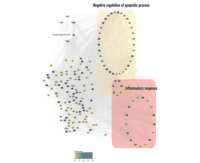
Garcinia forbesii King, locally known as Mundar in South Kalimantan, is rich in xanthone natural compounds recognized for their strong antioxidant and anti-inflammatory activities, which are thought to protect the kidneys from damage. However, the exact biological pathways are not fully understood. This study aimed to identify the bioactive compounds in Garcinia forbesii leaf and explore their potential mechanisms in protecting against kidney injury using a network pharmacology approach. The compounds were detected through liquid chromatography– high resolution mass spectrometry (LC-HRMS), and their chemical structures were represented in SMILES format using PubChem. Drug-likeness properties were assessed using ADMETLab, while potential target genes were identified through the Comparative Toxicogenomics Database and the Similarity Ensemble Approach (SEA). Genes relevant to renal ischemia–reperfusion injury (RIRI) were obtained from GeneCards. The predicted protein targets were then analyzed to determine their associated pathways and functions, and compound–target interaction networks were visualized with Cytoscape 3.10.2. Out of 219 bioactive compounds, 25 showed favorable drug-like properties. The key gene targets identified included TP53, TNF, BCL2, JUN, IL6, RELA, CASP3, IRS1, GSK3B, and NFE2L2. Gene Ontology (GO) and Kyoto Encyclopedia of Genes and Genomes (KEGG) pathway analyses showed that the extract primarily influences processes related to apoptosis, gene regulation, and inflammation. The predicted protein targets were largely localized in the cytosol, exosomes, and cytoplasm, suggesting potential modulation of protein–protein interactions. These results point to possible mechanisms by which Garcinia forbesii may protect against kidney injury, strengthening its potential as a nephroprotective candidate.
Downloads
Article Details
Section

This work is licensed under a Creative Commons Attribution-NonCommercial-NoDerivatives 4.0 International License.
How to Cite
References
1. Li C, Yu Y, Zhu S, Hu Y, Ling X, Xu L, Zhang H, Gou K. The emerging role of regulated cell death in ischemia and reperfusion-induced acute kidney injury: current evidence and future perspectives. Cell Death Discov. 2024; 10(1):1–10. https://doi.org/10.1038/s41420-024-01979-4
2. Li DD, Li N, Cai C, Wei CM, Liu GH, Wang TH, Xu FR. A molecular network-based pharmacological study on the protective effect of Panax notoginseng rhizomes against renal ischemia–reperfusion injury. Front Pharmacol. 2023; 14:1–14. https://doi.org/10.3389/fphar.2023.1134408
3. Aranda-Rivera AK, Srivastava A, Cruz-Gregorio A, Pedraza-Chaverri J, Mulay SR, Scholze A. Involvement of inflammasome components in kidney disease. Antioxidants. 2022; 11(2):1–45. https://doi.org/10.3390/antiox11020246
4. Scholz H, Boivin FJ, Schmidt-Ott KM, Bachmann S, Eckardt KU, Scholl UI, Persson PB. Kidney physiology and susceptibility to acute kidney injury: implications for renoprotection. Nat Rev Nephrol. 2021; 17(5):335–349. https://dx.doi.org/10.1038/s41581-021-00394-7 5. Satalkar VS and Swamy KV. Pathophysiology of acute kidney injury on a molecular level: A brief review. MGM J Med Sci. 2022;9(4):577–584. Doi: 10.4103/mgmj.mgmj_161_22
6. Andrianova NV, Zorov DB, Plotnikov EY. Targeting Inflammation and Oxidative Stress as a Therapy for Ischemic Kidney Injury. Biochem. 2020; 85(12):1591–1602. https://doi.org/10.1134/s0006297920120111
7. Ding C, Zheng J, Wang B, Li Y, Xiang H, Dou M, Qiao Y, Tian P, Ding X, Xue W. Exosomal microRNA-374b-50p by tubular epithelial cells promoted M1 macrophages activation and worsened renal ischemia/reperfusion injury. Front Cell Dev Biol. 2020; 8:1–15. https://doi.org/10.3389/fcell.2020.587693
8. Alsawaf S, Alnuaimi F, Afzal S, Thomas RM, Chelakkot AL, Ramadan WS, Hodeify R, Matar R, Merheb M, Siddiqui SS, Vazhappilly CG. Plant flavonoids on oxidative stress-mediated kidney inflammation. Biology (Basel). 2022; 11(12):1–27. Doi: 10.3390/biology11121717
9. Ali A, Sampaio TL, Khan H, Jeandet P, Akkol EK, Bahadar H, Martins AMC. Plants by therapeutic potential for ischemic acute kidney injury: A systematic review. Evidence-based Complement Altern Med. 2022; 2022:1–22. https://doi.org/10.1155/2022/6807700
10. Perez-Meseguer J, Torres-González L, Gutiérrez-González JA, Alarcón-Galván G, Zapata-Chavira H, Waksman-De Torres N, Moreno-Peña DP, Muñoz-Espinosa LE, Cordero-Pérez P. Anti-inflammatory and nephroprotective activity of Juglans mollis against renal ischemia-reperfusion damage in a Wistar rat model. BMC Complement Altern Med. 2019; 19(1):1–9. https://doi.org/10.1186/s12906-019-2604-7
11. Kazmierczak E, Magalhães CG, Pereira RP. Antioxidant property of secondary metabolites by Garcinia genus: A short review. Eclet Quim. 2023; 48(1):41–54. https://doi.org/10.26850/1678-4618eqj.v48.1.2023.p41-54
12. Wairata J, Sukandar ER, Fadlan A, Purnomo AS, Taher M, Ersam T. Evaluation of the antioxidant, antidiabetic, and antiplasmodial activities of xanthones isolated by garcinia forbesii and their in silico studies. Biomed. 2021;9(10):1–15. https://doi.org/10.3390/biomedicines9101380
13. Ambarwati NSS, Sukma NT, Desmiaty Y, Auliya A, Budi S, Arifuddin M, Ahmad I. Garcinia dulcis and Garcinia forbesii King fruit peel extract: Secondary metabolite composition, antioxidant, and elastase inhibitory activity evaluation. J Adv Pharm Technol Res. 2024; 15(1):8–12. https://doi.org/10.4103/japtr.japtr_344_23
14. Wairata J, Fadlan A, Purnomo AS, Taher M, Ersam T. Total phenolic and flavonoid contents, antioxidant, antidiabetic and antiplasmodial activities of Garcinia forbesii King: A correlation study. Arab J Chem. 2022; 15(2):1–8. https://doi.org/10.1016/j.arabjc.2021.103541
15. Sutomo S, Kamali DN, Arnida A, Normaidah N, Sriyono A. Pharmacognostic Study and Antioxidant Activity of Mundar (Garcinia forbesii King.) leaves by Banua Botanical Gardens of South Kalimantan. Borneo J Pharm. 2020; 3(4):209–215. https://doi.org/10.33084/bjop.v3i4.1541
16. Nogales C, Mamdouh ZM, List M, Kiel C, Casas AI, Schmidt HHHW. Network pharmacology: curing causal mechanisms instead of treating symptoms. Trends Pharmacol Sci. 2022; 43(2):136–150. https://doi.org/10.1016/j.tips.2021.11.004
17. Noor F, Qamar MTU, Ashfaq UA, Albutti A, Alwashmi ASS, Aljasir MA. Network Pharmacology Approach for Medicinal Plants: Review and Assessment. Pharmaceuticals. 2022; 15(5):1–33. https://doi.org/10.3390/ph15050572
18. Dillasamola D, Fitria N, Husni E, Aldi Y. Subacute Toxicity Test of Ethanol Extract of Sungkai Leaves (Peronema canescens Jack.) on Renal Histology of Male Wistar Rats. Trop J Nat Prod Res. 2023; 7(12):5519–5522. http://www.doi.org/10.26538/tjnpr/v7i12.22
19. Windarsih A, Suratno, Warmiko HD, Indrianingsih AW, Rohman A, Ulumuddin YI. Untargeted metabolomics and proteomics approach utilizing liquid chromatography-Orbitrap high resolution mass spectrometry to detect pork adulteration in Pangasius hypopthalmus meat. Food Chem. 2022; 386:1–9. https://doi.org/10.1016/j.foodchem.2022.132856
20. Sihombing INN, Arsianti A. Network pharmacology prediction and molecular docking analysis on the mechanism of eugenol as a candidate against estrogen receptor-positive breast cancer. J Pharm Pharmacogn Res. 2024; 12(5):837–851. https://doi.org/10.56499/jppres23.1699_12.5.837
21. Lestari DY, Mastutik G, Mukono IS. Ziziphus mauritiana in Triple-Negative Breast Cancer: Integrating Network Pharmacology and In Vitro Evaluation. Trop J Nat Prod Res. 2025; 9(1):194–199. https://doi.org/10.26538/tjnpr/v9i1.28
22. Xiong G, Wu Z, Yi J, Fu L, Yang Z, Hsieh C, Yin M, Zeng X, Wu C, Lu A, Chen X, Hou T, Cao D. ADMETlab 2.0: An integrated online platform for accurate and comprehensive predictions of ADMET properties. Nucleic Acids Research, 2021; 49(1):5–14. https://doi.org/10.1093/nar/gkab255
23. Dong J, Cao M, Yu H, Dong Y, Han C. Network pharmacology-based exploration of the therapeutic mechanisms of Cordyceps cicadae in renal ischemia/reperfusion. Ann Transplant. 2022; 27:1–22. https://doi.org/10.12659/aot.937469
24. Heberle H, Meirelles GV, da Silva FR, Telles GP, Minghim R. InteractiVenn: A web-based tool for the analysis of sets through Venn diagrams. BMC Bioinformatics. 2015; 16(1):1–7. https://doi.org/10.1186/s12859-015-0611-3
25. Zaman A, Hasnat H, Noman Z Al, Islam MM, Nakib A Al, Mukherjee S, Saha K, Ahmed NU, Ashrafi S, Saha T, Islam MA, Alam S. Exploring Pharmacological Potentials of p-Coumaric Acid: A Prospective Phytochemical for Drug Discovery. Bangladesh Pharm J. 2023; 26(2):185–194. https://doi.org/10.3329/bpj.v26i2.67808
26. Godarzi SM, Gorji AV, Gholizadeh B, Mard SA, Mansouri E. Antioxidant effect of p-coumaric acid on interleukin 1-β and tumor necrosis factor-α in rats by renal ischemic reperfusion. Nefrologia. 2020; 40(3):311–319. https://doi.org/10.1016/j.nefro.2019.10.003
27. Di Stasi LC. Natural Coumarin Derivatives Activating Nrf2 Signaling Pathway as lead Compounds for the Design and Synthesis of Intestinal Anti-Inflammatory Drugs. Pharmaceuticals. 2023; 16(4):1–26.https://doi.org/10.3390/ph16040511
28. Singaravelu K and Padanilam BJ. P53 Target Siva Regulates Apoptosis in Ischemic Kidneys. Am J Physiol - Ren Physiol. 2011; 300(5):1130–1141. https://doi.org/10.1152/ajprenal.00591.2010
29. Ma N, Lu H, Li N, Ni W, Zhang W, Liu Q, Wu W, Xia S, Wen J, Zhang T. CHOP-mediated Gasdermin E expression promotes pyroptosis, inflammation, and mitochondrial damage in renal ischemia-reperfusion injury. Cell Death Dis. 2024; 15(2):1-17. https://doi.org/10.1038/s41419-024-06525-9
30. 30 Zou G, Zhou Z, Xi X, Huang R, Hu H. Pioglitazone ameliorates renal ischemia-reperfusion injury via inhibition of NF-κB activation and inflammation in rats. Front Physiol. 2021; 12(July):1–8. https://doi.org/10.3389/fphys.2021.707344
31. Khang AR, Kim DH, Kim MJ, Oh CJ, Jeon JH, Choi SH, lee IK. Reducing oxidative stress and inflammation by pyruvate dehydrogenase kinase 4 Inhibition Is important in prevention of renal ischemia-reperfusion injury in diabetic mice. Diabetes Metab J. 2024; 48(3):405–17. https://doi.org/10.3389/fphys.2021.707344