


Ethnobotanical Survey of Medicinal Plants from the Villages Around Ngel-Nyaki Forest Reserve, Mambila Plateau: A Nigerian Montane Forest Project
Article Sidebar
Main Article Content
Abstract
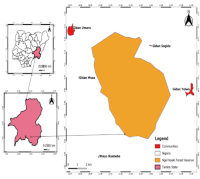
An ethnobotanical survey was conducted to document medicinal plants used by traditional medical practitioners (TMPs) around the Ngel-Nyaki Taraba state, Nigeria, for treating various ailments. The study aimed to preserve indigenous knowledge of medicinal plants, their potential in drug development, and maintaining both the ecological integrity and the cultural knowledge of local communities was a central focus of this research. Field trips twice a month (24) between the 1st week of January and to 2nd week of December 2023 were made to the sites. Interviews were conducted with TMPs, herb vendors, farmers, and elders using semi-structured questionnaires and open-ended conversations. The data were analyzed using Microsoft Excel 2016, focusing on frequencies and percentages for socio-demographic details. The ethnobotanical data were further analyzed using the Relative Frequency of Citation (RFC), Fidelity Level (FL), and Factor Informant Consensus (FIC) to assess the significance of plant species in treating various ailments. The study identified 40 medicinal plant species from 25 families, with Euphorbiaceae (11.90%) and Moraceae (9.52%) being the most common families. The majority of remedies were prepared from bark (46%) and roots (37%), with leaves (9%), fruits (5%), and stems (2%) being used less frequently. The plants were prepared using decoction, concoction, powder, chewing, edible forms, and infusion. A variety of ailments were treated using these plants, showing the breadth of local medicinal knowledge. Herbal medicine remains central to the healthcare practices of local communities around Ngel-Nyaki Taraba state, Nigeria. Protecting the ecological integrity and conserving traditional medicinal knowledge is crucial.
Downloads
Article Details
Section

This work is licensed under a Creative Commons Attribution-NonCommercial-NoDerivatives 4.0 International License.
How to Cite
References
1.Abbes M, Montana M, Curti C, Vanelle P. Ricin poisoning: A review on contamination source, diagnosis, treatment, prevention and reporting of ricin poisoning. Toxicon. 2021;195:86-92.
2.Abdel KN, Mala WA, Chimi PM, Funwi FP, Engoulou C, Effa JAM, Mbolo MM. Ethnobotanical study and vulnerability of medicinal plants used against the symptoms of COVID-19 in the Lomié subdivision, East Region of Cameroon. Heliyon. 2024;10(7).
3.Althobaiti AT. Taxonomic Studies on Family Euphorbiaceae Based on Some Morphological, Biochemical and Molecular Characteristics. J. of Adv Zool. 2023;44.
4.Asiimwe S, Namutebi A, Borg-Karlson AK, Mugisha MK, Kakudidi EK, Hannington OO. Documentation and consensus of indigenous knowledge on medicinal plants used by the local communities of western Uganda. J. of Nat Prod and Plant Res. 2014;4(1):34-42.
5.Asuquo EF, Edet OB, Sampson-Akpan PE, Duke E, Nsemo AD, Ajah CI. Utilization of insecticide treated nets among pregnant women and mothers with under five children in Ikot Omin Community, Calabar, Nigeria. Glob J. of Pure and Appl Sci. 2017;23(1):167-175.
6.Ayza MA, Rajkapoor B, Wondafrash DZ, Berhe AH. Protective effect of Croton macrostachyus (euphorbiaceae) stem bark on cyclophosphamide-induced nephrotoxicity in rats. J. of Exp Pharm. 2020;275-283.
7.Belyagoubi-Benhammou N, Belyagoubi L, Bechlaghem N, Ghembaza N, Atik-Bekkara F. Assessment of antioxidant potential and phytochemical analysis of Pituranthos scoparius crude extract and its fractions. Orig Pharm and Exp Med. 2017;17:51-57.
8.Benkhnigue O, Zidane L, Fadli M, Elyacoubi H, Rochdi A, Douira A. Ethnobotanical study of medicinal plants in the Mechraâ Bel Ksiri region of Morocco. Acta Bot Barc. 2010;(53):191-216.
9.Bett NK, Mwasi B, Lawrence E. Influence of Distance in Forest Utilization and Its Interaction with Neighbouring Communities of South West Mau, Kenya, Konoin Sub-County. Afri J. of Edu, Sci and Tech. 2020;5(4):121-131.
10.Bishaw M. Attitudes of modern and traditional medical practitioners toward cooperation. Ethiop Med J. 1990;28(2):63-72.
11.Borokini TI, Babalola FD, Amusa TO. Community-based forest resources management in Nigeria: case study of Ngel Nyaki Forest Reserve, Mambilla Plateau, Taraba State, Nigeria. 2012.
12.Brahmi F, Iblhoulen Y, Issaadi H, Elsebai MF, Madani K, Boulekbache-Makhlouf L. Ethnobotanical survey of medicinal plants of bejaia localities from algeria to prevent and treat coronavirus (COVID-19) infection shortened title: Phytomedicine to manage COVID-19 pandemic. Adv in Trad Med. 2023;23(3):819-831.
13.Cervantes E, Martín-Gómez JJ, Gutiérrez del Pozo D, Tocino Á. Curvature analysis of seed silhouettes in the Euphorbiaceae. Seeds. 2024;3(4):608–638.
14.Chaudhary P, Singh D, Swapnil P, Meena M, & Janmeda P. Euphorbia neriifolia (Indian spurge tree): A plant of multiple biological and pharmacological activities. Sustainability. 2023;15(2):1225.
15. Cordero CS, Meve U, Alejandro GJD. Quantitative ethnobotanical documentation of medicinal plants used by the indigenous Ati tribes in Panay Island, Philippines. Malays J Sustain Environ. 2022;9(2):143–170.16.
16.Crump JA, Luby SP, Mintz ED. The global burden of typhoid fever. Bull World Health Organ. 2004;82(5):346–353.
17.Dalia GG, AlQahtani RA. Review on: Morphological, Phytochemical and Medical Important of Some Wild Euphorbiaceae Poisonous Plants. Haya Saudi J. Life Sci. 2022;7(11):299-313.
18.Dossou-Yovo HO, Vodouhe FG, Sinsin B. Assessment of the medicinal uses of plant species found on termitaria in the Pendjari biosphere reserve in Benin. J. Med Plant Res. 2014;8(8):368–377.
19.El-Hilah F, Akka FB, Bengueddour R, Rochdi A, Zidane L. Ethnobotanical study of medicinal plants used in the treatment of dermatological conditions in the Moroccan central plateau. J. Appl Biosci. 2016;98:9252-9260.
20.Erinoso SM, Aworinde DO. Current outlook and future promise of ethnobotany in Nigeria: A review and personal observation. Afric J. of Plant Sci. 2018;12(4):73-80.
21.Franke H, Scholl R, Aigner A. Ricin and Ricinus communis in pharmacology and toxicology-from ancient use and Papyrus Ebers to modern perspectives and “poisonous plant of the year 2018”. Naunyn-Schmiedeberg's arch of pharmaco. 2019;392:1181-1208.
22.Friedman J, Yaniv Z, Dafni A, Palewitch D. A preliminary classification of the healing potential of medicinal plants, based on a rational analysis of an ethnopharmacological field survey among Bedouins in the Negev Desert, Israel J. ethnopharmacol. 1986;16(23):275-287.
23.Gajula H, Kumar V, Vijendra PD, Rajashekar J, Sannabommaji T, Basappa G. Secondary metabolites from mangrove plants and their biological activities. In Biotechnological utilization of mangrove resources. Academic Press. 2020;117-134.
24.Gaobotse G, Venkataraman S, Brown PD, Masisi K, Kwape TE, Nkwe DO, Makhzoum A. The use of African medicinal plants in cancer management. Front Pharmarcol. 2023;14:1122388.
25.Gurib-Fakim A. Medicinal plants: traditions of yesterday and drugs of tomorrow. Mol aspects Med. 2006;27(1):1-93.
26.Habchaou J, Saad I, El Khomsi M, Fadli M, Bourkhiss B. Ethnobotanical Study of Medicinal Herbs in the Saïss Urban Commune (Region of Fez/Morocco). Trop J. Nat Prod Res. 2023;7(11).
27.Hassanpouraghdam MB, Ghorbani H, Esmaeilpour M, Alford MH, Strzemski M, Dresler S. Diversity and distribution patterns of endemic medicinal and aromatic plants of Iran: Implications for conservation and habitat management. Int J. of Environ Res Public health. 2022;19(3):1552.
28.Hayat J, Mustapha A, Abdelmajid M, Mourad B, Ali S, Said E, Saadia B. Ethnobotanical survey of medicinal plants growing in the region of" Oulad Daoud Zkhanine"(Nador Province), in Northeastern Morocco. Ethnobot Res Appl. 2020;19:1-12.
29.Hazrati S, Mohammadi-Cheraghabadi M, Mollaei S. Threats and conservation of the medicinal plants. Phytochemicals in medicinal plants: Biodiversity, bioactivity and drug discovery. Cham: springer. 2023:27.
30.Hiura A, Nakagawa H, Kumamoto E, Liu T, Fujita T, Jiang CY. Peripheral and Central Inflammation Caused by Neurogenic and Immune Systems and Anti-Inflammatory Drugs. In Frontiers in Clinical Drug Research-Anti-Allergy Agents: Volume 2. Sharjah: Bentham Science Publishers; 2016. 149-206.
31.Hu R, Lin C, Xu W, Liu Y, Long C. Ethnobotanical study on medicinal plants used by Mulam people in Guangxi, China. J. of ethnobiol and ethnomed. 2020;16:1-50.
32.Hussein RA, El-Anssary AA. Plants secondary metabolites: the key drivers of the pharmacological actions of medicinal plants. Herb med. 2019;1(3):11-30.
33.Kamkumo RG, Betene ANM, Fokou PVT, Donfack JH, Nangap MJT, Ngako A, Boyom FF. Antimalarial effects of the aqueous extract of Entandrophragma angolense bark on Plasmodium berghei infection in mice. Pharm J. 2020;12(4).
34.Kemboi D, Peter X, Langat M, Tembu J. A review of the ethnomedicinal uses, biological activities, and triterpenoids of Euphorbia species. Molecules. 2020;25(17):4019.
35.Kgosiemang IKR, Lefojane R, Adegoke AM, Ogunyemi O, Mashele SS Sekhoacha MP. Pharmacological significance, medicinal use, and toxicity of extracted and isolated compounds from euphorbia species found in southern africa: a review. Plants. 2025;14(3):469.
36.Khursheed A, Jain V. Euphorbia hirta as a gold mine of high-value phytochemicals: A comprehensive review of its pharmacological activities and possible role against SARS-CoV-2. Biomed Res Ther. 2022;9(2):4930-4949.
37.Makunga NP, Philander LE, Smith M. Current perspectives on an emerging formal natural products sector in South Africa. J. of Ethnopharm. 2008;119(3):365-375.
38.Mali PY, Panchal SS. Euphorbia neriifolia L. Review on botany, ethnomedicinal uses, phytochemistry and biological activities. Asian Pac J. of trop med. 2017;10(5):430-438.
39.McGaw L, Jäger A, Grace O, Fennel C, van Staden J. Medicinal plants. In: Ethics in agriculture: African perspective. Dordrecht: Springer Netherlands; 2005. p. 67–83.
40.Mesfin F, Demissew S, Teklehaymanot T. An ethnobotanical study of medicinal plants in Wonago Woreda, SNNPR, Ethiopia. J. of Ethnobiol and Ethnomed. 2009;5:1-18.
41.Mondal S, Ghosh D, Ramakrishna K. A complete profile on blind-your-eye mangrove Excoecariaagallocha L.(Euphorbiaceae): Ethnobotany, phytochemistry, and pharmacological aspects. Pharm rev. 2016;10(20):123.
42.Mountessou BY, G, Tchamgoue J, Mouafon IL, Green IR, Choudhary MI, Kouam, SF. High potential of the genus Allanblackia (Guttiferae): Phytochemistry, pharmacology, and traditional uses over the past half-century. S Afr J. Bot. 2023;153:321-335.
43.Moyo M, Aremu AO, Van Staden J. Medicinal plants: An invaluable, dwindling resource in sub-Saharan Africa. J. Ethnopharm. 2015;174:595-606.
44.Mukaila YO, Oladipo OT, Arogundade OO, Ajao AAN. Traditional knowledge of medicinal plants used in Ile-Ife, Southwestern Nigeria. Asian J. Ethnobiol. 2022;5(2).
45.Mutungi, M. Evidence-based conservation of threatened medicinal plants in dry lands of Kenya: community awareness, and mass propagation. 2023.
46.Ngwamah JS, Mathias A, Dakum YD, Shitta KB, Audu-Ohida H. Evaluation of malaria and clinical forms of Plasmodium species in school-aged children attending Lokoja Specialist Hospital in relation to their socioeconomic status and blood group (ABO), Kogi State, Nigeria. Bima J. Sci Technol. 2024;8(1A):9–19.
47.Njoroge GN, Kaibui IM, Njenga PK, Odhiambo PO. Utilisation of priority traditional medicinal plants and local people's knowledge on their conservation status in arid lands of Kenya (Mwingi District). J. ethnobiol and ethnomed. 2010;6:1-8.
48.Olorode, O. Tax of West Afri flow plts. 1984.
49.Omara T, Kiprop AK, Ramkat RC, Cherutoi J, Kagoya S, Nyangena DM. Medicinal plants used in traditional management of cancer in Uganda: a review of ethnobotanical surveys, phytochemistry, and anticancer studies. Evid Based Complement Alternat Med. 2020;2020(1):3529081.
50.Otu E. Geographical access to healthcare services in Nigeria–a review. Int J. Integr Humanism Ghana. 2018;10(1):16.
51.Papageorgiou D, Bebeli PJ, Panitsa M, Schunko C. Local knowledge about sustainable harvesting and availability of wild medicinal plant species in Lemnos island, Greece. J. of ethnobiol ethnomed. 2020;16:1-23.
52.Payyappallimana U. Role of traditional medicine in primary health care. Yokohama J. Soc Sci. 2010;14(6):57-75.
53.Qadir SU, Raja V. Herbal medicine: Old practice and modern perspectives. In: Phytomedicine. Academic Press; 2021. 149–180.
54.Rahman AHMM, Akter M. Taxonomy and medicinal uses of Euphorbiaceae (Spurge) family of Rajshahi, Bangladesh. Res Plant Sci. 2013;1(3):74–80.
55.Rao BR. Genetic diversity, genetic erosion, conservation of genetic resources, and cultivation of medicinal plants. In: Genetic Diversity and Erosion in Plants. Case Histories. 2015(8):357.
56.Rokaya MB, Münzbergová Z, Timsina, B. Ethnobotanical study of medicinal plants from the Humla district of western Nepal. J. Ethnopharm. 2010;130(3):485-504.
57.Sadgrove NJ, Mitaine-Offer AC, Khumalo G, Van Wyk BE. An overview of the phytochemistry of medicinal bark (trunk, stem or root) from the most popular southern African species. Phytochem Rev. 2025:1–21.
58.Saganuwan S. Ethnoveterinary values of Nigerian medicinal plants: An overview. Eur J. Med Plants. 2017;18(4):1-35.
59.Salem MA, Serag A, El-Seedi HR, Hamdan DI, Ezzat SM, Zayed A. Identification and analysis of toxic phytochemicals. In Phyt, the military and health. Elsevier; 2021: 443-479.
60.Shafi A, Hassan F, Zahoor I, Majeed U, Khanday FA. Biodiversity, management and sustainable use of medicinal and aromatic plant resources. Medicinal and aromatic plants: heallthcare and industrial application. 2021:85-111.
61.Shopo B, Mapaya RJ, Maroyi A. Ethnobotanical study of medicinal plants traditionally used in Gokwe South District, Zimbabwe. S Afr J. Bot. 2022;149:29-48.
62.Soelberg J, Asase A, Akwetey G, Jäger AK. Historical versus contemporary medicinal plant uses in Ghana. J Ethnopharmacol. 2015;160:109–132.
63.Suleiman MHA. An ethnobotanical survey of medicinal plants used by communities of Northern Kordofan region, Sudan. J. ethnopharm. 2015;176:232-242.
64.Tardío J, Pardo-de-Santayana M. Cultural importance indices: a comparative analysis based on the useful wild plants of Southern Cantabria (Northern Spain). Econ bot. 2008;62(1):24-39.
65.Tiwari D, Sah AN, Bawari S, Bussmann RW. Ethnobotanical investigations on plants used in folk medicine by native people of Kumaun Himalayan Region of India. Ethnobiol Res Appl. 2020;20:1-35.
66.Tokuoka T, Tobe H. Phylogenetic analyses of Malpighiales using plastid and nuclear DNA sequences, with particular reference to the embryology of Euphorbiaceae sensu. stricto J. Plant Res. 2006;119:599-616.
67.Tugume P, Kakudidi EK, Buyinza M, Namaalwa J, Kamatenesi M, Mucunguzi P, Kalema J. Ethnobotanical survey of medicinal plant species used by communities around Mabira Central Forest Reserve, Uganda. J. ethnobiol ethnomed. 2016;12:1-28.
68.Uddin AN, Hossain F, Reza AA, Nasrin MS, Alam AK. Traditional uses, pharmacological activities, and phytochemical constituents of the genus Syzygium: A review. Food Sci Nutr. 2022;10(6):1789-1819.
69.World Health Organization. Regional Office for Africa. Promoting the Role of Traditional Medicine in health systems: A Strategy for the African Region. WHO Regional Office for Africa. 2001.
70.Wubetu M, Abula T, Dejenu G. Ethnopharmacologic survey of medicinal plants used to treat human diseases by traditional medical practitioners in Dega Damot district, Amhara, Northwestern Ethiopia. BMC res Notes. 2017;10(1):157.
71.Zakariya AM, Adamu A, Nuhu A, Sabo I, Baita HU. Ethnopharmacological survey of some selected medicinal plants used for the treatment of typhoid in kafin hausa, north west, Nigeria. J. Appl Biol Sci. 2021;15(2):169-184.