Characterization of Matrix Type Diclofenac Sodium Patch as a Transdermal Delivery System: Effect of Polymer Concentration
DOI:
https://doi.org/10.26538/tjnpr/v9i10.58Keywords:
Ethyl Cellulose, Hydroxypropyl Methylcellulose, Carboxymethyl Chitosan, Diclofenac sodium, PatchesAbstract
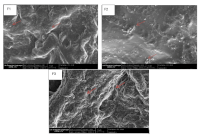
Diclofenac sodium belongs to the class of nonsteroidal anti-inflammatory drugs (NSAIDs) and is extensively utilized for the management of pain and inflammatory conditions, but its oral administration is often associated with gastrointestinal side effects. Therefore, transdermal drug delivery systems such as patches offer an alternative route to improve patient compliance and minimize adverse effects. This research sought to examine the matrix-type formulation of the diclofenac sodium patch using a combination of hydrophilic polymer Carboxymethyl Chitosan (CMC) and Hydroxypropyl Methylcellulose (HPMC) E15, as well as hydrophobic polymer Ethyl Cellulose (EC) N22. The effect of polymer combination and increased CMC concentration were evaluated. The patches were tested in vitro and assessed for their physicochemical properties. The results showed no significant differences in organoleptic, thickness, average weight, homogeneity, and drug content. However, the polymer combination affected surface morphology, and the presence of CMC increased the percentage of %moisture content. The results of this study indicate that patches containing the highest concentration of CMC (F3) showed the highest release, as the patches showed a maximum percentage of moisture absorption. All formulations followed zero-order release kinetics with correlation coefficients (R2) of 0.9061 (F1), 0.9518 (F2), and 0.9686 (F3). Formula F3 was identified as the optimal formulation with the highest %MC (6.34 ± 0.36%), the highest %cumulative drug release (25.20
± 0.42%) at 480 minutes, and zero-order flux (0.0466 μg/cm2/min). These findings suggest that increasing CMC concentration significantly enhances the drug release from diclofenac sodium patches.
References
1.Khadra I, Obeid MA, Dunn C, Watts S, Halbert G, Ford S, Mullen A. Characterisation and optimisation of diclofenac sodium or dispersible thin film formulation. Int J Pharm. 2019; 561: 43–46. Doi: 10.1016/j.ijpharm.2019.01.064.
2.Hu D, Huang H, Jiang R, Wang N, Xu H, Wang YG, Ouyang XK. Adsorption of diclofenac sodium on bilayer amino-functionalized cellulose nanocrystals/chitosan composite. J Hazard Mater. 2019; 369: 483–493. Doi: 10.1016/j.jhazmat.2019.02.057.
3.Yuan J, Ma H, Cen N, Zhou A, Tao H. A pharmacokinetic study of diclofenac sodium in rats. Biomed Rep. 2017; 7(2): 179–182. Doi: 10.3892/br.2017.942.
4.Silva ACQ, Pereira B, Lameirinhas NS, Costa PC, Almeida IF, Pereira PD, Sa IC, Oliveira H, Silvestre AJD, Vilela C, Freire CSR. Dissolvable Carboxymethylcellulose Microneedles for Noninvasive and Rapid Administration of Diclofenac Sodium. Macromol Biosci. 2023; 23(1): 1-11. Doi: 10.1002/mabi.202200323.
5.Mahdiyyah A, Diyah NW, Hendradi E. Transdermal Patches: A review of a new drug delivery system approach. Int J Med Rev Case Rep. 2022; 6(9): 25-31. Doi: 10.5455/ijmrcr.172-1641124566.
6.Wong WF, Ang KP, Sethi G, Looi CY. Recent Advancement of Medical Patch for Transdermal Drug Delivery. Medicina (Lithuania). 2023; 59(4): 1-20. Doi: 10.3390/medicina59040778.
7.Al Hanbali OA, Khan HMS, Sarfraz M, Arafat M, Ijaz S, Hameed A. Transdermal Patches: Design and Current
Approaches to Painless Drug Delivery. Acta Pharmaceutica. 2019; 69(2): 197–215. Doi: 10.2478/acph-2019-0016.
8.Alkilani AZ, McCrudden MTC, Donnelly RF. Transdermal Drug Delivery: Innovative Pharmaceutical Developments Based on Disruption of the Barrier Properties of the Stratum Corneum. Pharmaceutics. 2015; 7(4): 438–470. Doi: 10.3390/pharmaceutics7040438.
9.Waghule T, Singhvi G, Dubey SK, Pandey MM, Gupta G, Singh M, Dua. Microneedles: A Smart Approach and Increasing Potential for Transdermal Drug Delivery System. Biomedicine & Pharmacotherapy. 2019; 109: 1249–1258. Doi: 10.1016/j.biopha.2018.10.078.
10.Rastogi V, Yadav P. Transdermal Drug Delivery System: An Overview. Asian J Pharm. 2012; 6(3): 161–170. Doi: 10.4103/0973-8398.104828.
11.Suksaeree J, Nawathong N, Anakkawee R, Pichayakorn W. Formulation of Polyherbal Patches Based on Polyvinyl Alcohol and Hydroxypropyl methyl Cellulose: Characterization and In Vitro Evaluation. AAPS Pharm SciTech. 2017; 18(7): 2427–2436. Doi: 10.1208/s12249-017-0726-0.
12.Leitner S, Solans C, García-Celma MJ, Morral-Ruíz G, Melgar-Lesmes P, Caldero G. Ethylcellulose nanoparticles prepared from nano-emulsion templates as new folate binding haemocompatible platforms. Mater Sci Eng C. 2021; 120: 111682. Doi: 10.1016/j.msec.2020.111682.
13.Vanti G, Wang M, Bergonzi MC, Zhidong L, Bilia AR. Hydroxypropyl methylcellulose hydrogel of berberine chloride-loaded escinosomes: Dermal absorption and biocompatibility. Int J Biol Macromol 2020;164:232–241. Doi: 10.1016/j.ijbiomac.2020.07.129.
14.Sun T, Zhan B, Zhang W, Qin D, Xia G, Zhang H, Peng M, Li S-A, Zhang Y, Gao Y, Lee W-H. Carboxymethyl chitosan nanoparticles loaded with bioactive peptide OH-CATH30 benefit nonscar wound healing. Int J Nanomedicine 2018;13:5771–5786. Doi: 10.2147/IJN.S156206.
15.Siahaan P, Triandani NWP, Putra RA, Jannah C, Hudiyanti D, Hildayani SZ, Prasasty VD. Carboxymethyl Chitosan Characteristic for Drug Delivery Application and Its Intermolecular Interactions. In: AIP Conference Proceedings American Institute of Physics Inc. 2023: 050013-1–050013-14. doi: 10.1063/5.0140784.
16.Kumar, S.V., Turun, P. dan Kumar T.A. Transdermal drug delivery system for non-steroidal anti-inflammatory drugs: A review. American J Pharmaceu. Res. 2013; 3(5): 3588-3605.
17.Pham QD, Björklund S, Engblom J, Topgaard D, Sparr E. Chemical penetration enhancers in stratum corneum - Relation between molecular effects and barrier function. J. Control Release. 2016; 232: 175–187. Doi: 10.1016/j.jconrel.2016.04.030.
18.Sinko, P.J. Martin’s Physical Pharmacy and Pharmaceutical Sciences: Physical Chemical and Biopharmaceutical Principles in the Pharmaceutical Sciences, Sixth Edition (Sixth edition). Wolters Kluwer. Philadelphia; 2011.
19.Dash S, Murthy PN, Nath L, Chowdhury P. Kinetic modeling on drug release from controlled drug delivery systems. Acta Pol. Pharm. 2010; 67(3): 217–223.
20.Patel S, Shah N, Nagesh C, Venkatesh JS, Shankraiah M. Formulation and evaluation of transdermal patches of losartan potassium. Pharmacology online. 2011; 2: 50–57.
Published
Issue
Section
License
Copyright (c) 2025 Tropical Journal of Natural Product Research

This work is licensed under a Creative Commons Attribution-NonCommercial-NoDerivatives 4.0 International License.