Properties and Application of Luffa aegyptiaca and Citrullus lanatus Seed Lipases in the Degradation of Palm Oil Effluent (POE)
DOI:
https://doi.org/10.26538/tjnpr/v9i10.60Keywords:
degradation, Palm oil effluent, Luffa aegyptiaca, Citrullus lanatus, characterization, LipaseAbstract
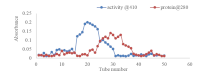
Enzyme pretreatment of palm oil effluent (POE), a significant environmental pollutant, offers an eco-friendly and cost-effective alternative over chemical pretreatment methods. Hence, this research explored the properties of lipases from Luffa aegyptiaca and Citrullus lanatus as well as their potential in the pretreatment of POE. Lipases were obtained on the 4th and 6th day of Luffa aegyptiaca and Citrullus lanatus seeds germination, with specific activities (SAs) of 211.81 and 170.56 U/mg, respectively. After ion exchange and gel filtration chromatography, the SAs were 546.88 and 490.55 U/mg, respectively. The enzymes were stable at a temperature and pH range of 50-80 °C and 5.0- 9.0. The pH optima of the Luffa aegyptiaca and Citrullus lanatus lipases were 7.0 and 6.0, respectively. The optimal temperatures for the Luffa aegytiaca and Citrullus lanatus lipases were 60 and 50 °C, respectively. The Michaelis constant (Km) and maximum velocity (Vmax) of 0.32 mM and 200 μmol/min were obtained for Luffa aegyptiaca lipase, whereas 0.370 mM and 197.27 μmol/min were obtained for Citrullus lanatus lipase. Metal ions (Fe2+, Ca2+, and Co2+) significantly (p<0.05) enhanced the lipase activity more than Mn2+ in a concentration-dependent manner. Pretreatment of POE with lipases enhanced the reduction of total organic carbon, biochemical oxygen demand, and total organic matter. Also, the pH and dissolved oxygen content of the effluent were increased. The properties of Luffa aegyptica and Citrullus lanatus lipases and their ability to degrade palm oil effluent make them ideal for the sustainable and successful pretreatment of POE.
References
1.Bala JD, Lalung J, Al-Gheethi AAS, Kaizar H, Ismail N. Reduction of Organic Load and Biodegradation of Palm Oil Mill Effluent by Aerobic Indigenous Mixed Microbial Consortium Isolated from Palm Oil Mill Effluent (POME). Water Conserv Sci. Eng. 2018; 2018:1-18. https://doi.org/10.1007/s41101-018-0043-9.
2.Oyedele SA, Ayodeji AO, Bamidele OS, Ajele JO, Fabunmi TB. Enhanced lipolytic activity potential of mutant Bacillus niacini EMB-5 Grown on Palm Oil Mill Effluent (POME) and biochemical characterization of purified lipase. Biocatal. Agric. Biotechnol. 2019; 18: 1-9. https://doi.org/10.1016/j.bcab.2019.01.055.
3.Said M, Rayahu RM, Yuliani AD, Faizal M. Aerobic treatment of POME with indigenous individual and consortium bacteria. Mater. Sci. Eng. 2019; 620: 1-8. doi:10.1088/1757-899X/620/1/012021.
4.Ganapathy B, Yahya A, Ibrahim N. Bioremediation of palm oil mill effluent (POME) using indigenous Meyerozyma guilliermondii. Environ. Sci. Pollut. Res. Int. 2019; 11:11113-11125. Doi: 10.1007/s11356-019-04334-8.
5.Adetunji AI, Olaniran AO. Production strategies and biotechnological relevance of microbial lipases: a review. Braz. J. Microbiol. 2021; 52:1257-1269
6.Shafwah OM, Suhendar D, Hudiyono S. Pretreatment of Palm Oil Mill Effluent (POME) Using Lipase and Xylanase to Improve Biogas Production. Adv. Biol. Res. 2019; 15: 86-90.
7.Patel K, Parikh S. Identification, production, and purification of a novel lipase from Bacillus safensis. J. Appl. Biol. Biotechnol. 2022;10: 73-76.
8.Ilesanmi OI, Adekunle AE, Omolaiye JA, Olorode EM, Ogunkanmi AL. Isolation, optimization, and molecular characterization of lipase-producing bacteria from contaminated soil. Sci. Afri. 2020; 8:1-10. https://doi.org/10.1016/j.sciaf.2020.e00279.
9.De Miranda AS, Miranda LS, de Souza RO. Lipases: Valuable catalysts for dynamic kinetic resolutions. Biotechnol. Adv. 2015; 33: 372-393.
10.Cavalcante FTT, Neto FS, de Aguiar Falcão IR, da Silva Souza JE, de Moura Junior LS, da Silva Sousa PP, Rocha TG, de Sousa IG, de Lima Gomes PH, de Souza MCM, dos Santos JC. Opportunities for improving biodiesel production via lipase catalysis. Fuel. 2021; 288: 119577.
11.Thangaraj B, Solomon PR. Immobilization of lipases–a review. Part I: Enzyme Immobilization. Chem. Bio. Eng. Rev. 2019; 6:157-166.
12.Zong W, Liu S, Yun J, Xiao X, Deng Z, Li H. Application of β-glucosidase Immobilized on Chitosan microspheres in Degradation of Polydatin in Polygonum cuspidatum. E3S Web of Conferences. 2021; 233: 1-8. https://doi.org/10.1051/e3sco nf/202123302034.
13.Guldhe A, Singh P, Kumari S, Rawat I, Permaul K, Bux F. Biodiesel synthesis from microalgae using immobilized Aspergillus niger whole cell lipase biocatalyst. Renew. Energ. 2016; 85: 1002-1010.
14.Santos MR, Hirata DB, Angelotti JAF. Lipases: Sources of Acquisition, Ways of Production, and Recent Applications. Catal. Res. 2022; 2(2): 1-35. doi:10.21926/cr.2202013
15.Maqbool M, Andleeb S, Jamil H, Akhtar K. Extraction of lipase from waste fruit seeds and its biomedical applications. J. Biol. Sci. Public Health. 2024; 2:11-18
16.Sankar S, Ponnuraj K. Less explored plant lipases: Modeling and molecular dynamics simulations of plant lipases in different solvents and temperatures to understand structure-function relationship. Int. J. Biol. Macromol. 2020; 164: 3546-3558.
17.Eze SOO, Chilaka FC, Nwanguma B. Studies on thermodynamic and Kinetic of thermoinactivation of some quality-related enzymes in white yam. J Thermodyn. Catal. 2010; 1:104.
18.Lowry O, Roseburg N, Farr A, Randall R. Protein measurement with Folin-Phenol reagents. J. Biol. Chem. 1951; 93, 265-275.
19.Lokrakul P, Dharmshiti S. Lipase production by Aeromonas Sobri LP004 in a medium containing whey and soybean meal. World J. Microbiol. Biotechnol. 1997;
13: 163- 166.
20.Liu Z, Chi L, Wang J, Li J. Production, purification and characterization of an extracellular lipase from Aureobasidium pullulans HN2.3 with potential application for the hydrolysis of edible oils. Biochem. Eng. J. 2008; 40: 445-451.
21.Abdella B, Youssif AM, Sabry SA, Ghozlan HA. Production, purification, and characterization of cold-active lipase from the psychrotroph Pseudomonas sp. A6. Braz J. Microbiol. 2023; 54(3):1623-1633. doi: 10.1007/s42770-023-01079-y.
22.Al-Haidari AMD, Khudhair SH, Alsaadawi, IS. Extraction and purification of lipase enzymes from germinating Seeds of Four Crops. Iraqi J. Sci. 2020; 61: 2182-2188.
23.Salmanu AN, Maibeza AH, Muhammed YG, Bashir M, Dangambo MA, Ibrahim S, Musa KA, Alhassan, AJ. (2024). Purification and Characterization of Lipase Isolated from Cyperus esculentus (Tiger nut) Milk and Determination of Factors Inhibiting the Lipase Activity. Malaysian J. Sci. Adv. Tech. 2024; 4:242-248. https://doi.org/10.56532/mjsat.v4i3.281.
24.Eze SOO, Ezema BO. Purification and Characterization of Lipase (EC 3.1.1.3) from the Seeds of Cucumeropsis manni (White Melon). Thai J. Agric. Sci. 2012; 45: 115- 120.
25.Romo-Silva M, Flores-Camargo EO, Chávez-Camarillo GM, Cristiani-Urbina E. Production, Purification, and Characterization of Extracellular Lipases from Hyphopichia wangnamkhiaoensis and Yarrowia deformans. Fermentation. 2024; 10: 595. https://doi.org/10.3390/fermentation10120595.
26.Buratai LB, Saidu MD, Ali AA, Milala MA, Lawan HK. Isolation and characterization of crude lipase from sprouted Hibiscus sabdariffa (sorrel) seeds. J. Sci. Multidiscip. Res. 2017; 9: 95-103.
27. Onosakponome I, Ezugwu AL, Eze SOO, Chilaka FC. Kinetics and Thermodynamic Properties of Glucose Oxidase Obtained from Aspergillus fumigatus ASF4. Trop J Nat Prod Res. 2022; 6(3):438-445. doi.org/10.26538/tjnpr/v6i3.22.
28.Nsude CA, Ezike TC, Ezugwu AL, Eje OE, Onwurah INE, Chilaka FC. Kinetics and Thermodynamic Properties of Pectinase Obtained from Trichoderma longibrachiatum MT321074. Trop J Nat Prod Res. 2022; 6(12):2063-2072. http://www.doi.org/10.26538/tjnpr/v6i12.28
Published
Issue
Section
License
Copyright (c) 2025 Tropical Journal of Natural Product Research

This work is licensed under a Creative Commons Attribution-NonCommercial-NoDerivatives 4.0 International License.