


Comparative Analysis of Proximate Composition, Microbial, Antioxidant and Sensory Evaluation of Yoghurts Made from Chili Pepper and Freeze Dried Starter
Article Sidebar
Main Article Content
Abstract
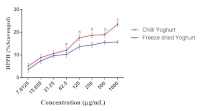
Fermentation is an important process in yoghurt production. The precise role that red chilli peppers play in fermenting milk to make yoghurt is still unknown. The study examined the use of chili pepper as an alternative fermentation starter in yoghurt production. The pH, proximate composition, microbiological, antioxidant, phenolic, and sensory qualities of yoghurt produced from chili pepper starter (CPS) and freeze-dried starter (FDS) were compared. Results showed that the pH of milk decreases with an increase in chili pepper concentration. In terms of proximate composition, the protein (8% and 8.3%, respectively), fat (1.02% and 1.01%), and carbohydrate (16% and 17%) contents of the chili pepper and FDS yoghurts were similar. The microbial analysis verified the presence of Lactobacillus in both varieties of yoghurt, but antioxidant analysis reveals little antioxidant activity. Sensory analysis shows overall acceptability of the two yoghurts. The phenolic content of chili pepper yoghurt (572.30 ± 1.83 mg GAE/kg) was significantly higher in comparison to the FDS yoghurt (526.05 ± 0.77 mg GAE/kg). According to the study's findings, chili pepper can be utilized as a successful starter culture to produce yoghurt that is on par with yoghurt made with FDS, providing a novel approach to yoghurt production.
Downloads
Article Details
Section

This work is licensed under a Creative Commons Attribution-NonCommercial-NoDerivatives 4.0 International License.
How to Cite
References
1.Evivie SE, Abdelazez A, Li B, Lu S, Liu F, Huo G. Lactobacillus delbrueckii subsp. bulgaricus KLDS 1.0207 exerts antimicrobial and cytotoxic effects in vitro and improves blood biochemical parameters in vivo against notable foodborne pathogens. Front. Microbiol. 2020; 24(11):583070. Doi:10.3389/fmicb.2020.583070
2. Yang S, Bai M, Kwok LY, Zhong Z, Sun Z. The intricate symbiotic relationship between lactic acid bacterial starters in the milk fermentation ecosystem. Crit Rev Food Sci Nutr. 2025;65(4):728-745. Doi: 10.1080/10408398.2023.2280706.
3. Church A, Zoeller S. Enteral nutrition product formulations: A review of available products and indications for use. Nutrition in Clinical Practice. 2023 Apr;38(2):277-300. Doi: https://doi.org/10.1002/ncp.10960
4. Irene Goetzke B, Spiller A. Health-improving lifestyles of organic and functional food consumers. British Food Journal. 2014;116(3):510-26. Doi: 10.1108/BFJ-03-2012-0073
5. Horlacher N, Oey I, Agyei D. Learning from tradition: health-promoting potential of traditional lactic acid fermentation to drive innovation in fermented plant-based dairy alternatives. Fermentation. 2023;9(5):452. Doi: 10.3390/fermentation9050452
6. Gänzle MG, Monnin L, Zheng J, Zhang L, Coton M, Sicard D, Walter J. Starter culture development and innovation for novel fermented foods. Annu Rev Food Sci Technol. 2024 Jun;15(1):211-239. Doi: 10.1146/annurev-food-072023-034207
7. Stephen EC, Silas TV, Iorlumun I. Comparative studies on the nutritional and physicochemical properties of yoghurts produced from soy and cow milk. Am. J. Microbiol. Biotechnol. 2017;4(1):8-13.
8. Duarte RV, Pinto CA, Gomes AM, Delgadillo I, Saraiva JA. A microbiological perspective of raw milk preserved at room temperature using hyperbaric storage compared to refrigerated storage. Innovative Food Science & Emerging Technologies. 2022;78(1):103019. Doi: 10.1016/j.ifset.2022.103019
9. Lim YS, Kim J, Kang H. Isolation and identification of lactic acid bacteria with probiotic activities from kimchi and their fermentation properties in milk. J Dairy Sci Biotechnol. 2019;37(2):115-28.
10. Duranova H, Valkova V, Gabriny L. Chili peppers (Capsicum spp.): The spice not only for cuisine purposes: An update on current knowledge. Phytochemistry Reviews. 2022;21(4):1379-413. Doi: 10.1007/s11101-021-09789-7
11. Shen W, Shen M, Zhao X, Zhu H, Yang Y, Lu S, Tan Y, Li G, Li M, Wang J, Hu F. Anti-obesity effect of capsaicin in mice fed with high-fat diet is associated with an increase in population of the gut bacterium Akkermansia muciniphila. Front. microbiol. 2017 23(8):272. Doi: 10.3389/fmicb.2017.00272
12. Ning X, Luo Z, Chen Z, Zhou C, Xie C, Du W, Wang L. Fortification of set yogurt with passion fruit juice: Effects on fermentation kinetics, physicochemical properties, and functionality. Journal of Dairy Science. 2021 104(4):4084-93. Doi: 10.3168/jds.2020-19261
13. Sohrabvandi S, Mortazavian AM, Dolatkhahnejad MR, Monfared AB. Suitability of MRS-bile agar for the selective enumeration of mixed probiotic bacteria in presence of mesophilic lactic acid cultures and yoghurt bacteria. Iran. J. Biotechnol. 2012 10(1):16-21.
14. Abiom LA, Ire FS, Ahaotu I. Production and characterization of bacteriocin from lactic acid bacteria isolated from fermented food products. Sci. Afri. 2024 12;23(3):101-14. Doi: 10.4314/sa.v23i3.10
15. Ogodo AC, Agwaranze DI, Daji M, Aso RE. Microbial techniques and methods: basic techniques and microscopy. In Analytical Techniques in Biosciences 2022; 1 (pp. 201-220). Academic Press. Doi: 10.1016/B978-0-12-822654-4.00003-8
16. Matela KS, Pillai MK, Matebesi-Ranthimo P, Ntakatsane M. Analysis of proximate compositions and physiochemical properties of some yoghurt samples from Maseru, Lesotho. J. Food Nutr. Res. 2019;2(3):245-52. Doi: 10.26502/jfsnr.2642-11000023
17. Oladipo IC, Atolagbe OO, Adetiba TM. Nutritional evaluation and microbiological analysis of yoghurt produced from full cream milk, tiger-nut milk, skimmed milk and fresh cow milk. Pensee. 2014;76(4):30-8.
18. Okunlola GO, Jimoh MA, Olatunji OA, Rufai AB, Omidiran AO. Proximate analysis, mineral composition, and antioxidant properties of bitter leaf and scent leaf. Int. J. Veg. Sci.. 2019 25(4):346-54. Doi: 10.1080/19315260.2018.1515141.
19. Asis H, Riadi AS, Arifin M, Ware I, Budiman C. Physicochemical Properties and Biochemical Profiling of Local Commercial Forest and Tualang Honeys. TJNPR. 2024; 8(10). Doi: 10.26538/tjnpr/v8i10.11.
20. Okafor CE, Ijoma IK, Igboamalu CA, Ezebalu CE, Eze CF, Osita-Chikeze JC, Uzor CE, Ekwuekwe AL. Secondary metabolites, spectra characterization, and antioxidant correlation analysis of the polar and nonpolar extracts of Bryophyllum pinnatum (Lam) Oken. BioTechnologia. 2024;105(2):121-36. Doi: 10.5114/bta.2024.139752
21. Ijoma KI, Ajiwe VI, Odinma SC. The organic extracts from the leaves of Ficus thonningii Blume, Jatropha tanjorensis JL Ellis and Saroja and Justicia carnea Lindley as potential nutraceutical antioxidants and functional foods. TPR. 2023;7(1):76-85. Doi: 10.30495/tpr.2023.1977670.1318
22. Wardana AP, Aminah NS, Kristanti AN, Fahmi MZ, Abdjan MI, Sucipto TH. Antioxidant, Anti-inflammatory, Antiviral and Anticancer Potentials of Zingiberaceae Species Used as Herbal Medicine in Indonesia. TJNPR. 2024 1;8(9).p8393. Doi: 10.26538/tjnpr/v8i9.22
23. Song J, Liu Y, Guo R, Pacheco A, Muñoz-Zavala C, Song W, Wang H, Cao S, Hu G, Zheng H, Dhliwayo T. Exploiting genomic tools for genetic dissection and improving the resistance to Fusarium stalk rot in tropical maize. Theor Appl Genet. 2024;137(5):109. Doi: 10.1007/s00122-024-04597-x
24. Maisano M, Meletharayil GH, Engel D. FDA Amends Final Ruling For Yohurt Standard of Identity. FDLI Update. 2023:14.
25. Shi C, Maktabdar M. Lactic acid bacteria as biopreservation against spoilage molds in dairy products–A review. Frontiers in microbiology. 2022 26(12):819684. Doi: 10.3389/fmicb.2021.8196842
26. Udayakumar S, Rasika DM, Priyashantha H, Vidanarachchi JK, Ranadheera CS. Probiotics and beneficial microorganisms in biopreservation of plant-based foods and beverages. Appl. Sci. 2022, 12(22), 11737; https://doi.org/10.3390/app122211737
27. Tamime AY, Robinson RK. Yoghurt: science and technology. 1985;29.
28. Oleksy M, Klewicka E. Capsular polysaccharides of Lactobacillus spp.: theoretical and practical aspects of simple visualization methods. Probiotics Antimicrob Proteins. 2017;9(4):425-434. Doi: 10.1007/s12602-017-9295-5.
29. Boyanova L. Direct Gram staining and its various benefits in the diagnosis of bacterial infections. Postgrad Med. 2018;130(1):105-110. Doi:10.1080/00325481.2018.1398049.
30. Rohde M. The Gram-positive bacterial cell wall. Microbiology Spectrum. Microbiol Spectr. 2019;7(3):Doi: 10.1128/microbiolspec.gpp3-0044-2018.
31. Yang E, Fan L, Yan J, Jiang Y, Doucette C, Fillmore S, Walker B. Influence of culture media, pH and temperature on growth and bacteriocin production of bacteriocinogenic lactic acid bacteria. AMB Express. 2018;8(1):10. doi: 10.1186/s13568-018-0536-0.
32. Renschler MA, Wyatt A, Anene N, Robinson-Hill R, Pickerill ES, Fox NE, Griffith JA, McKillip JL. Using nitrous acid-modified de Man, Rogosa, and Sharpe medium to selectively isolate and culture lactic acid bacteria from dairy foods. J Dairy Sci . 2020;103(2):1215-1222. Doi: 10.3168/jds.2019-17041
33. Mehmood T, Masud T, Abbass SA, Maqsud S. Isolation and identification of wild strains of lactic acid bacteria for yoghurt preparation from indigenous Dahi. Pak. J. Nutr. 2009;8(6):866-71.
34. Tamang JP, Kailasapathy K, editors. Fermented foods and beverages of the world. CRC press; 2010 Jul 1.
35. Vitheejongjaroen P, Kanthawang P, Loison F, Jaisin Y, Pachekrepapol U, Taweechotipatr M. Antioxidant activity of Bifidobacterium animalis MSMC83 and its application in set-style probiotic yoghurt. Food Bioscience. 2021;(1)43:101259.
36. Argaw S, Addis M. A review on staphylococcal food poisoning. Food Science and Quality Management. 2015;40(2015):59-72. Doi: 10.1016/j.fbio.2021.101259
37. de Britto Policarpi P, Turcatto L, Demoliner F, Ferrari RA, Bascuñan VL, Ramos JC, Jachmanián I, Vitali L, Micke GA, Block JM. Nutritional potential, chemical profile and antioxidant activity of Chichá (Sterculia striata) nuts and its by-products. Food Res Int. 2018;106:736-744. Doi: 10.1016/j.foodres.2017.12.069.
38. Omola EM, Kawo AH, Shamsudden U. Physico-chemical, sensory and microbiological qualities of yoghurt brands sold in Kano metropolis, Nigeria. BAJOPAS. 2014;7(2):26-30.
39. Micha R, Peñalvo JL, Cudhea F, Imamura F, Rehm CD, Mozaffarian D. Association between dietary factors and mortality from heart disease, stroke, and type 2 diabetes in the United States. JAMA. 2017;317(9):912-924. Doi: 10.1001/jama.2017.0947.
40. Boirie Y, Dangin M, Gachon P, Vasson MP, Maubois JL, Beaufrère B. Slow and fast dietary proteins differently modulate postprandial protein accretion. Proc Natl Acad Sci USA. 1997;94(26):14930-5. Doi: 10.1073/pnas.94.26.14930.
41. Calder PC. Functional roles of fatty acids and their effects on human health. Journal of parenteral and enteral nutrition. JPEN J Parenter Enteral Nutr. 2015;39(1 Suppl):18S-32S.
42. Ehirim FN, Onyeneke EN. Physico-chemical and organoleptic properties of yoghurt manufactured with cow milk and goat milk. Academic Research International. 2013;4(4):245.
43. Popescu L, Bulgaru V. The effects of lactose hydrolysis on the lactose-free yogurt quality. InModern Technologies in the Food Industry 2022. 978-997
44. Slavin JL. Dietary fiber and body weight. Nutrition. 2005;21(3):411-8.Doi: 10.1016/j.nut.2004.08.018.
45. Igbabul B, Shember J, Amove J. Physicochemical, microbiological and sensory evaluation of yoghurt sold in Makurdi metropolis. AJFST. 2014;5(6):129-35.
46. Virtanen T, Pihlanto A, Akkanen S, Korhonen H. Development of antioxidant activity in milk whey during fermentation with lactic acid bacteria. J Appl Microbiol . 2007;102(1):106-15. Doi: 10.1111/j.1365-2672.2006.03072.x.
47. Omola EM, Kawo AH, Shamsudden U. Physico-chemical, sensory and microbiological qualities of yoghurt brands sold in Kano metropolis, Nigeria. BAJOPAS. 2014;7(2):26-30.
48. da Silva N, Junqueira VC, de Arruda Silveira NF, Taniwaki MH, Gomes RA, Okazaki MM. Manual de métodos de análise microbiológica de alimentos e água. Editora Blucher; 2017 Apr 10.
49. Gómez-Gallego C, Gueimonde M, Salminen S. The role of yogurt in food-based dietary guidelines. Nutr Rev . 2018;76(Suppl 1):29-39. Doi: 10.1093/nutrit/nuy059.
50. Bach EM, Baer SG, Meyer CK, Six J. Soil texture affects soil microbial and structural recovery during grassland restoration. Soil biology and biochemistry. 2010 1;42(12):2182-91. Doi: 10.1016/j.soilbio.2010.08.014
51. Olugbuyiro JA, Oseh JE. Physico-chemical and sensory evaluation of market yoghurt in Nigeria. Pakistan Journal of Nutrition. 2011 31;10(10):914-8.
52. Rafieian-Kopaei M, Baradaran A, Rafieian M. Plants antioxidants: From laboratory to clinic. Journal of nephropathology. 2013;2(2):152. Doi: 10.12860/JNP.2013.26
53. Halliwell B. Free radicals and antioxidants–quo vadis?. Trends Pharmacol Sci. 2011;32(3):125-30. Doi: 10.1016/j.tips.2010.12.002.
54. Shori AB. Storage quality and antioxidant properties of yogurt fortified with polyphenol extract from nutmeg, black pepper, and white pepper. Electronic Journal of Biotechnology. 2022;57(1):24-30. Doi: 10.1016/j.ejbt.2022.03.003
55. Citta A, Folda A, Scalcon V, Scutari G, Bindoli A, Bellamio M, Feller E, Rigobello MP. Oxidative changes in lipids, proteins, and antioxidants in yogurt during the shelf life. Food Sci Nutr. 2017;5(6):1079-1087. Doi: 10.1002/fsn3.493.
56. Juncker HG, Ruhé EJ, Burchell GL, van den Akker CH, Korosi A, van Goudoever JB, van Keulen BJ. The effect of pasteurization on the antioxidant properties of human milk: A literature review. Antioxidants. 2021;10(11):1737. Doi: 10.3390/antiox10111737.
57. Mbuge DO, Mutai EB. Influence of heat treatment on vitamin C levels in Oyster Mushroom. 2018;8(2):47-52.
58. de la Rosa LA, Moreno-Escamilla JO, Rodrigo-García J, Alvarez-Parrilla E. Phenolic compounds. InPostharvest physiology and biochemistry of fruits and vegetables. 2019;1. 253-271).
59. Arnnok P, Ruangviriyachai C, Mahachai R, Techawongstien S, Chanthai S. Determination of total phenolics and anthocyanin contents in the pericarp of hot chilli pepper (Capsicum annuum L.). Int. Food Res. J. 2012 Feb 1;19(1).
60. Buitimea-Cantúa NE, Gutiérrez-Uribe JA, Serna-Saldívar SO. Phenolic–protein interactions: Effects on food properties and health benefits. J Med Food. 2018;21(2):188-198. Doi: 10.1089/jmf.2017.0057. Doi: 10.1089/jmf.2017.0057