Antioxidant and α-amylase/α-glucosidase Inhibitory Activities 0f Leaf, Bark, and Seed Extracts of Moringa oleifera Grown in Buon Ma Thuot, Vietnam
DOI:
https://doi.org/10.26538/tjnpr/v9i8.18Keywords:
Moringa oleifera, antioxidant, α-amylase inhibition, α-glucosidase inhibition, phenolics, Buon Ma ThuotAbstract
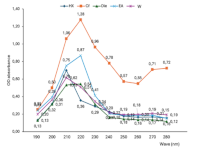
Buon Ma Thuot in Vietnam's Central Highlands features basalt-rich soil and a mild highland climate that may favor the accumulation of bioactive phytochemicals. This study assessed the antioxidant and α-amylase/α-glucosidase inhibitory activities of Moringa oleifera leaf, bark, and seed extracts collected from this region to identify the most bioactive plant part and isolate functional fractions. Sequential solvent fractionation (hexane, chloroform, diethyl ether, ethyl acetate, water) was applied to the ethanol-extracted leaf sample, which exhibited the highest initial activity, to enrich bioactive compounds. The Buon Ma Thuot Moringa leaf extract exhibited significantly higher phenolic and flavonoid contents than those reported for M. oleifera from other regions, correlating with enhanced antioxidant and enzyme-inhibitory effects. Among the fractions, the chloroform-soluble layer showed the strongest DPPH radical scavenging activity (IC₅₀ ≈ 117 µg/mL), the diethyl ether fraction had the highest α-amylase inhibition (IC₅₀ ≈ 11.5 mg/mL), and the ethyl acetate fraction provided the most potent α-glucosidase inhibition (IC₅₀ ≈ 2.1 mg/mL). The latter value is notably more potent than most previously reported values (e.g., >5 mg/mL) for Moringa extracts, highlighting the phytochemical richness of leaves grown in this ecological zone. These findings suggest that M. oleifera leaves from Buon Ma Thuot are promising natural sources of antioxidants and mild enzyme inhibitors, with potential applications in functional foods or adjunct therapy for type 2 diabetes.
References
Duong TD, Nguyen TX, Phan HT, Tran TT, Le TH. Determination of phytochemical composition of Moringa oleifera cultivated in Thanh Hoa. J Med Mater. 2012; 17(4):13–17.
Leone A, Spada A, Battezzati A, Schiraldi A, Aristil J, Bertoli S. Cultivation, genetic, ethnopharmacology, phytochemistry and pharmacology of Moringa oleifera leaves: an overview. Nutrients. 2022; 14(5):1057.
Adusei S, Essuman EK, Ansong R, Oppong IA, Yeboah SO. Nutritional and phytochemical composition of Moringa oleifera Lam. leaves: potential dietary supplement for managing chronic diseases. Heliyon. 2022; 8(9):e10525.
Jansen RA. The systematics of Moringaceae. Utrecht: University of Utrecht; 2012.
Oyeyinka AT, Oyeyinka SA, Popoola AA, Olasanmi BO. Phytochemical composition and antioxidant activity of Moringa oleifera leaves grown in South-Western Nigeria. Antioxidants. 2023; 12(5):1047.
Konmy K, Yamasaki Y, Kim HJ. Study on antioxidant capacity of Moringa oleifera leaves from Southeast Asia. J Food Nutr Res. 2016; 4(6):376–382.
Kasolo JN, Bimenya GS, Ojok L, Ochieng J, Ogwal-Okeng JW. Phytochemicals and uses of Moringa oleifera leaves in Uganda: a review. Afr J Pharm Pharmacol. 2019; 13(3):27–35.
Oladeji OS, Adelowo FE, Ayodele DT, Olasanmi BO. Ethnobotanical appraisal and phytochemical screening of Moringa oleifera for nutraceutical potential. Sci Afr. 2020; 9:e00574.
Gopalakrishnan L, Doriya K, Kumar DS. In vitro inhibitory potentials of ethanolic extract of Moringa oleifera flower against enzymes activities linked to diabetes. J Herbmed Pharmacol. 2021; 10(4):408–413.
Nguyen TH, Le PTT, Vo NK, Nguyen QT. Evaluation of antioxidant and enzyme inhibitory activities of ethanol extract from Moringa oleifera grown in Mekong Delta, Vietnam. J Appl Biol Biotechnol. 2022; 10(3):114–120.
Folin O, Ciocalteu V. On tyrosine and tryptophane determination in proteins. J Biol Chem. 1927; 73:627–650.
Chang CC, Yang MH, Wen HM, Chern JC. Estimation of total flavonoid content in propolis by two complementary colorimetric methods. J Food Drug Anal. 2002; 10(3):178–182.
Abdulkadir AR, Dauda A, Sadiq A, Usman MS. Antioxidant and alpha-glucosidase inhibitory potential of aqueous extract of Moringa oleifera roots. J Appl Pharm Sci. 2015; 5(10):95–101.
Adisakwattana S, Chanathong B. α-Glucosidase inhibitory activity and lipid-lowering mechanisms of Moringa oleifera leaf extract. Eur Rev Med Pharmacol Sci. 2011; 15(7):803–808.
Magaji UM, Anuka JA, Abdurahman EM, Hussaini IM. Anti-diabetic effect of methanolic extract of Moringa oleifera seeds in alloxan-induced diabetic rats. Afr J Tradit Complement Altern Med. 2020; 17(4):49–56.
Siddhuraju P, Becker K. Antioxidant properties of various solvent extracts of total phenolic constituents from three different agro-climatic origins of drumstick tree (Moringa oleifera Lam.) leaves. J Agric Food Chem. 2003; 51(8):2144–2155.
Tawiah A, Cornick S, Moreau F, Gorman H, Kumar M, Tiwari S, Chadee K. High MUC2 Mucin Expression and Misfolding Induce Cellular Stress, Reactive Oxygen Production, and Apoptosis in Goblet Cells. Am J Pathol. 2018;188:1354–1373.
Kang S, Gweon T, Lee H, Lee KM, Jung SH, Kang SB. Reliability and Validity of Korean Version of Crohn’s and Ulcerative Colitis Questionnaire-8. Biomed Res Int. 2022; 9746899-9746899.
Karlsson L, Rehnström E, Karlsson A, Utkovic H, Jansson L and Michaëlsson E.Validation of murine dextran sulfate sodium-induced colitis using four therapeutic agents for human inflammatory bowel disease. Int Immunopharmacol. 2008; 8: 836-844.
Escande, F, Porchet, N, Aubert JP. Batra SK. Structural organization and classification of the human mucin genes. Frontiers in Bioscience. 2001; 6, D1192–1206.
Colombel JF, Aboubakr A, Narula N. Systematic review: Safety of mesalazine in ulcerative colitis. Aliment. Pharmacol. Ther. 2018; 47:1597–1609. doi: 10.1111/apt.14688.
Published
Issue
Section
License
Copyright (c) 2025 Tropical Journal of Natural Product Research

This work is licensed under a Creative Commons Attribution-NonCommercial-NoDerivatives 4.0 International License.