


Effects of Nanoparticle of Saussurea lappa on Stem Cell from Human Exfoliated Deciduous Teeth (SHED) Proliferation and Cancer Cell Inhibition
Article Sidebar
Views | PDF/EPUB Downloads:
226
/ 76
/ 54
Main Article Content
Abstract
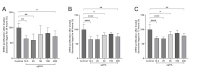
Saussurea lappa, a medicinal plant, is known for its anti-inflammatory, and anticancer properties. This study explored the effects of nanoparticle of Saussurea lappa on stem cells from human exfoliated deciduous teeth (SHED) proliferation at various concentrations, aiming to assess its potential in promoting stem cell growth. The preparation of nanoparticles from Saussurea lappa was accomplished through an encapsulation method utilizing Eudragit RS 100.Simultaneously, the cytotoxic effects of nanoparticle of Saussurea lappa on HeLa cells were evaluated by determining its IC₅₀, providing insights into its anticancer properties. The dual focus on enhancing stem cell proliferation and inhibiting cancer cell growth highlights the therapeutic versatility of nanoparticle of Saussurea lappa. SHED proliferation was assessed at concentrations of 12.5, 25, 50, 100, and 200 µg/ml after exposure for 24, 48, and 72 hours. Cell viability was measured using absorbance assays. Additionally, the inhibitory effects of nanoparticle of Saussurea lappa on HeLa cells were evaluated to determine the IC₅₀ value. The nanoparticle Saussurea lappa demonstrates a concentration- and time-dependent effect on cell proliferation. At high concentrations (100–800 µg/mL), it significantly reduces cancer cell viability, indicating strong cytotoxic potential. For SHED cells, proliferation decreases notably at 12.5 µg/mL (p < 0.0001) across 24, 48, and 72 hours, with inhibitory effects diminishing at higher concentrations. Nanoparticle of Saussurea lappa shows promising dual effects as a stimulant of SHED proliferation and an inhibitor of cancer cell growth. These findings suggest its potential therapeutic applications in regenerative medicine and cancer treatment, warranting further investigation into its underlying mechanisms and clinical efficacy.
Downloads
Article Details
Section

This work is licensed under a Creative Commons Attribution-NonCommercial-NoDerivatives 4.0 International License.
How to Cite
References
⦁ Madhuri K, Elango K, Ponnusankar S. Saussurea lappa (Kuth root): review of its traditional uses, phytochemistry and pharmacology. Orient Pharm Exp Med. 2012;12(1):1–9. DOI: https://doi.org/10.1007/s13596-011-0043-1
⦁ Ali SI, Venkatesalu V. Botany, traditional uses, phytochemistry and pharmacological properties of Saussurea costus – An endangered plant from Himalaya- A review. Phytochem Lett. 2022;47:140–155. DOI: https://doi.org/10.1016/j.phytol.2021.12.008
⦁ Alnahdi HS, Danial EN, Elhalwagy MEA El, Ayaz NO. Phytochemical Studies, Antioxidant Properties and Antimicrobial Activities of Herbal Medicinal Plants Costus and Cidir Used in Saudi Arabia. Int J Pharmacol. 2017;13(5):481–487. DOI: https://doi.org/10.3923/ijp.2017.481.487
⦁ Rahman MdA, Hong J-S, Huh S-O. Antiproliferative properties of Saussurea lappa Clarke root extract in SH-SY5Y neuroblastoma cells via intrinsic apoptotic pathway. Anim Cells Syst (Seoul). 2015;19(2):119–126. DOI: https://doi.org/10.1080/19768354.2015.1008041
⦁ Ali S, Ahmed D. Comparing DES-mediated ultrasound- and heat-assisted extraction of bioactive metabolites from Saussurea lappa and optimization by RSM and validation studies. GAC. 2023;7:100080. DOI: https://doi.org/10.1016/j.greeac.2023.100080
⦁ Urvashi, Kaur R. Saussurea Lappa C.B. Clarke: Kushta/Kut. In: Immunity Boosting Medicinal Plants of the Western Himalayas. Singapore: Springer Nature Singapore; 2023. p. 433–462. DOI: https://doi.org/10.1007/978-981-19-9501-9_18
⦁ Pavan Kumar Ch, Devi A, Ashok Yadav P, Rao Vadaparthi R, Shankaraiah G, Sowjanya P. “Click” reaction mediated synthesis of costunolide and dehydrocostuslactone derivatives and evaluation of their cytotoxic activity. J Asian Nat Prod Res. 2016;18(11):1063–1078. DOI: https://doi.org/10.1080/10286020.2016.1193012
⦁ Barrios FJ. Chemistry of Sesquiterpene Lactones. In: Sesquiterpene Lactones [Internet]. Cham: Springer International Publishing; 2018. p. 93–117. DOI: https://doi.org/10.1007/978-3-319-78274-4_5
⦁ Peasari J reddy, Motamarry S sri, Varma KS, Anitha P, Potti RB. Chromatographic analysis of phytochemicals in Costus igneus and computational studies of flavonoids. Inform Med Unlocked. 2018;13:34–40. DOI: https://doi.org/10.1016/j.imu.2018.10.004
⦁ Park K-S, Kim H, Kim MK, Kim K, Chong Y. Synthesis and biological evaluation of flavonol-glucose conjugates for cosmeceutical development. J Korean Soc Appl Biol Chem [Internet]. 2015 Jun 11;58(3):317–323. DOI: https://doi.org/10.1007/s13765-015-0049-3
⦁ Kumar R, Patel SK, Verma A, Joshi GS, Bisen HK, Asrani RK. Saussurea costus (falc.) lipsch: A promising ally against cancer. PRENAP. 2024;5:100123. DOI: https://doi.org/10.1016/j.prenap.2024.100123
⦁ Pandey MM, Rastogi S, Rawat AKS. Saussurea costus: Botanical, chemical and pharmacological review of an ayurvedic medicinal plant. J Ethnopharmacol. 2007;110(3):379–90. DOI: https://doi.org/10.1016/j.jep.2006.12.033
⦁ Elshaer SE, Hamad GM, Sobhy SE, Darwish AMG, Baghdadi HH, H. Abo Nahas H. Supplementation of Saussurea costus root alleviates sodium nitrite-induced hepatorenal toxicity by modulating metabolic profile, inflammation, and apoptosis. Front Pharmacol. 2024;15: 1378249. DOI: https://doi.org/10.3389/fphar.2024.1378249
⦁ Kumar A, Kumar S, Maurya AK, Agnihotri VK. NMR Based Metabolic Profiling of Saussurea lappa Roots and Aerial Parts from Western Himalaya. Anal Chem Lett. 2020;10(4):428–441. DOI: https://doi.org/10.1080/22297928.2020.1796783
⦁ Mohd Nor NH, Mansor NI, Mohd Kashim MIA, Mokhtar MH, Mohd Hatta FA. From Teeth to Therapy: A Review of Therapeutic Potential within the Secretome of Stem Cells from Human Exfoliated Deciduous Teeth. Int J Mol Sci. 2023;24(14):11763. DOI: https://doi.org/10.3390/ijms241411763
⦁ Chunarkar-Patil P, Kaleem M, Mishra R, Ray S, Ahmad A, Verma D. Anticancer Drug Discovery Based on Natural Products: From Computational Approaches to Clinical Studies. Biomedicines. 2024;12(1):201-210. DOI: https://doi.org/10.3390/biomedicines12010201
⦁ Ghasemi M, Turnbull T, Sebastian S, Kempson I. The MTT Assay: Utility, Limitations, Pitfalls, and Interpretation in Bulk and Single-Cell Analysis. Int J Mol Sci. 2021;22(23):12827. DOI: https://doi.org/10.3390/ijms222312827
⦁ Mansour HH, Rifaat Ismael NES, Hafez HF. Ameliorative effect of septilin, an ayurvedic preparation against γ-irradiationinduced oxidative stress and tissue injury in rats. Indian J Biochem Biophys. 2014;51(2). 135-141.
⦁ Lim JS, Lee SH, Lee SR, Lim H-J, Roh Y-S, Won E. Inhibitory Effects of Aucklandia lappa Decne. Extract on Inflammatory and Oxidative Responses in LPS-Treated Macrophages. Molecules. 2020;25(6):1336. DOI: https://doi.org/10.3390/molecules25061336
⦁ Choi YK, Cho S-G, Woo S-M, Yun YJ, Jo J, Kim W. Saussurea lappa Clarke-Derived Costunolide Prevents TNF α -Induced Breast Cancer Cell Migration and Invasion by Inhibiting NF- κ B Activity. eCAM. 2013;2013:1–10. DOI: https://doi.org/10.1155/2013/936257
⦁ Kim H-R, Kim J-M, Kim M-S, Hwang J-K, Park Y-J, Yang S-H. Saussurea lappa extract suppresses TPA-induced cell invasion via inhibition of NF-κB-dependent MMP-9 expression in MCF-7 breast cancer cells. BMC Complement Altern Med. 2014;14(1):140-170. DOI: https://doi.org/10.1186/1472-6882-14-170
⦁ Dong G, Shim A-R, Hyeon JS, Lee HJ, Ryu J-H. Inhibition of Wnt/β-Catenin Pathway by Dehydrocostus Lactone and Costunolide in Colon Cancer Cells. Phytother Res. 2015;29(5):680–6. DOI: https://doi.org/10.1002/ptr.5299
⦁ Chio HC, Jeong NH. Effect of saussurea lappa root extract on proliferation and hair growth-related signal pathway in human hair follicle dermal papilla cells. Appli Chem for Eng. 2021;32(6). 647-652.